
Considerations for Developing CNG and Household Gas Networks
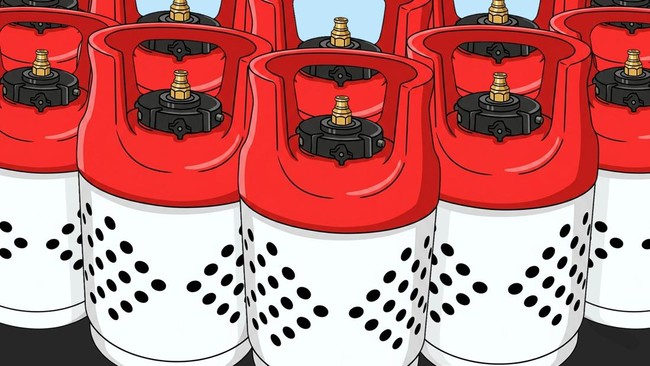
The development of household gas networks (Jargas) and compressed natural gas (CNG) in Indonesia holds a strategic place in national energy policy. Its main aim is to reduce dependence on liquefied petroleum gas (LPG) imports, which place a burden on the state budget (APBN) through subsidies.
However, implementation faces complex fundamental obstacles, particularly for PT Perusahaan Gas Negara Tbk (PGN), which is often positioned as the programme’s principal implementing company.
The underlying dilemma
The central problem concerns PGN’s position and structure: it carries three roles simultaneously—as a state-owned enterprise (SOE) responsible for public service obligations (PSO), as part of Pertamina’s Gas Subholding, and as a publicly listed company accountable to public shareholders.
Economically, developing household-sector gas networks requires high upfront capital expenditure (CAPEX), which can reach Rp10 million to Rp13 million per household connection (SR). Meanwhile, household gas consumption is relatively low, averaging 10–15 cubic metres a month, and selling prices are constrained by government regulation.
The combination of substantial upfront investment and thin operating margins results in an internal rate of return (IRR) of around 3% to 5% for projects without subsidies. This is below the weighted average cost of capital (WACC) for a corporation such as PGN, which is about 8% to 9%.
If PGN finances the expansion itself, using internal funds or debt, higher depreciation and interest expenses will weigh on its net profit. This would directly reduce its return on invested capital (ROIC) and its capacity to pay dividends to shareholders, including public investors and the government.
Ideal policy options
In theory and policy planning, several ideal arrangements are often recommended to address the economic barriers to developing household gas networks and CNG. These options are intended to ensure that projects remain financially viable for the implementing company.
The first is government viability support through a Viability Gap Fund (VGF) or an APBN grant, amounting, for example, to at least 40% of total pipeline construction CAPEX. Financial modelling suggests that initial capital assistance of 40% could raise a project’s IRR to around 8.9%, above the company’s WACC threshold.
The second is to set a special, lowest-tier upstream gas price for the PSO sector—below US$4.72 per MMBTU, or fixed at around US$3.50 per MMBTU. Lower feedstock costs would widen distribution margins without requiring higher prices for end consumers.
The third is to integrate downstream regulation by gradually stopping or restricting the distribution of 3kg LPG in residential areas where gas network infrastructure is already available. This market reorganisation is intended to ensure that natural gas uptake ramps up quickly.
The fourth is to use a public-private partnership (PPP) scheme based on Availability Payments (AP), under which the government pays for services periodically according to infrastructure availability. This would shield the business from fluctuations in usage, or demand risk.
In theory, these four arrangements would provide certainty over financial viability. In practice, however, implementation faces political and economic obstacles as well as budget constraints. The Finance Ministry has limited fiscal room in the APBN to provide upfront VGF grants.
Upstream, contractors to production-sharing contracts (KKKS) and the Special Task Force for Upstream Oil and Gas Business Activities (SKK Migas) have an interest in ensuring that gas prices are not set too low, as this could reduce returns on exploration investment. Meanwhile, restricting 3kg LPG distribution at local level risks social opposition and political consequences.
Win-win options
Given these constraints, a more realistic middle-ground strategy is needed to keep CNG and household gas network development moving without placing the entire capital burden on PGN. Options could include:
Anchor tenants along distribution pipelines: Rather than laying pipelines exclusively through densely populated residential areas, routes could pass through or near commercial and small industrial customers, such as hotels, restaurants, hospitals and shopping centres. Higher margins from these customers could help cover the cost of extending pipelines to neighbouring residential areas through cross-subsidisation.
Switching to CNG virtual pipelines and Micro-LNG: In low-density areas or places far from main transmission pipelines, expansion could shift from physical pipelines to road transport using CNG-cylinder or Micro-LNG fleets. Virtual pipelines have relatively lower upfront costs, offer flexibility and reduce the risk of stranded assets, since transport equipment can be reassigned to other areas if uptake is low.
Sharing the capital burden through co-investment: Network development should not be funded entirely by the business. Local governments could participate through regionally owned enterprises (BUMD) in a consortium or by providing land. Developers of new residential areas could also be required to build internal pipeline networks as part of the area’s basic infrastructure.
Tiered tariffs: Subsidised gas quotas could be limited to a basic household consumption allowance, for example 0–10 cubic metres a month. Usage above that threshold would be charged at the full commercial, cost-reflective rate. This would prevent affluent households or concealed business activities from using low-cost natural gas.
Managing expectations
In assessing the success of CNG and household gas network programmes, the government and public should take an objective view of the pace of progress and the scale of their impact on national energy subsidy reductions. In technical terms, gas pipeline infrastructure takes time to permit, secure land for and physically construct.
Without a substantial upfront injection of APBN funding, the number of new household connections will increase gradually and cannot rise dramatically in the short term.
The impact of household gas network development on reducing 3kg LPG subsidies should also be measured in proportion. As an illustration, 100,000 household connections could use around 518,400 MMBTU of gas a year, roughly equivalent to replacing 12,000–15,000 tonnes of LPG annually. This is relatively small compared with national LPG imports and consumption, which exceed 8 million tonnes a year.
Therefore, household gas networks and CNG cannot be viewed as a single solution capable of easing the burden of energy subsidies immediately in the short term. They are long-term energy-conversion instruments whose progress will depend on efficient funding arrangements, regulatory incentives and the implementing companies’ ability to manage financial risks.
Integrating natural gas infrastructure planning with national subsidy policy is key to ensuring that this infrastructure delivers measurable benefits without undermining the continued viability of the companies responsible for implementation.
Source: jawawa.id (https://jawawa.id/newsitem/considerations-for-developing-cng-and-household-gas-networks-1791532323)
Originally published by CNBC Indonesia (https://www.cnbcindonesia.com/opini/20261009134134-14-774766/catatan-atas-pengembangan-cng-dan-jargas), translated from Indonesian