
Conquering Mountains of Waste Through Circular Economy
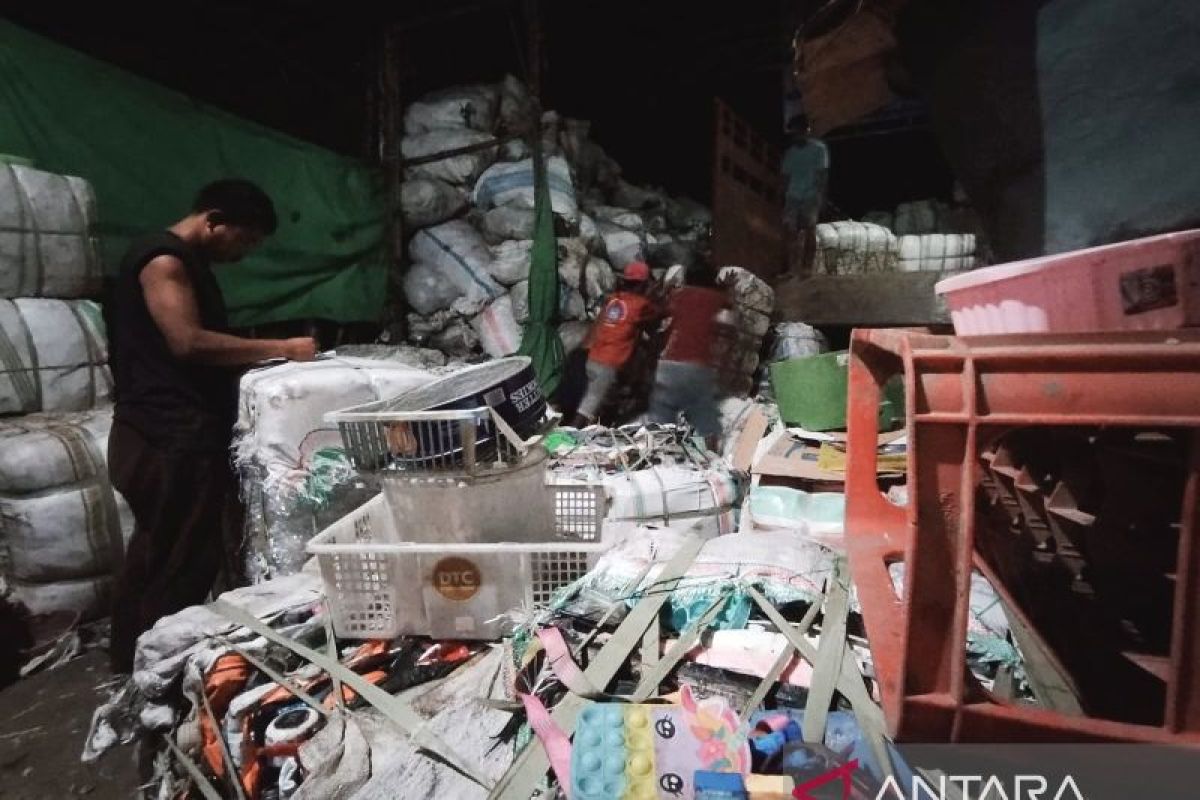
Waste collection trucks continue to transport various discarded items from across the city to the landfill in Dompu Regency, West Nusa Tenggara Province. Approximately 110 tonnes of waste arrive every day, a figure sufficient to form new mountains of waste within just a few weeks.
The circular economy concept is increasingly viewed as a solution—amidst limited waste management capacity—to transform environmental issues into sources of economic growth while simultaneously creating jobs for local residents. The Head of the Dompu Regency Environmental Office, Muhammad Syau0adkani, stated that waste management can no longer rely on the old pattern of collecting, transporting, and disposing of waste at landfills. This outdated paradigm must shift towards repurposing waste as an economically valuable resource.
“The banking sector can play a strategic role by providing specialised financing programmes for circular economy and recycling entrepreneurs, such as low-interest loans or more accessible soft financing schemes,” said Syaukani. Financial support could be provided through People’s Business Credit (KUR), eco-friendly business financing, and Corporate Social Responsibility (CSR) programmes targeting waste management communities. While the concept of green financing has developed at the national level, implementation in regions, including Dompu Regency, still requires the strengthening of the business ecosystem and waste management institutions.
Dompu Regency currently has only one landfill, located in Lune Village, Pajo District. The five-hectare site serves as the primary disposal location for waste from urban areas and surroundings. With waste accumulation reaching 110 tonnes per day, reducing waste at the source is an urgent necessity to extend the landfill’s service life. This is where the circular economy becomes relevant. Unlike the linear economic system of ‘take-use-dispose’, the circular economy treats waste as raw material that can be reused through sorting, processing, and recycling.
The Director of the Dompu Green Asri Central Waste Bank, Rony Haryato, believes the economic potential of the waste sector in Dompu remains vast because most community waste is not yet sorted at the source. According to data, approximately 70 per cent of Dompu’s waste composition is organic, while the remainder consists of inorganic recyclable waste and residue. Currently, the waste bank receives an average of six tonnes of plastic waste and about six tonnes of paper and cardboard per week. These materials originate from a network of waste banks, schools, collectors, and sorting efforts at the landfill level. Overall, the volume of successfully collected recyclable material reaches approximately 33 tonnes, with significant potential for further increase. The waste bank is supported by four partner collectors, four village-level waste banks, and 46 school-level waste banks spread across various areas.
Source: jawawa.id (https://jawawa.id/newsitem/conquering-mountains-of-waste-through-circular-economy-1780821902)
Originally published by Antara (Indonesian) (https://www.antaranews.com/berita/5595065/menaklukan-gunungan-sampah-dengan-ekonomi-sirkular), translated from Indonesian