
Connected in Service, Moving the Nation Forward
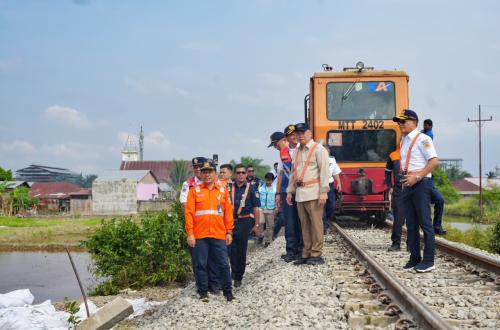
JAKARTA — In the two years of President Prabowo Subianto’s administration, the transport sector has continued to serve the public. Mobility is increasing, along with demand for a transport system that is safe, comfortable, integrated and sustainable.
The Ministry of Transportation is working to meet these growing mobility challenges. Programmes with a direct impact on safety and public services must receive priority attention.
The same applies to connectivity for the 3TP areas — disadvantaged, frontier, outermost and border regions — as well as logistics routes, strategic transport hubs and services that meet people’s basic needs. With resources limited, transport development is no longer measured only by how much infrastructure can be built, but by the benefits it delivers to the public.
Transport Minister Dudy Purwagandhi has outlined strategic steps on several occasions to improve service quality amid numerous challenges. “Sound financial management is not just about how the budget is accounted for, but also about how every rupiah managed can be converted into transport services whose benefits are felt by the public,” Minister Dudy said.
As a lifeline of everyday life, the transport sector remains connected in service and continues to move the nation forward. In land transport, 122 Type A terminals across Indonesia serve inter-provincial journeys. In 2025, 1,582,676 vehicles departed from Type A terminals, carrying 20,184,864 passengers. A further 1,730,629 vehicles arrived, carrying 20,254,258 passengers.
By July 2026, vehicle departures for the year had reached 2,148,213, carrying 28,791,469 passengers; arrivals stood at 2,218,699 vehicles and 27,682,693 passengers. In 2025 and 2026, the Directorate General of Land Transportation also distributed 300 school buses, 28 of which were allocated to the Sekolah Rakyat programme. Support bus services for National Tourism Strategic Areas (KSPN) served 24 routes by 2026.
Turning to ferry ports, 235 ports are operating across 82 ferry routes, served by 342 commercial ferries. In 2025, 75,128,420 passengers and 21,403,550 vehicles used these services. By July 2026, the services had carried 38,315,490 passengers and 11,134,120 vehicles.
Rail connectivity has also strengthened through service improvements on several lines. In 2025, these included services on the Jember–Kalisat line in East Java, construction of the Kiaracondong–Cicalengka double track in West Java, Phase I upgrades at Tanah Abang Station in Jakarta, and construction of Paledang Station and a skybridge in West Java.
The following year, rail development focused on improving facilities and infrastructure at several stations, including upgrades to Rangkasbitung and Jatake stations in Banten, as well as the commissioning of the Mandai–Palanro section of the Makassar–Parepare railway in South Sulawesi.
Overall, rail transport served 551,737,151 passenger journeys in 2025 and 388,291,217 by the end of August 2026. Passengers were served by local trains, KRL Commuterline, airport trains, pioneering services, the Mass Rapid Transit (MRT), Light Rail Transit (LRT) and high-speed rail.
Air transport services are expanding, supported by airport development in priority tourism areas (KSPN), Special Economic Zones (KEK), industrial areas and border regions. These upgrades are intended to extend the reach of mobility across the country.
Air passenger numbers reached 102,949,425 in 2025, comprising 63,627,020 domestic and 39,322,405 international passengers. By the end of August 2026, air passenger numbers had reached 66,108,417, including 40,470,617 domestic and 25,637,800 international passengers.
Domestic air freight services carried 1,040,390 tonnes of goods in 2025, comprising 553,969 tonnes of domestic cargo and 486,421 tonnes of international cargo. By the end of August 2026, air freight had carried 676,553 tonnes, comprising 357,122 tonnes of domestic cargo and 319,431 tonnes of international cargo.