
Conflict and the Climate Crisis Put the Goal of Ending Hunger Further Out of Reach
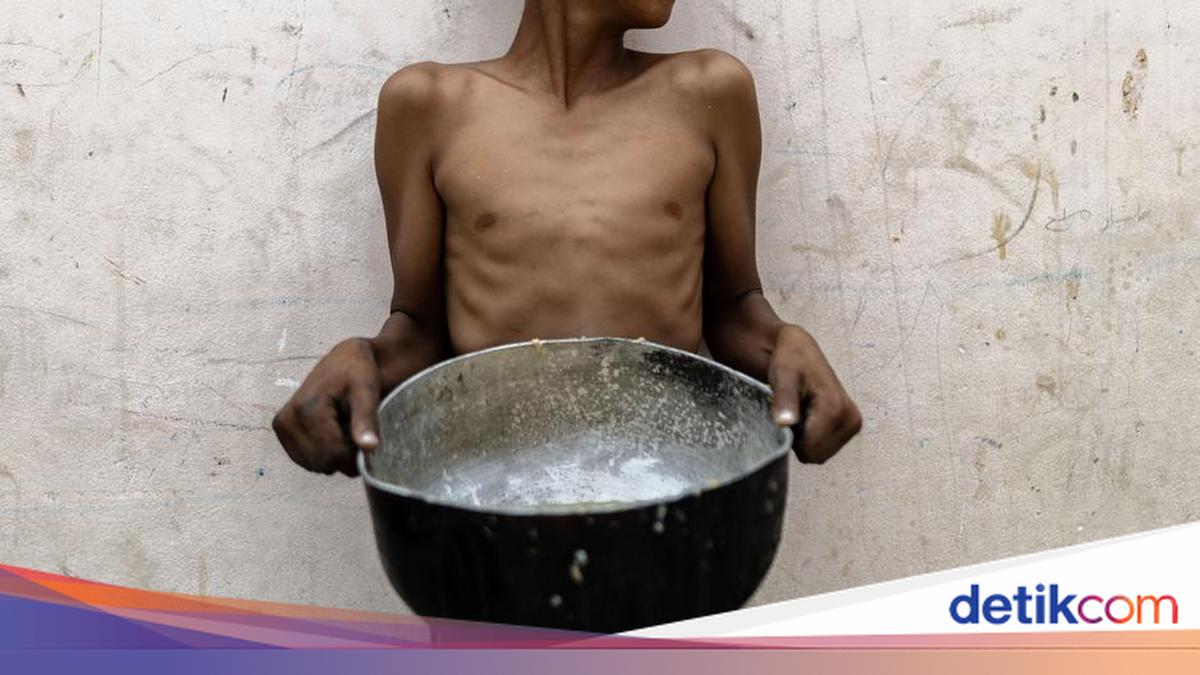
The timing of the publication of the Global Hunger Index (GHI) and global hunger reports is no coincidence. The United Nations Food and Agriculture Organization (FAO) was established on 16 October 1945 with the aim of ensuring food availability for everyone around the world.
However, two humanitarian organisations, Welthungerhilfe and Action Against Hunger, say efforts to achieve that goal are now facing a serious setback. In separate reports, the two German non-governmental organisations highlight a significant deterioration in global hunger.
Somalia, Congo, Sudan and the Sahel are among the worst affected
“Food security is a prerequisite for peace and stability,” said Welthungerhilfe President Marlehn Thieme. The organisation’s Secretary-General, Mathias Mogge, cited Somalia, Sudan, Congo and the Sahel as examples of places where hunger is rising.
“Hunger is increasing there. These countries and regions are often among those feeling the effects of climate change most acutely. We see a very clear link between the two,” Mogge told DW.
The Global Hunger Index is based on four measurable indicators: undernourishment across the population, child stunting, child wasting caused by malnutrition, and child mortality.
Using these data, 122 countries with sufficient information are placed in one of four hunger categories: low, moderate, serious or very serious. The overall results are alarming: hunger has worsened in 32 countries.
Military spending rises as humanitarian aid shrinks
Welthungerhilfe President Marlehn Thieme described the reversal as a worrying change of direction after almost two decades of tangible progress. She said security is too often viewed solely through a military lens.
While Germany’s Defence Ministry budget has risen by 20 per cent or more, funding for development cooperation and humanitarian aid has been cut, in some areas by as much as half.
“But a fundamental question is being overlooked: how safe can someone feel if they do not know whether they will have enough food tomorrow?” Thieme said.
Despite the setbacks, the Global Hunger Index records some positive developments. Mogge cited Uganda, Kenya and Sierra Leone as countries where conditions have improved.
“Progress is particularly evident where governments are stable, there is no conflict or only limited conflict, and there are clear policies to address the effects of climate change,” he said.
Investment in rural areas is paying off
According to Mogge, progress also comes when the poorest communities remain a priority. He said visits to affected countries and regions had given him first-hand insight into conditions on the ground.
Positive results are particularly evident when investment is directed towards rural areas. This includes agriculture, healthcare, education and social protection systems.
But, Mogge said, the situation in the Gaza Strip bears no resemblance to such progress. He had just returned from a five-day visit. In 2025, the UN declared a hunger crisis in Gaza, much of which has been devastated by the war between Israel and the Islamist group Hamas.
Gaza: ‘There is little hope of improvement’
Mogge said hunger in Gaza is no longer as severe as before because more aid has entered the territory. However, people remain crowded into a very small area. Around 90 per cent of residents have to live in tent settlements.
“Sanitary conditions are extremely poor. As a result, children in particular are suffering from skin diseases and diarrhoea. Unfortunately, at the moment they have little hope that things will improve,” Mogge said.
Mogge’s account is consistent with the German government’s official assessment. In a recently published response to a parliamentary question from The Left party in the Bundestag, the government said the humanitarian situation in Gaza remained “catastrophic”.
Germany relies on diplomacy
Germany, one of the largest bilateral donors, has provided up to €420 million in humanitarian assistance since Hamas’s attack on 7 October 2023. The German government also says it continues to use diplomatic channels to press Israel to improve humanitarian access.
Action Against Hunger’s report likewise describes Gaza as suffering widespread devastation. It says 87 per cent of agricultural land has been damaged, 81 per cent of greenhouse infrastructure destroyed, and around 90 per cent of water is unfit to drink.
Beyond Gaza, the report contains more bad news than positive developments.
‘Crises are compounding one another’
“Hunger is becoming increasingly concentrated in a small number of countries that are simultaneously affected by conflict, displacement, climate shocks and the collapse of basic infrastructure,” said Jan Sebastian Friedrich-Rust, managing director of Action Against Hunger.
“These crises compound one another and drive millions of people into hardship,” he said.
The organisation estimates that 645 million people are experiencing chronic hunger, the same figure estimated by Welthungerhilfe.
The hunger report, published in German for the first time, draws on data from the Global Report on Food Crises (GRFC), analyses by the UN Food and Agriculture Organization (FAO) and the World Food Programme (WFP), as well as Action Against Hunger’s direct findings in the field.
‘We can only provide emergency aid’
Action Against Hunger, which operates in 54 countries, has also criticised the steep cuts to development cooperation and humanitarian aid budgets since 2023.
“We are increasingly forced to suspend programmes that are vital to people’s lives, even as the need for assistance continues to grow,” Friedrich-Rust said.
He described a chain of consequences as a “vicious circle”. “Often, we can only provide emergency assistance to save lives, while we have to halt long-term projects that help communities become more resilient and able to meet their own needs,” he said.
African countries are worst affected
African countries dominate the list of the ten countries with the highest absolute numbers of people facing severe acute food insecurity. Nigeria, Congo and Sudan occupy the top positions. South Sudan has entered the list for the first time. More than 80 per cent of its population now depends on humanitarian aid.
However, Friedrich-Rust cautioned against misinterpreting the fall in the number of people on the list, from 197 million to 177 million. Some countries facing serious crises, such as Ethiopia, could not be included this time because of a lack of data.
In the previous year, around 22 million people in the East African country of Ethiopia experienced severe acute food insecurity.
More than a moral obligation
According to Action Against Hunger, the international community’s course of action is clear: address the root causes of crises and create conditions that allow people to live free from hunger over the long term.
“Aid is not merely a moral obligation,” Friedrich-Rust said.
He described cuts to development cooperation and humanitarian assistance as short-sighted. “Savings made today merely defer the bill until tomorrow—and ultimately make it far more expensive.”
Source: jawawa.id (https://jawawa.id/newsitem/conflict-and-the-climate-crisis-put-the-goal-of-ending-hunger-further-out-of-reach-1792151619)
Originally published by detikcom (https://news.detik.com/dw/d-8710365/konflik-dan-krisis-iklim-jauhkan-mimpi-mengentaskan-kelaparan), translated from Indonesian