
Confirmed! Inactive PBI BPJS Kesehatan Participants Still Receive Hospital Services
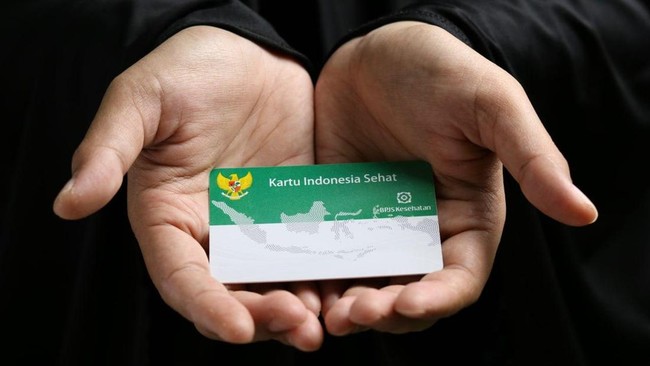
The government and the Indonesian House of Representatives (DPR RI) have agreed to guarantee the continuity of healthcare services for participants of the Penerima Bantuan Iuran Jaminan Kesehatan Nasional (PBI JKN) who are deactivated during the data updating and ground check processes.
This will be followed up with a Letter of Reactivation Determination for PBI JKN from the Minister of Social Affairs RI in accordance with applicable laws and regulations, reinforced by a Joint Ministerial Decree between the Minister of Social Affairs, the Minister of Health, and the Director of BPJS Kesehatan.
This is outlined in the conclusions of the working meeting between Commission IX of DPR RI and the Ministry of Health, Ministry of Social Affairs, BPS, DJSN, the BPJS Kesehatan Supervisory Board, and BPJS Kesehatan, which was approved on Wednesday (15/4/2026) at the DPR Building in Jakarta.
In this meeting’s agreement, poor communities without NIK are to be facilitated to still access healthcare services at health facilities through alternative mechanisms prepared and implemented by the government, namely the Ministry of Health RI, Ministry of Social Affairs RI, Ministry of Home Affairs RI, BPS, and DJSN.
Additionally, the reactivation of inactive PBI participants will be accelerated through simplified procedures, the establishment of clear national Standard Operating Procedures (SOP), and strengthened field supervision to ensure the reactivation process runs effectively and reaches entitled communities.
The PBI JKN scheme and quotas will be reorganised to be more adaptive to poverty dynamics, including considering quota increases, proposals for buffer budget reserves, and clarity on the division between central and regional governments to ensure no poor individuals are overlooked.
Regarding data utilisation, the government and Commission IX of DPR RI have agreed to conduct a comprehensive evaluation of the use of the Integrated National Social and Economic Data (DTSEN) as the basis for determining PBI JKN, through:
Comprehensive evaluation of the decile determination methodology, including the validity of indicators and data accuracy to better reflect real field conditions.
Strengthening integration, synchronisation, and interoperability of data across ministries/institutions to realise an accurate, up-to-date, and accountable DTSEN.
Ensuring that the data updating process does not disrupt the continuity of healthcare access, especially for poor and vulnerable communities, including patients with catastrophic diseases.
Overall, the Ministry of Health RI, Ministry of Social Affairs RI, Ministry of Home Affairs RI, BPS, DJSN, the BPJS Kesehatan Supervisory Board, and BPJS Kesehatan will jointly strengthen the governance of the JKN programme through enhanced cross-sector coordination, regulatory improvements, and strengthened public communication, including effective socialisation to the public and acceleration of resolving strategic issues, particularly participant deactivation.