
Confirmed! Constitutional Court Rejects Election Lawsuit, All Valid – Government to Continue
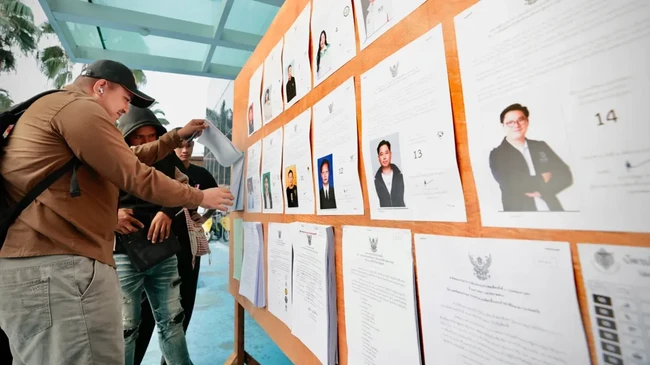
The Constitutional Court of Thailand has rejected a lawsuit questioning the validity of the ballots used in the elections held last February. The decision ensures that the victory of Prime Minister Anutin Charnvirakul and his coalition remains intact.
Thailand has a long history of political instability, ranging from massive demonstrations and military coups to court rulings that have led to the collapse of governments. The Constitutional Court has previously annulled election results on two occasions. Had the current challenge regarding the 8 February election been successful, the court could have invalidated the results and ordered a re-run, forcing Anutin’s coalition to face voters once again.
However, in its ruling on Monday (28/09/2026), the Court stated that the use of QR codes and barcodes on ballots does not violate constitutional provisions regarding voter secrecy. Consequently, the conservative Bhumjaithai Party, led by Anutin, maintains its control of the government.
“The judges decided that the barcodes and QR codes are consistent with the constitution and do not violate the rights and freedoms of voters,” said Judge Chiranit Havanond, as reported by AFP.
Judge Sarawut Songsivilai explained that while barcodes on ballots for party lists could theoretically allow for tracking, their purpose is to maintain election integrity rather than to identify an individual’s political choice.
The case originated from over 20 complaints filed with the Ombudsman regarding the ballot design. The petitioners argued that QR codes and barcodes could be used to identify voters and reveal their political preferences, thereby compromising the secrecy of the vote.
Nevertheless, the Constitutional Court stated that the Election Commission maintains voter secrecy by separating the portion of the ballot containing voter identity information from the portion used to cast the vote.
In the February election, Bhumjaithai achieved a significant victory. The party successfully strengthened support from rural political networks while capitalising on a wave of nationalism following border clashes between Thailand and Cambodia that resulted in fatalities last year.
Despite being the party with the highest number of constituency seats, Bhumjaithai failed to secure an absolute majority in Parliament. The party subsequently formed a coalition with Pheu Thai, the populist party previously associated with former Prime Minister Thaksin Shinawatra, which finished third in the election.
This latest ruling is particularly significant given the Thai Constitutional Court’s history of annulling elections. In 2006, the court invalidated a snap election that had been boycotted by the opposition, ruling that the polling date was chosen unfairly and that polling arrangements compromised voter secrecy.
Eight years later, the court again annulled the 2014 election, citing that voting could not be conducted simultaneously across the country after anti-government protesters disrupted the process in several locations.
Both incidents occurred following waves of mass demonstrations that were followed by military coups. The 2006 coup overthrew Thaksin, while the 2014 coup ousted his sister, Yingluck Shinawatra. These events are part of a long-standing political conflict between the populist-backed Shinawatra political dynasty and Thailand’s conservative elite.
Source: jawawa.id (https://jawawa.id/newsitem/confirmed-constitutional-court-rejects-election-lawsuit-all-valid-government-to-continue-1790639472)
Originally published by CNBC Indonesia (https://www.cnbcindonesia.com/news/20260929053424-4-771609/tok-mk-tolak-gugatan-soal-pemilu-semua-sah-pemerintahan-lanjut), translated from Indonesian