
Confirmation Bias and the Truth That Is Overlooked
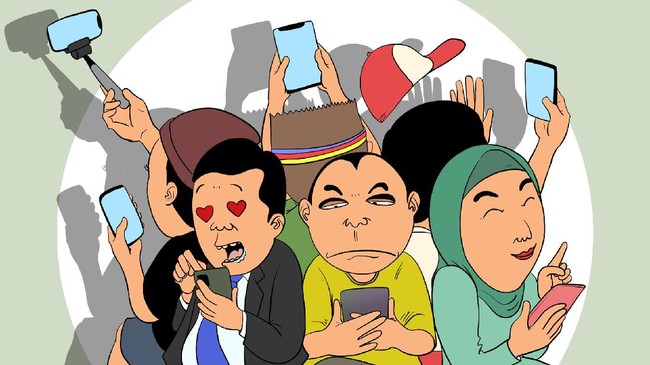
What causes one party’s clarification—for example, in a dispute between a Brooklyn toy shop and singer Kelly Clarkson—to receive less attention than a viral social-media post?
On 11 October 2026, Australian news outlet abc.net.au published “A Complete Timeline of Singer Kelly Clarkson’s Feud with a Brooklyn Toy Store” about the dispute. It said the incident began when the singer went into Art of Play in Brooklyn.
The shop sells high-end antiques, unusual playing cards, kinetic sculptures, puzzle boxes and an assortment of unconventional toys. Clarkson was drawn to a mechanical yellow bird called Molly. A US$15,000 price tag was scattered nearby, and she assumed that was the price of Molly.
Interested, Clarkson asked about the item. The conversation apparently did not satisfy her. This was evident in a post on her X account, made shortly after she left the shop. She accused the store of treating her as though she could not afford Molly, and said she had received service she disliked.
She vented her displeasure on social media, where she has 8.8 million followers. Clarkson compared her experience to that of Julia Roberts’ character in the film Pretty Woman, who takes an interest in a dress at a boutique that had initially employed her but is treated as though she cannot afford it. Clarkson’s anger was expressed bluntly: “You’re an idiot and just lost a huge sale.”
In response to Clarkson’s post, Art of Play issued a clarification. The shop denied mistreating its prospective customer and said it was shocked to suddenly come under attack from eight million people—presumably Clarkson’s followers—who had never visited the store.
The shop also said Molly had never been for sale: she served as its mascot and was an integral part of the store. The disagreement did not end there. The parties exchanged posts on social media, and the dispute even prompted an investigation, with footage from the shop’s security cameras made public.
Social-media users were divided. Some defended Art of Play, sharing positive experiences of visiting the shop. Among them was actor Michelle Monaghan, who praised it as a special place she had visited, where she was encouraged to keep playing and enjoy a sense of wonder.
Others, however, said their experiences supported Clarkson’s account. One comment said, in effect: “Your shop is very well laid out, but on the several occasions I’ve visited, your staff have always been rude or unpleasant to me and to other customers.”
The scale of the divide was unclear, but Adam Rubin, one of Art of Play’s owners, told USA Today that he feared his business was in danger. He said the negative reaction online had worried him.
The shop’s staff also faced threats to their safety. “It’s not just people coming in person; our neighbours have also been subjected to doxxing and review bombing. People are being threatened in the street. And the worst part is, we had no idea this would happen. But Kelly Clarkson did.”
Posts and clarifications have also caused a stir in Indonesia. Anita, a passenger on a commuter train travelling from Tanah Abang to Rawa Buntu, reported losing her cooler bag, which contained a relatively expensive tumbler.
The cooler bag was found soon afterwards by Argi, a staff member accompanying the KRL train journey. Anita collected it the following day, but was still disappointed: the tumbler was missing. This prompted her to post an angry message: “MY TUKU TUMBLER IS GONE BECAUSE OF PT KAI STAFF’S IRRESPONSIBILITY.”
Anita’s complaint prompted state railway company PT KAI to conduct an internal investigation. Before it was completed, however, Argi posted his own account, saying he had been fired and lost his job because of Anita’s complaint.
Argi acknowledged that he had been negligent in failing to check the contents of the cooler bag when handing it over at a busy station. In the subsequent exchange of claims, however, public opinion sided with him and blamed Anita.
Anita was accused of being careless with her belongings while causing someone else to lose their job. The criticism coincided with a clarification from KAI that Argi had not been fired. But the anger had already taken hold and proved difficult to quell with a clarification.
The two cases illustrate how the public can place greater trust in an initial viral narrative than in a later clarification that sets out the facts. Clarifications go unheeded. The inability to consider what actually happened, rather than the version of events encountered first, is often shaped by confirmation bias. During the Covid-19 pandemic, confirmation bias fuelled public polarisation, commonly known as Social Media Induced Polarisation (SMIP).
In their 2021 paper, “A Confirmation Bias View on Social Media Induced Polarisation During Covid-19”, Sachin Modgil, Rohit Kumar Singh, Shivam Gupta and Denis Dennehy describe this phenomenon. They define confirmation bias, a form of cognitive bias often induced by social media, as the tendency to believe information that aligns with one’s prior beliefs or opinions while disregarding clarifications or evidence that contradict them.
As more information is delivered through social media, reality becomes increasingly distorted. Algorithms reinforce bias by curating posts based on users’ previous consumption of information, as well as on the platforms’ commercial interests.
This is reflected in the flood of supportive comments and posts. Clarifications and contradictory facts are ignored, with their accounts dismissed as inconsistent with the narrative people have already come to believe.
In the dispute between Kelly Clarkson and Art of Play, for instance, the shop said the price tag was not the price of Molly, but the cost of commissioning a similar bird from its artist, Bliss Kolb. That explanation was ignored. People were more comfortable with the narrative of an arrogant shop that thought a customer could not afford its product, and the shop was vilified.
Although the public may sometimes take the side of what actually happened, the possibility that a reputation could suddenly collapse because of a false but viral narrative is a serious concern for any organisation. Entertainment stars, athletes, social activists, commercial businesses and political actors—all of whom rely on public support on social media—can suddenly be targeted by such misleading narratives.
The attacks can come without warning, causing support that had once surged to disappear, or at least eroding it in ways that are difficult to reverse. Yet the greatest danger of confirmation bias among people whose lives are now heavily shaped by algorithms and artificial intelligence (AI)-based manipulation is the confusion it creates about reality. The basis for establishing what is real becomes unclear, which is dangerous when reality is used to guide action.
In “The Danger of Confirmation Bias in Society and Social Media” (2022), Deepak Ouseph describes this danger. He notes that the spread of fake news and inaccurate, misleading material is accelerating.
Social media helps turn such material into apparently legitimate news, as though it came from a trustworthy source. People then readily share the information and articles.
This happens because the material is taken to confirm ideas built on existing beliefs. As a tactic, attention-grabbing headlines package a range of unfounded allegations. Their factual status is often no more than biased opinion, reflecting the beliefs of the readers themselves.
Bias is reinforced further. Statements without evidence are accepted as fact simply because they fit the beliefs people hold when they encounter the information. They are then widely shared, drawing on collective beliefs that have already taken shape.
Confirmation bias grows into an echo chamber, in which people hear their own views ever more loudly, creating an illusion of truth, alongside the formation of filter bubbles. Together, these mechanisms limit the information people encounter to material that resembles what they have consumed before.
Confirmation bias therefore turns social media into an amplifier of incomplete versions of reality. When those incomplete accounts are used to guide action—often framed as a binary choice between taking sides and opposing someone—the result can be a biased decision.
Without a complete picture of reality, people can support the wrong side: aligning themselves with falsehood and opposing the truth. The priority, then, is to use reality as it is as a point of reference, rather than a version distorted by confirmation bias or algorithmic manipulation. Or people can refrain from taking sides in matters that do not necessarily concern them, so the world becomes a little less complicated.
Source: jawawa.id (https://jawawa.id/newsitem/confirmation-bias-and-the-truth-that-is-overlooked-1792644725)
Originally published by CNBC Indonesia (https://www.cnbcindonesia.com/opini/20261022100440-14-778487/bias-konfirmasi-dan-kebenaran-yang-terbaikan), translated from Indonesian