
Conditions Stabilising as Anak Krakatau Eruption Ash Moves Towards Indian Ocean
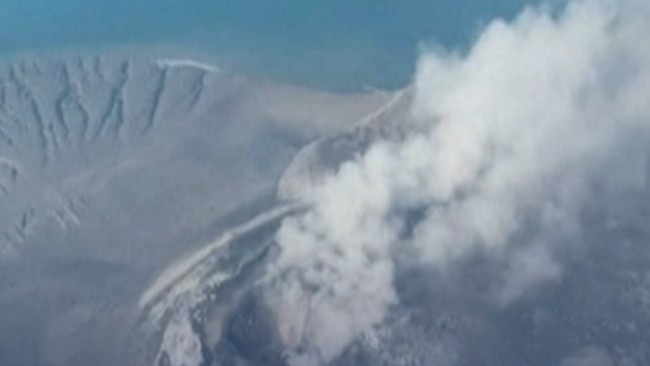
The National Disaster Management Agency (BNPB) has reported that the distribution of volcanic ash following the eruption of Mount Anak Krakatau is tending to move towards the Indian Ocean. This situation has made the regions of Lampung, Banten, West Java, and DKI Jakarta more stable regarding ash dispersal.
The Acting Head of the BNPB Data, Information, and Disaster Communication Centre, Berton SP Panjitas, explained that the direction of the ash distribution follows the wind, which is currently moving west towards the Indian Ocean. Based on satellite imagery analysis, wind speeds around Mount Anak Krakatau have reached 15 knots.
“From this information, we can determine that the current situation in Lampung, West Java, Banten, and DKI Jakarta is more conducive regarding volcanic ash,” said Berton, quoting an official statement on Tuesday (8/9/2026).
Despite the more favourable ash distribution conditions, Berton warned that the volcanic activity of Mount Anak Krakatau remains at Level III (Alert). Consequently, the public and tourists are still prohibited from any activities within a three-kilometre radius.
Furthermore, the BNPB continues to conduct operations to manage the impact of volcanic ash and air pollutants. On Monday (7/9), the BNPB carried out a weather modification operation (OMC) using the cloud seeding method.
This operation involved seeding clouds with the potential to produce rain in the border regions of West Java and Central Java. During the operation, the BNPB utilised an aircraft to disperse approximately 650 litres of water mixed with 350 kilograms of calcium chloride (CaCl2).
“The spraying of water mixed with calcium chloride was targeted at clouds with the potential to produce rain in the border area between West Java and Central Java,” he said.
Meanwhile, on Tuesday (8/9/2026), the BNPB conducted a weather modification operation using the water mist method. This involved spraying water mixed with surfactants to help capture pollutant layers in the air. In this operation, the BNPB used approximately 2,000 litres of water mixed with surfactant.
“The seeding material used consisted of 2,000 litres of water plus surfactant,” he concluded.
Berton also noted that these conditions have had a positive impact on flight operations. Eight airports that were previously closed by authorities have now been reopened.