
Condition of Indonesian Shipyards: Coal Vessel Orders Decline, Shifting Towards Oil and Gas
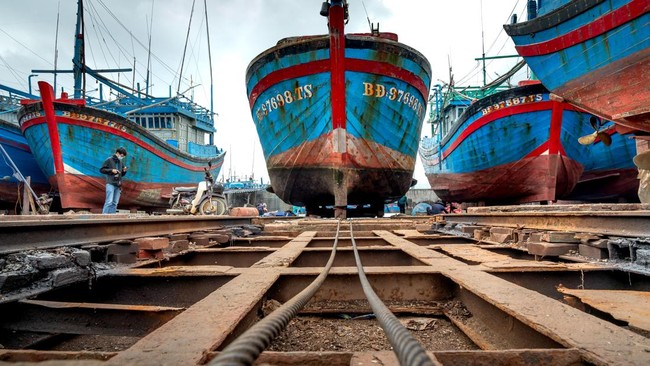
The national shipbuilding industry is currently facing pressure from weakening demand for new vessel construction. After receiving numerous orders from the mining sector, specifically for tug and barge vessels, over the last few years, shipbuilding activity has now decreased, leaving ship maintenance as the industry’s primary mainstay.
Anita Puji Utami, Chairperson of the Indonesian Association of Shipbuilding and Offshore Facilities Companies (IPERINDO), stated that the association currently comprises approximately 280 members, including shipyards and supporting industries. The proportion of new shipbuilding work is shrinking compared to vessel maintenance activities.
“I need to convey that currently, our association has 280 members consisting of shipyards and other supporting industries. Regarding the current state of the shipbuilding industry, national new vessel construction has indeed begun to decline,” Anita told CNBC Indonesia on Tuesday (29/09/2026).
The decline is most noticeable in vessels that have traditionally supported mining activities. Demand for tug and barges has been impacted by developments in coal imports, causing a sharp contraction in new shipbuilding work related to that sector.
“Specifically, over the last five years, the industry was dominated by fulfilling vessel needs to support the mining industry, such as tug and barges. However, currently, the need for tug and barges, due to several developments in coal importation, is significantly affecting new builds in Indonesia,” she said.
Shipyards are now shifting their focus towards vessels for the distribution of fuel, oil, and gas, as well as Ro-Ro ferry vessels. However, maintenance work remains the largest share of the business as new shipbuilding orders have yet to recover.
“As a result, it has decreased; perhaps now only 40% remains. 60% has all been delivered, and the remaining demand for new builds related to the mining industry has truly declined significantly,” said Anita.
In terms of capacity, domestic shipyards still have the potential to increase new vessel production. The challenge lies in generating sufficient demand so that existing capacity is not solely utilised for maintenance work.
“Therefore, the shipbuilding industry is currently dominated by ship maintenance, at a ratio of about 70-30. Maintenance, precisely,” she added.
Amidst these pressures, shipyards also face competition from imported vessels, including second-hand ships. The need for larger vessels is a key factor, as the ability of domestic shipyards to build vessels measuring 150 metres to over 200 metres remains uncompetitive.
“Because what is required are large capacities, such as sizes of 150 metres or 200 metres and above, where we are still not competitive in building. This is also related to the requirement for vessels to be ready, as the market demands logistics support,” concluded Anita.
Source: jawawa.id (https://jawawa.id/newsitem/condition-of-indonesian-shipyards-coal-vessel-orders-decline-shifting-towards-oil-and-gas-1790679145)
Originally published by CNBC Indonesia (https://www.cnbcindonesia.com/news/20260929141658-4-771807/kondisi-galangan-kapal-ri-order-kapal-batu-bara-sepi-pindah-ke-migas), translated from Indonesian