
Concerns Mount Over Migration from Pertamax to Pertalite Following Fuel Price Hike
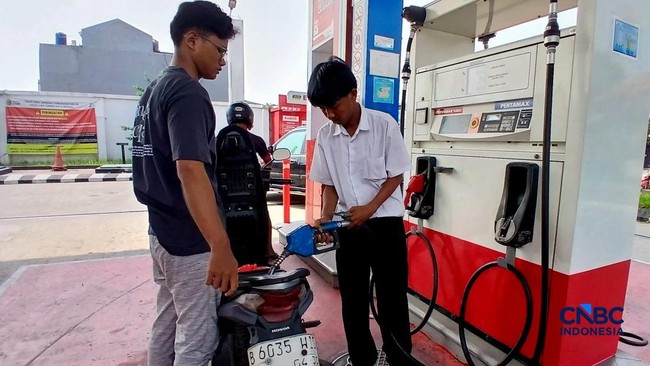
The significant increase in the price of the non-subsidised fuel Pertamax has raised concerns, particularly regarding a potential consumer shift to subsidised fuels such as Pertalite. Responding to this, Pertamina Patra Niaga Corporate Secretary Roberth MV Dumatubun urged the public to use energy wisely and not to take the rights of groups entitled to receive subsidies. “The appeal to use energy wisely and the awareness not to take the rights of subsidy recipients continues to be echoed,” he told CNBC Indonesia on Thursday (11/6/2026). Roberth stated that the price adjustment for the non-subsidised Pertamax fuel was made while still considering purchasing power and the national economy. Meanwhile, the price of subsidised fuel has not been adjusted and continues to be sold according to applicable regulations. According to him, market price factors and economic price were among the reasons for the adjustment. After coordinating with regulators, the Pertamax price adjustment was eventually implemented. “More to the upstream to downstream business process of energy provision, which in coordination with regulators needs to be dynamic and adapt to the latest conditions in response to the current phenomenon,” he added. Yusuf Rendy Manilet, an economist from the Center of Reform on Economics (CORE) Indonesia, assessed that the Pertamax price hike, which creates a difference of around Rp6,250 per litre with Pertalite, has the potential to accelerate a consumption shift, especially from non-subsidised to subsidised fuel. He noted that economically, consumers tend to switch to cheaper products when the price difference between two goods with relatively the same function widens. Assuming a consumption of 100 litres per month, vehicle users could save around Rp625,000 per month by switching from Pertamax to Pertalite. “Therefore, it is not surprising if we start to see longer queues for Pertalite and relatively slowing demand for Pertamax,” Yusuf told CNBC Indonesia. Furthermore, he assessed that this migration trend is likely to continue if the price gap remains wide in the coming months. Based on a simulation his party conducted, in a moderate scenario, Pertalite consumption could increase by about 7 per cent, while in a more severe scenario, the increase could approach 12 per cent. “However, it should be noted that the Pertalite quota is only potentially exceeded when the consumption migration rate approaches 11.3 per cent. This means that in mild to moderate scenarios, consumption can still be relatively accommodated within the available quota,” he added.