
Conceptual Debates Hinder Deliberation of Asset Forfeiture Bill
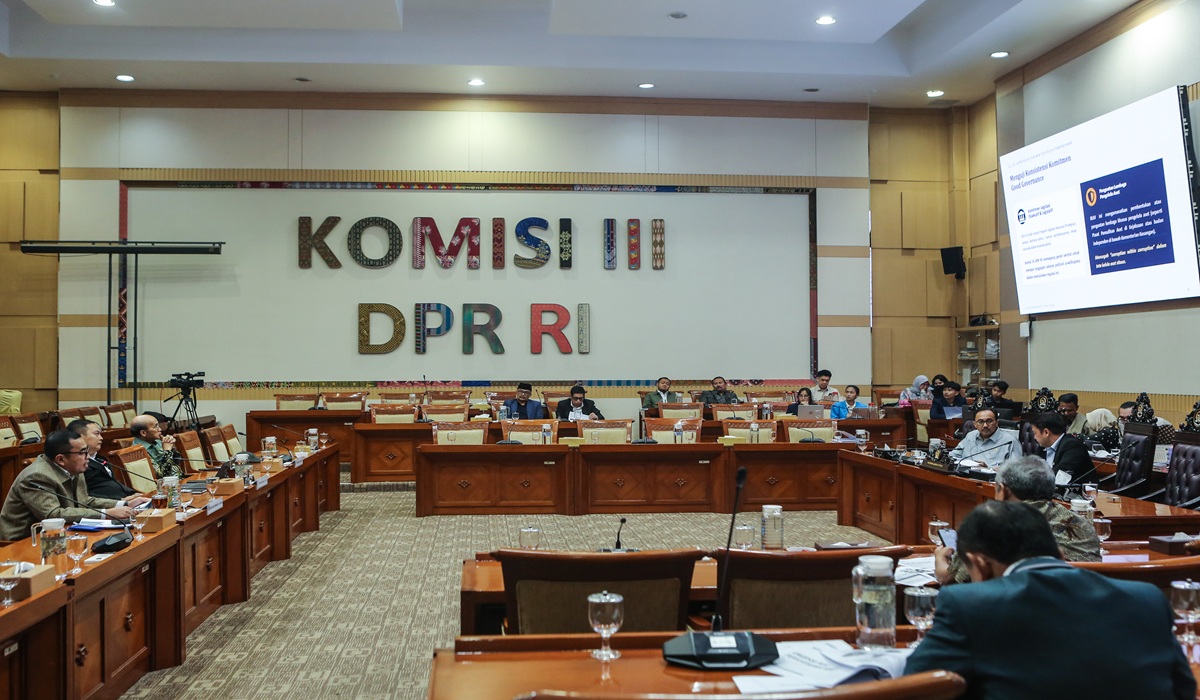
House of Representatives Commission III member Bob Hasan has urged that deliberation of the Asset Forfeiture Bill no longer be bogged down in conceptual debate.
The Gerindra Party politician said expert input so far remains focused on the dichotomy of basic concepts, such as conviction-based forfeiture versus non-conviction based forfeiture, as well as the legal position of forfeiture as a primary or additional punishment.
“The debate is important as a foundation, but it needs to be narrowed immediately into technical formulation. I have already left a message with the expert staff at Commission III to produce a faster and more focused terms of reference so that the discussion converges, no longer circling around the NCB or conviction-based debate, but directly on its implementation,” said Bob Hasan after attending a public hearing with academics at Nusantara II Building, Parliament Complex, Senayan, Jakarta, Tuesday (11/8/2026).
The chairman of the House Legislation Body said the main objective of the Asset Forfeiture Bill is optimal recovery of state financial losses. He dismissed the notion that parliament is deliberately stalling the passage of the bill, which is included in the 2026 Priority National Legislation Programme.
“No one is stalling. What is happening is a normal tug-of-war of ideas on substance in the legislative process. The goal is how to recover the stability of the state economy and save assets derived from crime,” he asserted.
Beyond the question of the lawsuit mechanism, Bob Hasan noted that experts still hold differing views on the scope of predicate crimes, whether they should be limited specifically to corruption cases or also include narcotics trafficking, customs offences and other crimes.
The Asset Forfeiture Bill is currently listed as number six in the 2026 Priority National Legislation Programme as a House initiative. Commission III continues to hold public hearings during the recess period from 21 July to mid-August 2026 to gather input from academics and various parties before the bill is formulated into substantive provisions.