
Complying with 117 Regulations Does Not Guarantee Mining Companies Meet Global ESG Standards
Mining and mineral processing companies in Indonesia face a massive homework task to penetrate global Environmental, Social, and Governance (ESG) standards. This is because compliance with 117 components of national regulations does not automatically mean companies meet international ESG standards.
These findings were revealed in a Gap Analysis study of Environmental, Social, and Governance (ESG) in Critical Minerals in Indonesia, which was followed up by the Coordinating Ministry for Economic Affairs together with the National Economic Council (DEN) in Jakarta on Wednesday (3/9/2026).
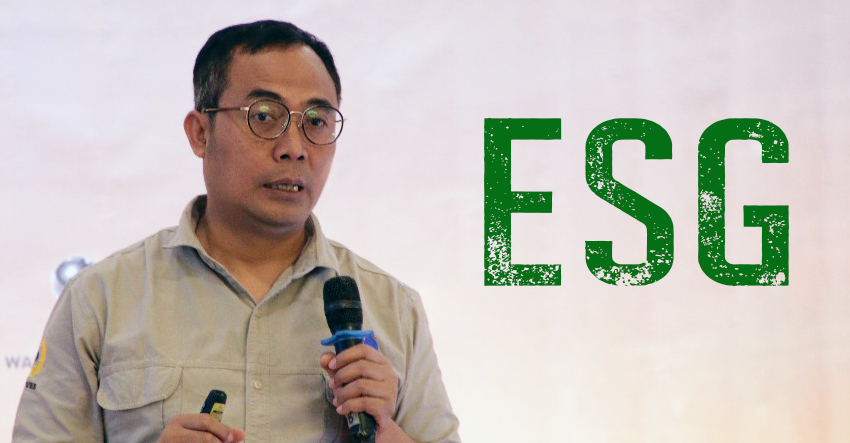
Tubagus Nugraha, Executive Director for Policy Synchronisation of Economic Priority Programmes at DEN, stated that the study was conducted to map the position of Indonesian regulations against various ESG standards used globally, while measuring the gaps that companies still need to address.
According to Tubaudus, Indonesia actually possesses very extensive regulations to govern various ESG aspects. In the study, at least 117 rules covering ESG parameters were mapped and matched against international ESG standard requirements. However, the results showed a significant gap.
“If I am Company A, and I comply with the 117 existing components in Indonesia, when I access the IRMA standard, how much do I achieve? Less than 50%,” he said during his presentation.
This finding indicates that domestic regulatory compliance is not identical to readiness for global ESG certification. Companies that have met all national provisions must still bridge several additional requirements when attempting to access international standards.
The Burden of ESG Certification is Not Small
According to the former Assistant Deputy for Mining at the Coordinating Ministry for Maritime Affairs and Investment (2020–2024), the issue is becoming increasingly complex because companies are not only facing a single ESG standard. Globally, there are approximately 158 sustainability frameworks, while about 11 to 12 standards are considered relevant options for companies.
This condition clearly requires companies to determine which standard to target while simultaneously calculating their internal capacity to meet requirements and provide evidence of compliance.
When three standards—the International Finance Corporation (IFC), the Initiative for Responsible Mining Assurance (IRMA), and Copper Mark—were compared in the study, the need for compliance evidence reached approximately 582 pieces of evidence. Of that number, about 103 pieces of evidence are cross-cutting requirements shared among the three standards, while the remaining 479 pieces of evidence must still be pursued and proven specifically by companies to assessors.
“If you want to comply 100% with three standards, there are approximately 582 pieces of compliance evidence required,” he said.
This means the challenge for companies is not merely implementing ESG practices, but also building documentation and verification systems that can be validated during the assessment process.
Indonesian Regulations Have Not Fully Closed the Gap
Tubagus stated that the mapping also found an imbalance in national regulations. Some ESG aspects are regulated by more than one ministry or agency, while other components remain limited or are not specifically regulated.
“This is important so we can inform our colleagues in the Ministries. There is one rule or one component that is regulated by many places, and there are also parts that are not regulated at all,” he said.
This condition poses a particular challenge for companies when facing international ESG standards. He cited aspects such as human rights, land acquisition, and displacement. If international standards require companies to show evidence of compliance in these areas, companies must still be able to provide evidence to assessors even if specific government regulations are unavailable.
“How can you prove that you comply with human rights implementation, or even displacement or land acquisition, while our government regulations do not exist?” he asked.
ESG as Part of Downstreaming Competitiveness
For the government, the ESG issue cannot be separated from the major agenda of developing Indonesia’s mineral industry and downstreaming. He explained that commodity-based natural resource industrial policy does not only include export bans, but also encompasses investment policies, domestic pricing, mineral price benchmarks (HPM), traceability, sustainability, and economic diplomacy.
“Sustainability is included, ESG is included, and traceability is included to ensure that it stems from responsible sourcing,” he explained.
This series of policies must be viewed holistically as a strategy to build Indonesia’s industrial structure. A strong industry is expected to increase manufacturing contributions, create decent jobs, and expand the proportion of the workforce in the formal sector.
However, strengthening the national industry must also account for Indonesia’s position in the global supply chain. Indonesia must not only ensure compliance with domestic regulations but also face international market demands, including aspects of sustainability, traceability, and various global trade dynamics.
Opening Markets and Financing
ESG should not stop being merely a compliance agenda or an additional cost for companies. Businesses need to calculate the economic benefits of ESG certification, particularly regarding market access and financing.
“It should not just be about meeting sustainability aspects. The hope is that this relates to financing, market access, and everything else,” he said.
Furthermore, companies need to identify whether their target markets, buyers, or creditors require evidence of compliance or ESG certification. With this perspective, a company’s investment in meeting ESG standards should have clear commercial consequences.
Source: jawawa.id (https://jawawa.id/newsitem/complying-with-117-regulations-does-not-guarantee-mining-companies-meet-global-esg-standards-1788454321)
Originally published by nikel.co.id (https://nikel.co.id/2026/09/03/patuh-117-aturan-perusahaan-tambang-belum-tentu-lolos-standar-esg-global/), translated from Indonesian