
Compliance Becomes the Foundation for Sustainable Mining Operations
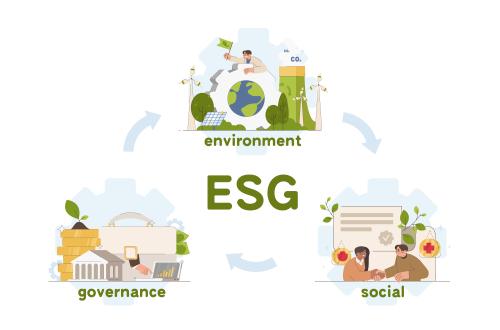
The increasingly tangible impacts of climate change, seen through extreme weather and unpredictable seasons, are pushing the mining industry to strengthen sustainability practices. Compliance with environmental standards is considered the primary foundation for maintaining sustainable mining operations.
AMMAN’s Head of Environment Department, Jorina, stated that the effects of climate change are now being felt directly, demanding that every sector, including mining, play a role in protecting the environment. “At AMMAN, this commitment starts from the most basic principle, namely compliance,” Jorina said in a written statement in Jakarta on Saturday (27/6/2026).
According to her, compliance is not merely interpreted as fulfilling regulations, but serves as the basis for building an environmental management system that encompasses planning, infrastructure, and human resource capacity building.
One implementation carried out is the reclamation of former mining land. By the end of 2025, AMMAN recorded having reclaimed 859.61 hectares of land, including the largest annual achievement at Batu Hijau in 2025 of 92.67 hectares. The reclamation process includes lengthy stages, from soil salvage and land arrangement to erosion control, planting, and maintenance.
Beyond the operational area, the company has also rehabilitated approximately 3,600 hectares of watersheds and supports social forestry and marine conservation programmes in Gili Balu. These efforts demonstrate that environmental management is not limited to the mine site.
In an effort to reduce emissions, AMMAN is developing lower-carbon energy sources. A solar power plant with a capacity of 26.8 MWp, operating since 2022, reportedly avoided approximately 34,794 tonnes of CO2e emissions throughout 2025. The company is also developing a 450 MW gas-based Combined Cycle Power Plant as part of its energy transition.
In the water management sector, AMMAN has built desalination facilities in Benete and Sejorong and is optimising water reuse to maintain security during the dry season.
Jorina noted that technology also plays an important role in environmental management, including the use of satellite imagery to monitor land condition changes more quickly and accurately. However, she stressed that the success of a system is not solely determined by technology, but also by human behaviour in carrying out daily operational practices.
“The environment is a shared responsibility. What makes a system work are people who have commitment and consistency,” Jorina said. According to her, efforts to protect the environment can start from simple steps such as using energy and water efficiently, reducing waste, and complying with work procedures. These steps are considered part of the industry’s response to the increasing pressure of climate change.