
Complete! Unique Facts About the 6-Day Funeral Procession of Ali Khamenei
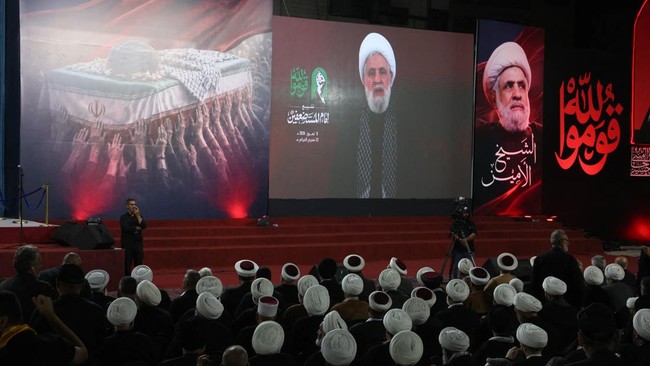
Iran held a lengthy funeral procession for the late Supreme Leader Ayatollah Ali Khamenei. The series of events took place over six days, spanning several cities from Tehran and Qom to Najaf and Karbala, before concluding in Mashhad. Khamenei’s coffin travelled approximately 2,600 kilometres, crossing five cities and two countries, from Iran to Iraq, before returning to Mashhad for burial. The procession was not merely a state mourning event; the chosen route carried strong religious and political significance, passing through several cities central to Shia tradition in both Iran and Iraq. Khamenei died on 28 February 2026 after a combined United States and Israeli strike hit his residence in Tehran. The funeral was only held several months later because the war made a large procession of this kind difficult to conduct. The funeral rites began on Friday, 3 July 2026, in Tehran and concluded on Thursday, 9 July 2026, in Mashhad. On 3 July 2026, the official state honours commenced in Tehran. The first day featured a state tribute attended by senior Iranian officials, military figures, clerics, and guests from other countries. The ceremony began with an official event in the capital, where senior officials, special guests, and foreign delegates paid their respects to Khamenei and met his close family. The state ceremony lasted from morning until evening local time. Khamenei’s body lay in repose in a large hall in Tehran, his coffin placed alongside those of several family members also killed in the same attack. This first day served as the opening of the long funeral rites. On 4-5 July 2026, the procession moved to a larger session with public tributes at the Imam Khomeini Grand Mosalla in Tehran. The public ceremony began around 6:00 a.m. local time, with mourners gathering from the morning to pay their final respects. The event lasted two days, until Sunday, with the Mosalla becoming the centre of national mourning. Mourners came in shifts while security forces and committees managed the flow of people in and out of the complex. A large stage was set up in the courtyard to hold Khamenei’s coffin and others, with concrete barriers and cooling systems installed to manage the crowd and heat. Khamenei’s coffin was placed on a tiered white podium in the grand prayer hall, adorned with his black turban, the Iranian flag, and symbols of mourning. On 6 July 2026, the main Tehran procession took place. The coffin was carried out of the Mosalla complex and paraded through the capital’s main streets, covering a route of about 10 kilometres from Imam Hossein Square to Azadi Square. The route passed through key areas of Tehran, drawing massive crowds. The day’s events included funeral prayers for Khamenei and his family members. The coffin was carried in an open convoy through the crowds, moving from east to west Tehran. Many mourners wore black, carrying Iranian flags, posters of Khamenei, and symbols of grief, while others bore flags and posters with messages of resistance. The procession route was altered due to the density of the crowd, shifting from Enghelab Street to Azadi Street. On 7 July 2026, the procession moved to Qom, one of Iran’s most important religious centres and a hub for Shia clerical education. The rites began at the Shrine of Hazrat Masoumeh and moved to Jamkaran Mosque, both sites of deep significance in Shia tradition. The transfer to Qom added a stronger religious message following the large procession in the capital. After the Qom events concluded, the coffin was moved to Iraq that night, arriving at Najaf International Airport and received in an official ceremony by senior Iraqi officials. On 8 July 2026, the procession entered Iraq, marking one of the most symbolic stages as the coffin was taken to the holy cities of Najaf and Karbala. In Najaf, the procession began around 6:00 a.m. local time, moving from the Kufa area towards Thawrat al-Ishreen Square near the Imam Ali Shrine complex.