
Competitiveness Key to Attracting Upstream Oil and Gas Investment
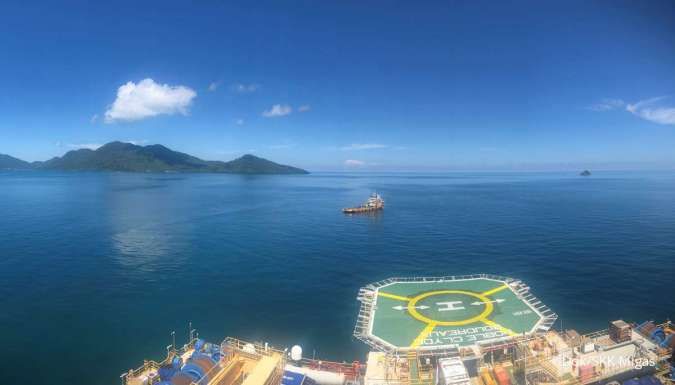
JAKARTA - Investment competitiveness is a challenge that the government must strengthen to encourage the exploration and development of oil and gas projects in Indonesia.
Pri Agung Rakhmanto, an oil and gas observer from Trisakti University and founder of the ReforMiner Institute, stated that while Indonesia possesses vast oil and gas resource potential, this potential must be supported by a competitive investment climate. He noted that investors consider not only underground risks but also various ‘above-ground’ risks.
He added that the speed at which the government and industry players execute projects is also a critical consideration for investors. A prolonged timeframe between resource discovery and the commencement of production (onstream) can negatively impact a project’s economic viability. “The longer the gap from discovery to onstream, the more negative the signal, which reduces the economic value of the investor’s project,” said Pri Agung.
Furthermore, competition for global capital is intensifying. Oil and gas projects in Indonesia must compete with those in various other countries to secure investment allocations from global energy companies. Pri Agung mentioned that several international oil companies, including Eni, Petronas, and Mubadala, still view Indonesia as an investment destination. However, he stressed that this interest must be followed by actual investment realisation and the acceleration of field projects.
“The success of investment policy cannot be measured solely by an increase in investment value; it must be reflected in more concrete indicators, particularly the increase in reserves and production,” he said.
Several strategic projects, such as Abadi Masela and North Hub/Geng North–Gehem, exploration activities by Production Sharing Contract (PSC) contractors, and opportunities for developing new oil and gas working areas, are part of the efforts to increase national oil and gas production.
Kathy Wu, bp Regional President for Asia Pacific, previously stated that competition for capital allocation at the global level is becoming increasingly fierce. Therefore, partnerships between the government and business players are vital factors in building investor confidence. “Projects in Indonesia must be truly competitive, regarding return on investment, risk, certainty of execution, and the assurance that the figures calculated on paper can actually be realised,” Kathy explained.
Similarly, Wade Floyd, President of ExxonMobil Indonesia, noted that ExxonMobil’s 128-year journey in Indonesia was built through partnership and collaboration, including the management of the Banyu Urip field in the Cepu Block. “Our long history is built on the basis of partnership and collaboration. In my view, that is one of the reasons for Indonesia’s current success,” said Wade.
Strengthening collaboration between the government, industry, investors, and stakeholders will be a primary focus of the FOREK Upstream Oil and Gas 2026 forum. The forum will discuss investment challenges and opportunities, the strengthening of policies and the investment ecosystem, as well as recommendations to enhance the competitiveness of Indonesia’s upstream oil and gas sector.
Investment competitiveness encompasses various aspects, ranging from fiscal policy, contract schemes, business processes, technology, and infrastructure, to market certainty and the speed of decision-making. Incentives are also expected to improve project economics, ultimately reflected in increased investment, reserves, production, lifting, and state revenue.
Source: jawawa.id (https://jawawa.id/newsitem/competitiveness-key-to-attracting-upstream-oil-and-gas-investment-1789725079)
Originally published by industri.kontan.co.id (https://industri.kontan.co.id/news/daya-saing-jadi-kunci-menggaet-investasi-hulu-migas), translated from Indonesian