
Competitive EV Landscape: Indonesia Must Act to Avoid Falling Behind
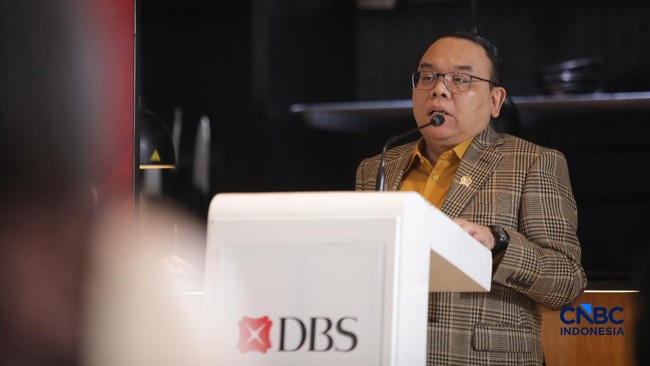
The Chairman of Commission VII of the Indonesian House of Representatives (DPR RI), Saleh Parta0f6naan Daulay, believes the electric vehicle (EV) industry is gaining significant momentum and has become a priority, not only for the DPR but also for President Prabowo. According to Saleh, President Prabowo envisions Indonesian-made vehicles, specifically electric cars, being exported to various countries.
“The electric vehicle business is a global trend. As a country with a large population, we are currently lagging far behind China and India, which also have large populations but are becoming increasingly competitive,” stated Saleh during an event titled “Building a Resilient Automotive Ecosystem Beyond EV Amid Global Supply Chain Shift,” organised by CNBC Indonesia in collaboration with DBS.
He noted that China is the leader in the EV industry, followed by India and the United States. Saleh believes Indonesia should aim for the fourth position, seizing the current momentum and opportunities.
“Within the current automotive industry, much can be achieved, including increasing global competitiveness. Furthermore, many of our citizens are working abroad in this industry. This position must be reclaimed so that these individuals can return to work in Indonesia, providing benefits amidst current economic and geopolitical tensions,” Saleh detailed.
Consequently, Saleh ensured that the DPR is playing a role in developing the EV business in Indonesia. He stated that the DPR is currently working on harmonising regulations to ensure fairness.
Saleh understands that for the industrial sector, it is vital to ensure that investment proceeds securely. Therefore, his party is developing regulations and rules to be adhered to by all Indonesians.
“The DPR will conduct studies to serve as the basis for new legislation regarding EVs, which will act as a reference for the development of electric vehicles in Indonesia,” he concluded.
Meanwhile, the Director of the Institutional Banking Group at DBS Bank Indonesia, Antonius Sehonormin, noted that the domestic automotive industry is currently facing various shifts, both in terms of technology and global supply chains.
“We see a transition in the automotive industry at all levels; there are factors influencing electrification, affordability, economic productivity, utilisation, and operational efficiency,” said Antonius.
Antonius explained that regarding competitiveness, DBS has noted at least three major trends shaping the future direction of the automotive industry: first, vehicle electrification; second, supply chain localisation; and third, the utilisation of artificial intelligence (AI), data, and technology.
He noted that production capacity is no longer the sole determinant of an automotive company’s competitiveness. Other factors, such as technological adaptation and operational efficiency, are becoming increasingly decisive for players in this industry.
“From the players we observe, they must demonstrate adaptability and adjustment to the factors that will determine future competitiveness,” Antonius explained.
Antonius highlighted Indonesia’s advantage in terms of its rich upstream resources, such as nickel and copper, which serve as essential capital for the national automotive industry’s downstreaming process. However, he emphasised the importance of building an ecosystem that covers the entire end-to-end value chain, ranging from advanced manufacturing to the battery sector, including energy storage, battery production, and recycling.
“For all of this, we see three necessities: there must be investment, capability, and ecosystem development,” he stated.
Furthermore, DBS observes a shift in supply chain management approaches in the automotive industry, moving from the “just-in-time” concept to what Antonius calls “just-in-scale.” This approach is described as more anticipatory and oriented towards optimisation to build resilience in inventory management, supply chains, and local manufacturing capacity.
This shift, according to Antonius, also drives the importance of mature capital allocation, for both short-term and long-term needs, to support the investment and working capital requirements of companies within the automotive sector.