
Competing Solutions at Gunung Padang Cultural Village
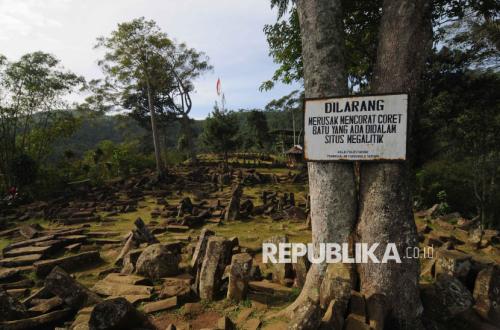
Gunung Padang Cultural Village in Cianjur, West Java, is renowned as a top cultural destination that made it to the top 50 of the 2022 Indonesian Tourism Village Awards (ADWI). The village, known for its natural scenery and cool climate, centres around a megalithic site containing the largest prehistoric stepped pyramid in Southeast Asia. The site is believed to represent human civilisation dating back 3,000 years. Geographically, Gunung Padang Cultural Village is situated in hilly and mountainous terrain, dominated by plantations, natural areas, and Ciwung Waterfall. Located 30.8 kilometres from Cianjur’s city centre, the community continues to uphold traditions of mutual assistance, local wisdom, and harmonious coexistence with nature. Beyond agriculture and tourism, villagers are developing creative economy initiatives and local SME products as tourist numbers rise. The village has been selected as the final venue for the Genera-Z Berbakti programme, where teams from IPB University and Padjadjaran University will compete and test their ideas to address challenges facing the cultural village. ‘BCA is committed to ensuring the Genera-Z Berbakti programme serves as a strategic bridge between students and communities, not merely a competition of ideas. We hope the teams given the opportunity to implement their ideas at Gunung Padang Cultural Village will contribute meaningful solutions, implementing them to advance social welfare, health, and environmental sustainability. Through community service at BCA’s designated village, the finalists’ innovations can deliver tangible impacts that balance cultural heritage preservation with improved local livelihoods,’ said BCA’s EVP of Corporate Communications and Social Responsibility, Hera F. Haryn, in a written statement. Despite its attractions and potential, Gunung Padang Cultural Village faces several challenges. These include suboptimal Community Health Centre services, high rates of Acute Respiratory Infections (ARI), pneumonia cases among infants, some residents lacking toilets and resorting to open defecation in rivers, inadequate waste management, unsustainable tree-planting programmes, lack of tourism waste management, no village library or reading garden, need for SME marketing training, and no facilities to teach traditional musical instruments (Karinding, Kacapi Suling, Gendang Penca) to younger generations. With its remarkable historical potential and highland natural beauty, Gunung Padang Cultural Village has been chosen as a site for implementing the 2026 Genera-Z Berbakti programme. Students from Padjadjaran University (UNPAD) and IPB University are competing to contribute and collaborate with the local community. Both teams selected waste management as a key issue in their proposals for the 2026 Genera-Z Berbakti programme. However, the Padjadjaran University and IPB University teams proposed different tactics to address waste management challenges in the village. IPB University’s Sabilulungan Lestari team proposed: - SIMPONIK: Waste sorting education, installation of Loseda systems and shredder machines, and waste-to-wallet implementation. - KEMBARA: Education on cultivating medicinal plants (TOGA) and agroforestry, awareness campaigns and training for energy bar production, and agroforestry modelling support for farmers. - SIANJUR: Installation and education on air quality and weather monitoring stations. - SADULUR RAHAYU: Free health checks for residents. Meanwhile, Padjadjaran University’s Mega Lestari team proposed: - Eco-sanitasi: Revitalising 10 bioseptic tank-based toilets. - Waste & Circular Economy: Processing organic waste into animal feed and transforming inorganic waste into unique Gunung Padang souvenirs. - Youth Empowerment & Preservation of Local Wisdom: Training 40 youths to establish eco-tour guiding teams and eco-cultural activities.