
Comparison of US Patriot and Russian S-400 Air Defence Systems
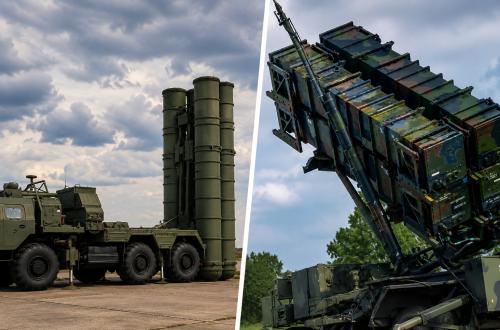
In the world of modern air defence, few names possess as much prestige as the United States-made MIM-104 Patriot and the Russian-made S-400 Triumf. Both are designed to protect territories from threats ranging from fighter jets, cruise missiles, and ballistic missiles to drones. However, despite frequent comparisons, the two are built upon very different philosophies.
The Patriot was developed as a “precision shield” to protect high-value targets such as capitals, military bases, command centres, and strategic infrastructure. Conversely, the S-400 is designed as a “defence bubble” capable of controlling vast areas of airspace and preventing enemy aircraft from approaching from hundreds of kilometres away.
Therefore, comparing the two solely based on missile range figures is often misleading. What determines effectiveness is not just how far a missile can fly, but whether the system is truly capable of detecting, tracking, and destroying threats under actual combat conditions.
Patriot: The King of Ballistic Missile Interception
The greatest strength of the Patriot lies in its ability to intercept ballistic missiles. Since the Gulf War, the system has continuously evolved into one of the most mature missile defence systems in the world.
The latest PAC-3 Missile Segment Enhancement (MSE) variant utilises “hit-to-kill” technology, which destroys targets through direct impact rather than relying on fragmentation explosions. This approach provides a much higher level of accuracy when facing high-speed ballistic missiles.
Another advantage of the Patriot is its integration with the air defence networks of the United States and NATO. The system can share real-time data with radars, early warning aircraft, satellites, and other command systems through an integrated defence network. As a result, the Patriot does not operate in isolation but serves as part of a connected defence ecosystem.
Most importantly, the Patriot has been tested numerous times in real combat. The system has been deployed since the Gulf War, the Iraq conflict, Saudi Arabia, and the war in Ukraine. Although its performance faced criticism during its early deployment, decades of modernisation have allowed the Patriot to continuously evolve, enabling it to face ballistic missiles, cruise missiles, drones, and various modern aerial threats.
These capabilities have also been recognised by United States defence analysts. Tom Karako, Director of the Missile Defence Project at the Center for Strategic and International Studies (CSIS), stated that combat experience in Ukraine shows the Patriot has proven its ability to face highly complex threats, including Russian ballistic and hypersonic missiles. This statement was reported by Defence News on Tuesday, 9 April 2024, while reviewing the effectiveness of the Patriot against Russian missile attacks.
S-400: The Master of Long-Range Airspace
If the Patriot excels in point defence, the S-400 is built to dominate much larger areas of airspace.
The Russian-made system is capable of using several types of missiles simultaneously, ranging from short-range missiles to the 40N6 missile, which is officially claimed to have a maximum range of up to 400 kilometres against certain aerial targets. This layered approach allows operators to select the missile most suitable for the specific type of threat encountered.
Source: jawawa.id (https://jawawa.id/newsitem/comparison-of-us-patriot-and-russian-s-400-air-defence-systems-1783047107)
Originally published by Republika (https://news.republika.co.id/berita/thktqe451/patriot-amerika-vs-s400-rusia-duel-dua-raksasa-pertahanan-udara-mana-yang-lebih-unggul), translated from Indonesian