
Comparing the Foreign Exchange Reserves of Global Powers: US, China, and Russia
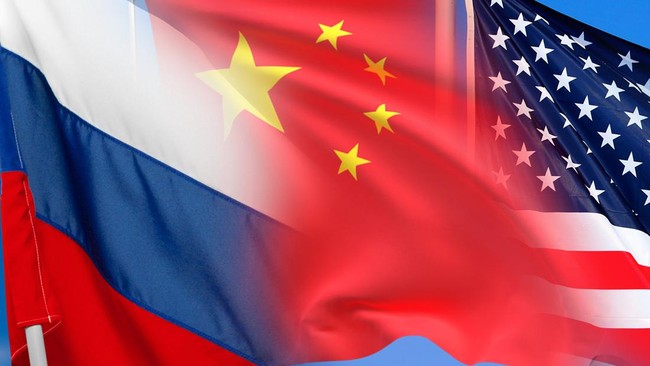
Nine months into the uncertain period of 2026, global tensions remain high. The conflict in the Middle East between the United States and Iran shows no signs of ending, while the war between Russia and Ukraine in Europe continues to intensify.
These ongoing battles incur heavy costs beyond military expenditure. Supply disruptions in the Middle East have driven up global oil prices, increased shipping costs, and made imports more expensive for many nations.
These pressures are felt differently by the US, China, and Russia. Washington must fund its military operations in the Middle East, Moscow continues to bear the costs of the war in Ukraine, and Beijing faces rising energy costs as one of the world’s largest oil importers. All three require significant funding to navigate these upheavals. In such conditions, foreign exchange reserves serve as a vital buffer to maintain economic stability.
Foreign exchange reserves are used to pay for imports, meet foreign obligations, and maintain currency stability during financial market volatility. However, the total size of reserves does not necessarily indicate the amount of immediately available funds. The composition of assets, changes in gold prices, exchange rate movements, and international sanctions all determine the true strength of these reserves, as seen in the movements of US, Chinese, and Russian reserves throughout 2026.
China Gradually Bolsters Reserves
China holds the largest foreign exchange reserves among the three nations. In August 2026, its reserves reached US$3.438 trillion, an increase of US$19.55 billion or 0.57% compared to July. Compared to the end of 2025, when reserves stood at US$3.358 trillion, China’s reserves have increased by approximately US$80.53 billion, or 2.4%.
The journey has not been entirely smooth. China’s reserves rose to US$3.428 trillion in February but subsequently fell to US$3.342 trillion in March, marking its lowest point in 2026. This decline occurred as the US-Iran conflict began to shake global financial markets, causing the US dollar to strengthen, the yuan to face pressure, and various financial assets to experience sharp fluctuations.
The State Administration of Foreign Exchange (SAFE) explained that changes in China’s reserves stem not only from the purchase or sale of foreign currencies, but also from exchange rate movements and changes in asset prices when valued in US dollars.
Following the March decline, China’s reserves rose again to US$3.411 trillion in April and reached US$3.442 trillion in May. The value dipped in June before increasing again over the following two months. Behind this increase, Beijing has also been restructuring its assets. China’s holdings of US Treasury bonds fell to US$618 billion in July 2026, the lowest level since 2008. Simultaneously, the People’s Bank of China has continued to increase its gold reserves for 22 consecutive months. Gold holdings rose from 74.19 million troy ounces in January to 76.73 million troy ounces in August. This addition of 2.54 million troy ounces is equivalent to approximately 79 tonnes of gold, indicating that China is maintaining large reserves while increasing its share of assets outside of US Treasury bonds.
Russia’s Reserves Fluctuate Following Gold Prices
Russia’s international reserves have experienced much sharper movements. The value reached US$833.57 billion in January 2026, the highest point in the first eight months of the year. However, this position continued to shrink as the war with Ukraine intensified. Russian reserves fell to US$809.31 billion in February and plummeted to US$748.98 billion in March.
After a brief increase in April, Russian reserves declined for the following three months, hitting US$720.35 billion in July—a drop of more than US$113 billion compared to January. The trend reversed in August, with Russian reserves surging by US$48.67 billion, or 6.76%, to US$769.02 billion in just one month.
This significant increase superficially suggests that Russia is accumulating reserves. However, most of the surge originated from the rising value of gold held within the Central Bank of Russia’s reserves. The value of Russia’s gold component rose from US$292.85 billion in July to US$334.48 billion in August. This increase of US$40.63 billion accounted for approximately 83.5% of the total growth in reserves for that month. Meanwhile, non-gold reserves only grew by about US$8.05 billion. The rise in global gold prices boosted the value of Russia’s reserves even though the actual volume of foreign currency did not increase by the total amount shown.
Compared to the end of 2025, Russia’s reserves have still increased by US$14.17 billion, or 1.88%, though the position remains 7.74% lower than in January 2026. Furthermore, the size of these reserves does not fully reflect the funds Russia can immediately utilise, as a portion of the Central Bank of Russia’s assets remains frozen by Western nations following the 2022 invasion of Ukraine. While these frozen assets are still recorded in Russia’s international reserves, Moscow cannot access all of them. Disputes over these funds continue as European nations seek ways to use the interest earned to assist Ukraine.
US Reserves are Small, but the Dollar Remains the Primary Weapon
Unlike China and Russia, US foreign exchange reserves are relatively small and have not changed significantly throughout 2026. According to data from the U.S. Department of the Treasury, the position has fluctuated between US$37.72 billion and US$39.17 billion. Based on interim reports up to 28 August 2026, US foreign exchange reserves were recorded at US$38.24 billion, a decrease of approximately US$0.36 billion, or 0.92%, compared to the end of 2025. The reserves reached US$39.17 billion in January before declining to US$3…
Source: jawawa.id (https://jawawa.id/newsitem/comparing-the-foreign-exchange-reserves-of-global-powers-us-china-and-russia-1789984408)
Originally published by CNBC Indonesia (https://www.cnbcindonesia.com/research/20260921104715-128-769482/adu-kuat-cadangan-devisa-penguasa-dunia-as-china-rusia-siapa-menang), translated from Indonesian