
Companies with Positive Work Cultures Increasingly Sought After in Southeast Asia
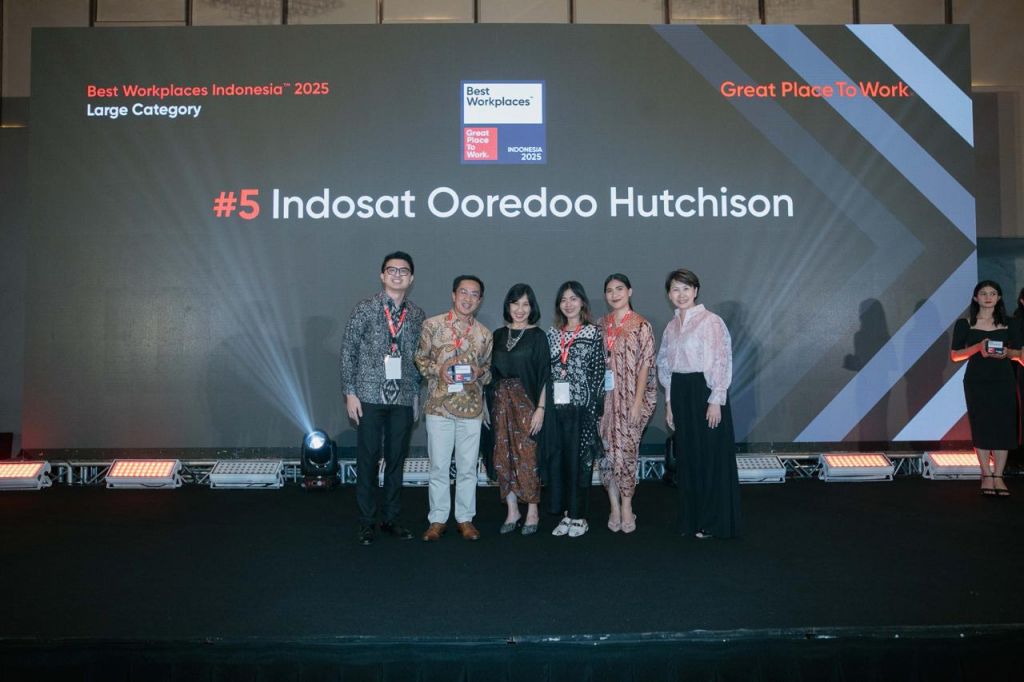
In the midst of an increasingly dynamic world of work, companies are now not only required to pursue business growth but also to create a healthy working environment for their employees. This is the focus of the inaugural Fortune 100 Best Companies to Work For™ Southeast Asia ranking released by Great Place To Work® (GPTW) ASEAN & ANZ in collaboration with Fortune magazine.
The ranking involved more than 550,000 employees in ten Southeast Asian countries, with over 1.3 million workers asked to rate levels of trust, fairness, and support in their workplaces through GPTW’s confidential Trust Index™ Survey.
SVP Head of People & Culture at Indosat, Lisa Qonita, revealed that the company’s mental health support programme was initially not widely taken up due to stigma in the work environment.
“We called it ‘mental health support’; at that time, participation was limited due to stigma. Once we positioned it as an instrument for improving performance and energy management, employee participation increased,” said Lisa in a press statement quoted on Wednesday, 13 May 2026.
The phenomenon of work productivity in Indonesia is also a concern. Surveys show that the rate of presenteeism—when employees are physically present at work but not fully focused—is around 41.2 per cent, far higher than absenteeism at 7.69 per cent.
According to Lisa, a cultural approach is a key factor in building welfare programmes in Southeast Asia. Many employees feel more comfortable participating in programmes linked to performance improvement rather than those implying they cannot handle work pressure.
She noted that the company provides open town hall forums, dedicated wellness platforms, and various cross-functional activities to maintain cohesion during the restructuring process.
“We place employees at the centre of the business. Investments in welfare are tailored to their needs, and we monitor their impact regularly on business performance and HR stability,” added Lisa.
Managing Director of Great Place To Work® ASEAN and ANZ, Evelyn Kwek, assesses that companies that successfully make the Best Workplaces™ list are not merely those with the largest welfare budgets, but those able to build psychological safety for their employees.
“Even expensive welfare programmes will not be effective if employees do not feel safe using them. Our data shows that the key lies in building an open culture. The key is leaders who truly listen,” said Kwek.
This ranking also serves as a reminder that investments in employee welfare not only impact work comfort but also strengthen company stability and business sustainability in the future.