
Commuter Rail Becomes Increasingly Crowded, Daily Passengers Surpass 1.1 Million
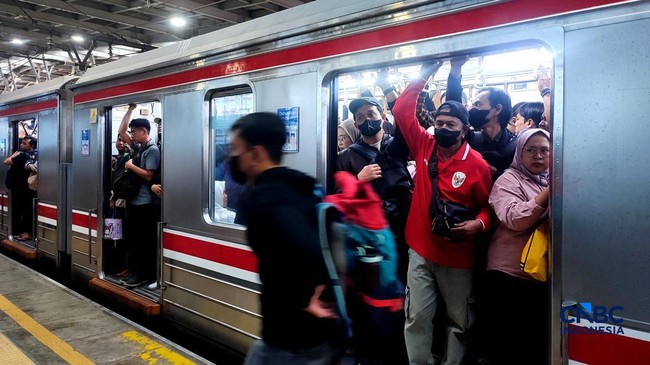
The number of passengers on the Jabodetabek Commuter Line (KRL) continues to surge, now surpassing an average of 1.1 million people per day. This surge has made the need for increased train capacity increasingly urgent.
The President Director of PT Kereta Api Indonesia (Persero), or KAI, Bobby Rasyidin, revealed that the growth in KRL passenger numbers during the first half of 2026 reached 11.5% compared to the same period the previous year. This figure is significantly higher than previous growth projections, which were only around 3%-4%.
“This is an anomaly when we compare 2025 to 2026, which is 11.5%. This is for the first semester of the year. The average daily passengers, which were previously below 1 million, have now reached 1.1 million,” Bobby stated during a hearing with Commission VI of the Indonesian House of Representatives (DPR RI) on Wednesday (23/09/26).
The surge is also evident at several stations where passenger volumes have increased significantly. At Bogor Station, for instance, the daily passenger count, which was previously below 100,000, has now reached approximately 160,000 people per day.
A similar situation is occurring on the LRT Jabodebek. Daily passenger numbers, which were previously below 90,000, have now reached approximately 138,000.
“This means that for commuter transport, trains are indeed becoming the primary choice at this time,” he said.
The increase in users has also driven up the demand for KRL rolling stock. For 2026, KAI projects a requirement of 104 trainsets, based on a conservative assumption of 1 million passengers per day.
This calculation includes the need for 89 trainsets to operate 1,065 KRL trips per day. Additionally, KAI has factored in a reserve of approximately 3% and maintenance requirements of around 16%.
The issue is that the number of available rolling stock at the beginning of 2026 only reached 102 trainsets. At the same time, several ageing trains must begin to be decommissioned. KAI revealed that the average age of the current fleet has reached over 41 years, with some trainsets dating back to the 1970s.
This situation means that the need for a fleet is not only related to increasing capacity to accommodate passenger growth but also to replacing the ageing trains.
In the long term, the demand for the Jabodetabek KRL fleet is projected to continue rising. By 2040, KAI estimates that approximately 200 trainsets will be required to anticipate daily passenger growth to around 2.5–3 million people, while simultaneously replacing the old fleet.