
Commuter Line Serves 178 Million Trips, Transporting the Breadwinners of Families
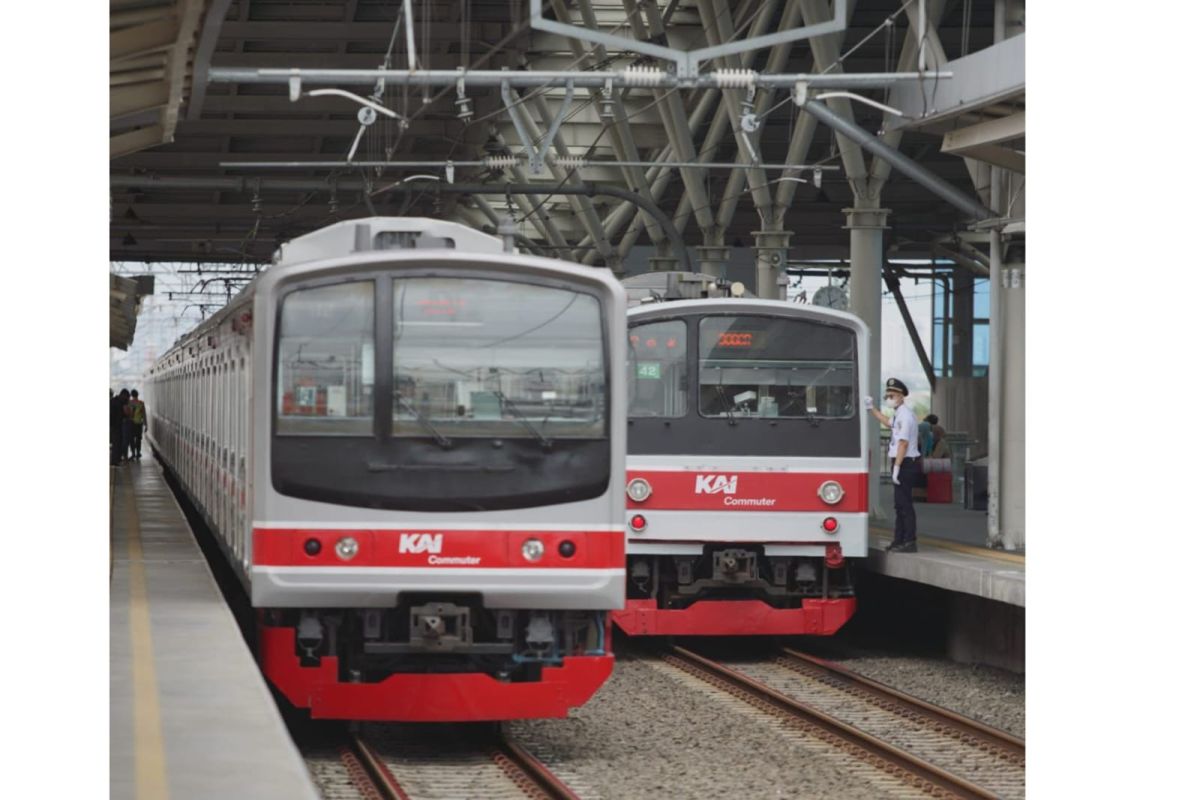
Jakarta (ANTARA) - The morning is still dark when many residents of the Jabodetabek area begin to leave their homes. Some bid farewell to sleeping children, prepare meals before departing, or hurry towards stations to arrive at work on time. These individuals include workers, traders, public service personnel, entrepreneurs, and students—the breadwinners of families who travel daily from satellite towns to various activity centres. For many, the Commuter Line is an essential part of their efforts to earn a living and meet family needs.
PT Kereta Api Indonesia (Persio) recorded that the Jabodetabek Commuter Line served 178,001,308 trips throughout January–June 2026. This figure demonstrates how closely urban rail services are intertwined with the lives of the community and the economic activities of the metropolitan region. Anne Purba, Vice President of Corporate Communication at KAI, stated that travel patterns during the first semester of 2026 showed a high demand for services on weekdays. The average volume of Commuter Line users in Jabodetabek from Monday to Friday reached approximately 1.05 million trips per day, which is 29.3% higher than the weekend average of around 813,600 trips per day.
“Within every journey, there are hopes brought from home. There are parents leaving for work to fund their children’s schooling, workers chasing time to maintain their income, and traders and entrepreneurs whose businesses depend on smooth travel. They are the breadwinners of families who entrust their daily journeys to the Commuter Line,” said Anne. Of all trips during the first semester of 2026, approximately 135.7 million trips, or 76.2%, occurred on weekdays. Peak congestion occurs primarily in the morning and evening as people commute to work and return home.
For passengers, crowded journeys are more than just operational statistics. Within the crowded carriages are people standing after a full day of work, parents eager to return to their children, and workers hoping to arrive home safely to continue their routines the next day. “When customers crowd during peak hours, we do not just see high travel demand. We see the breadwinners of families striving to arrive at work on time and return home with the fruits of their labour. Therefore, increasing capacity is a necessity that must be addressed collectively,” Anne added.
The high volume of weekday travel underscores the strategic position of the Commuter Line in maintaining productivity in Jabodetabek. Smooth services are closely linked to worker punctuality, the continuity of business activities, access to education and public services, and the economic circulation in Jakarta and its surrounding areas. According to Anne, this development must be followed by a gradual strengthening of capacity through the addition of rolling stock, increased capacity for lines and stations, reinforcement of signalling and electrical systems, and the optimisation of operational patterns.
“Government support for the addition of rolling stock and the strengthening of infrastructure is very significant for the community. Every increase in capacity will provide a more decent travel space, reduce congestion, and offer better comfort for the millions of customers who rely on the Commuter Line for their daily mobility,” said Anne.
Over the last five years, the volume of Jabodetabek Commuter Line users has shown consistent recovery. User numbers were recorded at 168 million trips in 2021, increasing to 252 million in 2022, 301 million in 2023, 328.2 million in 2024, and 349.3 million in 2025. Entering the first semester of 2026, the volume has already reached 178 million trips. Service strengthening has also been accompanied by the expansion of the service network. The number of Jabodetabek Commuter Line stations increased from 71 stations in 2015 to 85 stations in 2026, including the introduction of Jatake Station and Jakarta International Stadium Station in 2026, expanding rail-based access to residential areas and new activity centres.
On the operational side, the number of KRL trips increased from 881 trips per day in 2015 to 1,063 trips per day in 2025, an increase of approximately 21%. This increase in trips is accompanied by evaluations of operational patterns to maintain safety, punctuality, and the smoothness of passenger mobility. Throughout 2025, the Bogor line served approximately 155 million trips, followed by the Cikarang line with 85.9 million, the Rangkasbitung line with 77.6 million, the Tangerang line with 27.3 million, and the Tanjung Priok line with approximately 3.5 million. This data illustrates the massive flow of people from satellite areas to work centres in Jakarta and vice versa.
Future development of the Jabodetabek Commuter Line is directed towards strengthening capacity, improving intermodal integration, developing digital services, and supporting transit-oriented urban development. These steps require collaboration between KAI, KAI Commuter, the Government, and all stakeholders. “For some, travelling on the Commuter Line might seem like a routine. However, for millions of breadwinners, that journey is part of the struggle to keep the household running, to fund education, and to bring hope back home. Every increase in capacity means a more decent journey for those who work every day for the people they love,” Anne concluded.