
Community Funds Potential to Reach Rp 1,200 Trillion Per Year
The potential for community funds in Indonesia, derived from zakat, infaq, alms, waqf, and other religious social funding sources, is estimated to reach Rp 1,200 trillion per year. This potential is viewed as a significant instrument for economic empowerment and poverty alleviation.
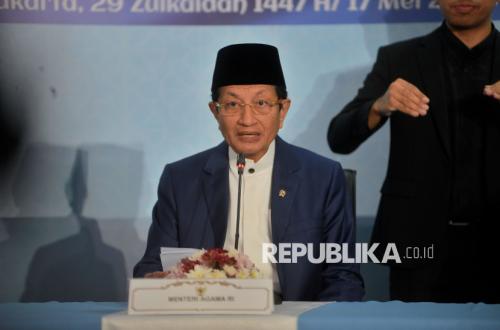
The General Chair of the Indonesian Association of Islamic Economic Experts (IAEI), Professor Nasaruddin Umar, stated that these community funds are currently scattered across various instruments. Consequently, the IAEI is encouraging the formation of a Community Fund Empowerment Agency (BPDO) to consolidate and empower this potential.
“According to the calculations presented, the overall potential can reach at least Rp 1,200 trillion per year,” noted the IAEI materials during the National Discussion and Expert Council Forum in Jakarta on Tuesday (29/09/2026).
Nasaruddin emphasised that the formation of the BPDO is not merely intended to collect community funds. These funds must be managed to deliver a greater economic impact on society.
“We are not just talking about collecting community funds. What we need is the empowerment of community funds. Therefore, I am more inclined to use the term Community Fund Empowerment Agency, or BPDO,” said Nasaruddin.
He added that strengthening community funds can be linked to the agenda of alleviating poverty. This potential encompasses zakat, infaq, alms, waqf, and other religious social funding sources.
On the other hand, the Vice General Chair of IAEI, Professor Andi Faisal Bakti, stated that the resilience of the Islamic economy cannot be built solely through the growth of assets and the Sharia financial industry. Integration across various sectors is required so that the Islamic economy can withstand shocks while providing real benefits to the community.
“The resilience of the Islamic economy cannot be built through Islamic banks alone. We need three simultaneous layers: commercial strength to grow, social strength to protect the community during crises, and moral strength to ensure the economy operates fairly,” Andi said during the forum in Jakarta.
Andi encouraged the integration of five ecosystems to strengthen Islamic economic resilience: value chains, Sharia finance, social finance, the digital economy, and the green economy.
According to Andi, these five ecosystems need to be connected within a single economic architecture. For example, MSMEs could obtain zakat funds for empowerment, utilise waqf assets as business locations, access Sharia financing for expansion, use digital-based halal certification, and develop businesses using more environmentally friendly energy sources.
He also urged a shift in the orientation of the Islamic economy from mere asset and transaction growth towards more tangible economic impacts. Formal Sharia compliance, according to him, needs to be translated into benefits for the public.
Furthermore, Andi assessed that Indonesia needs to shift its position from being a country with a large Muslim consumer base to becoming a force for production and innovation. This transformation requires the integration of human resources, financing, technology, industry, research, standardisation, and markets.