
Communications Minister: Residents Need Not Submit Data to Government Repeatedly
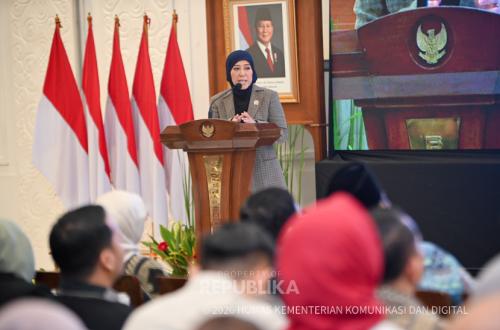
JAKARTA — Residents will no longer need to repeatedly submit data and administrative documents to various government agencies to access public services. The move is intended to make the bureaucracy more efficient and services easier for everyone to obtain.
Through implementation of the One Data Indonesia Law (UU SDI), the government is strengthening data links between ministries and agencies so that information already available and verified can lawfully be reused by institutions that need it. The integrated policy is expected to cut through red tape.
Communications and Digital Minister Meutya Hafid said data connectivity was key to delivering more efficient public services while reducing the administrative burden on the public. The government is continuing its efforts to optimise the integration of information systems across sectors.
The Ministry of Communication and Digital (Kemkomdigi) is responsible for ensuring that government electronic systems can connect with one another, enabling data to be exchanged and used effectively across institutions. This strategic role is a key foundation of the national digital transformation.
“At Kemkomdigi, our main task is connectivity. Our job is to link data so that information that is available and verified can lawfully be reused by the institutions that need it,” Meutya said at a briefing on the One Data Indonesia Law at the National Development Planning Agency (Bappenas) office in Jakarta on Thursday (5 November 2026).
Meutya said that administrative processes requiring people to visit multiple locations and submit their data repeatedly could consume considerable time and effort. She said the arrangements were inefficient and often prompted complaints from the public.
With integrated data governance, the government can use information already on file instead of continually asking people to repeat the same administrative procedures. The policy is expected to significantly reduce the time needed to process documents.
“This means people will no longer have to repeat administrative processes and visit so many places. They can put the time and effort they save, and the reduced administrative burden, towards more productive activities,” Meutya said.
To achieve this, the One Data Indonesia Law makes interoperability a key requirement. This technical principle is essential to ensuring smooth integration between institutions.
Interoperability is the ability of different electronic systems to connect and exchange data using common standards. Under this mechanism, one institution’s data can be used by another in accordance with its authority and applicable rules.
Meutya said data exchanges between ministries and agencies required consistent standards, including common definitions, metadata rules, reference codes, and security and access controls. Such consistency helps ensure the security of shared information.
The use of data must also be traceable so that every instance can be held legally accountable. The government regards accountability as a serious priority.
“Without standardisation among ministries and agencies for data exchange, interoperability cannot work properly. That is why common standards are so important,” Meutya said.
Kemkomdigi is supporting this effort by developing the Government Service Bus (SPLP), backed by the National Data Centre (PDN) infrastructure and the Government Intranet Network (JIP). This infrastructure is being prepared to handle a surge in digital data exchanges.
Together, these systems provide the digital foundations for connecting government electronic systems and enabling integrated data exchange between institutions. Their combined infrastructure is intended to improve bureaucratic efficiency.
Meutya stressed that technological development must go hand in hand with consistent regulations in practice. Legal compliance is an important pillar in maintaining a secure digital ecosystem.
Implementation of the One Data Indonesia Law needs to complement the Electronic Information and Transactions Law (UU ITE), the Personal Data Protection Law (UU PDP) and other sectoral regulations. This comprehensive legal framework is intended to prevent potential misuse of data.
The laws must align so that every institution understands its access rights, the purposes for which data may be used, and the limits of its authority and responsibilities. A clear division of duties will help prevent overlapping mandates.
At the same time, easier data exchange must not come at the expense of data sovereignty or the public’s privacy. Protecting citizens’ security remains a priority for the state.
Source: jawawa.id (https://jawawa.id/newsitem/communications-minister-residents-need-not-submit-data-to-government-repeatedly-1793955084)
Originally published by Republika (https://news.republika.co.id/berita/to2lsv370/menkomdigi-warga-tak-perlu-berulang-kali-serahkan-data-ke-pemerintah), translated from Indonesian