
Common Misconceptions: Hotel Star Rating Criteria from 1 to 5 Stars
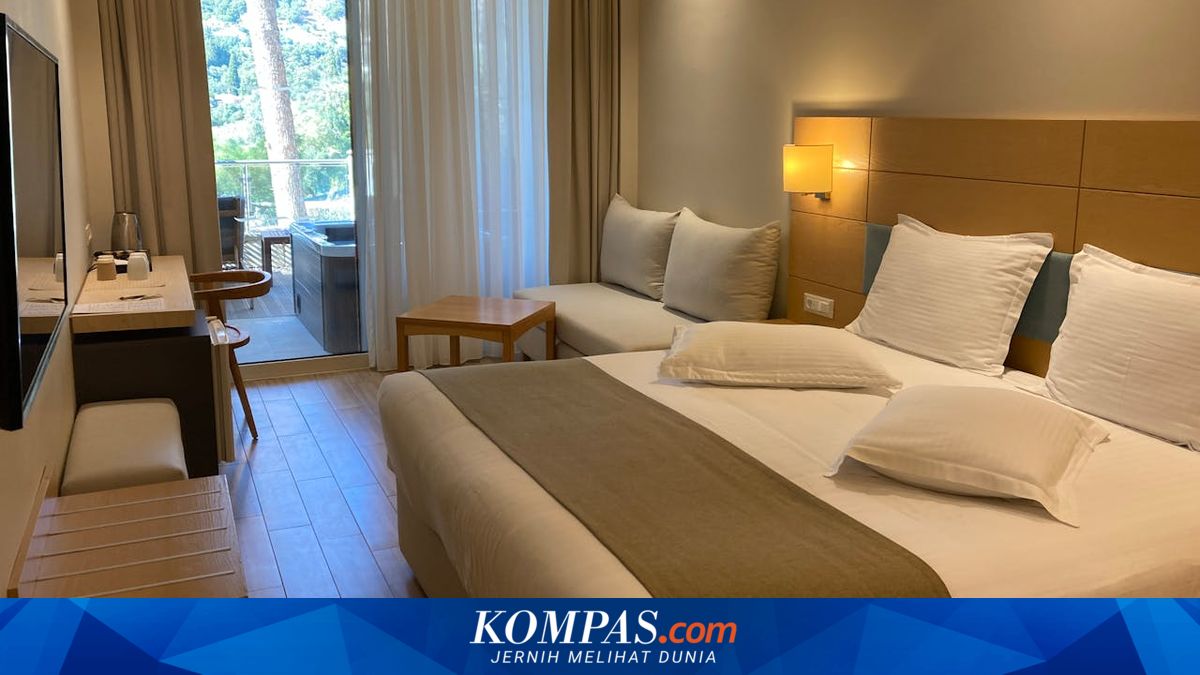
JAKARTA, KOMPAS.com – The primary difference between one- and five-star hotels lies in the completeness of facilities and services provided to guests.
‘Star-rated hotels have criteria with specific facility standards that must be provided,’ said property expert and Deputy Chairman of the Indonesian Real Estate Association (REI) Bambang Ekajaya to Kompas.com, quoted on Sunday, 31 May 2026.
This is also outlined in Ministry of Tourism and Creative Economy Regulation No. PM.53/HM.001/MPEK/2013 concerning Hotel Business Standards.
Two-star hotels offer additional facilities such as meeting rooms, laundry services for guests, and building safety systems, including emergency exits for multi-storey buildings.
This category also begins implementing workplace safety and health management for a certain number of employees.
Three-star hotels provide more comprehensive facilities, including restaurants with diverse services, room service, sports or recreational facilities, business services, and internet access.
Four-star hotels feature broader amenities, such as business centres, retail areas, banquet halls, energy-efficient rooms, and security equipment like smoke detectors and sprinklers.
In terms of services, these hotels typically have duty managers, guest relations staff, and specialised services for guests with specific needs.
At the highest level, five-star hotels offer the most extensive facilities and services with the highest standards in product, service, and management. They include various room types, including suites, more comprehensive room service, recreational facilities, meeting rooms, and integrated hotel management systems.
Hotel classification is determined through assessments of basic requirements, absolute criteria, and non-absolute criteria.
Assessment results are then converted into specific value ranges to determine the hotel’s classification.
Beyond facilities and services, hotel classifications also differ based on management systems. The higher the hotel class, the more complex the organisational structure and management systems implemented.
Three- to five-star hotels are required to have standard operating procedures (SOPs), hotel management information systems, human resource development programmes, and corporate social responsibility initiatives.
Hotel classification assessments are conducted only after all basic requirements are met, including business legality, building functionality, health clearance, and water quality.
If a hotel does not meet the minimum score for a certain class, management is given time to make improvements. If improvements are not made, the hotel may be downgraded to a lower classification.