
Committee II of DPD RI Supports Ministry of Agriculture in Strengthening AI to Improve Livestock Genetic Quality
Jakarta (ANTARA) - Committee II of the DPD RI supports the strengthening of artificial insemination (AI) by the Ministry of Agriculture to improve livestock genetic quality, boost farmer productivity, and enhance sustainable national food security through reproductive services.
“Artificial insemination is a strategic issue that must be monitored collectively because it directly relates to national food security,” said the Chair of Committee II of the DPD RI from East Nusa Tenggara (NTT), Angelius Wake Kako, or Angelo as he is commonly known, in a statement received in Jakarta on Sunday.
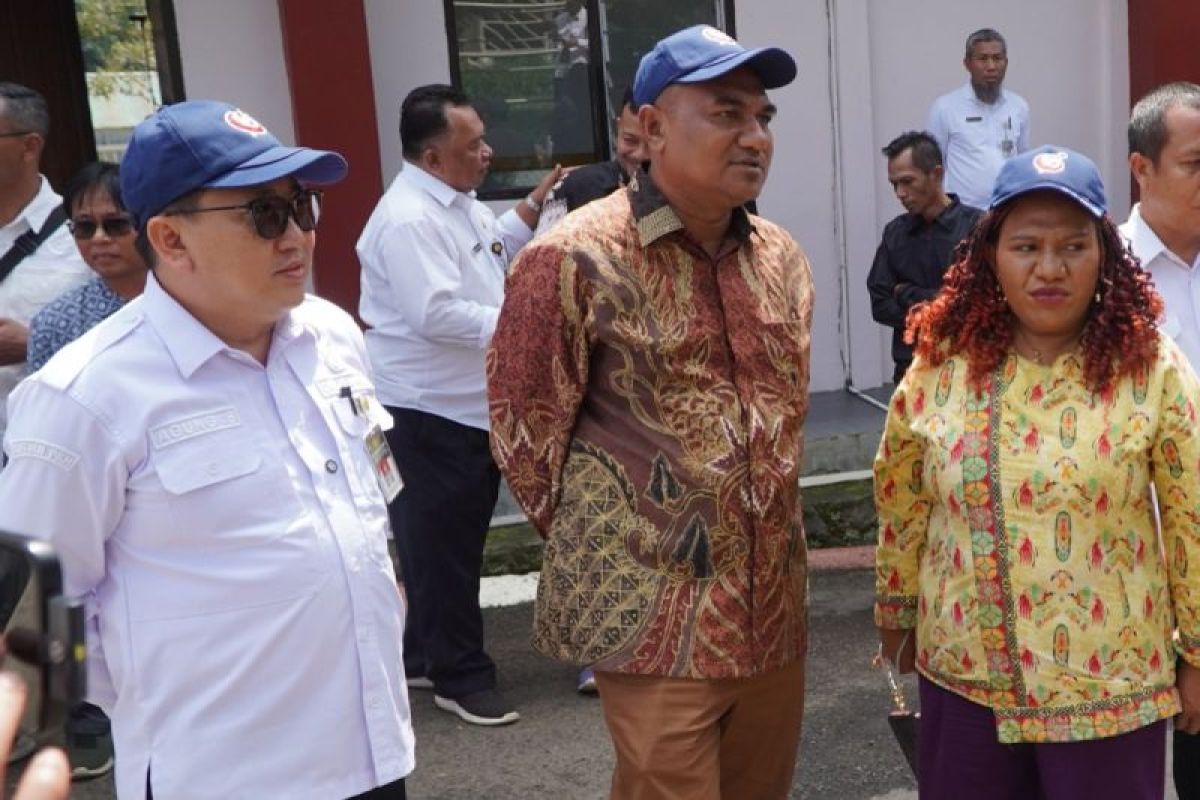
He emphasised this during a working visit to the Lembang Artificial Insemination Centre (BIB) in West Java. Angelo also participated in training for artificial insemination technicians (inseminators).
As the head of Committee II of the DPD RI, which oversees natural resources and other economic resources, Angelo asserted that artificial insemination is a strategic issue that must be monitored collectively because it directly relates to national food security.
The Lembang Artificial Insemination Centre is a technical implementing unit under the Ministry of Agriculture that plays a strategic role in providing high-quality frozen semen (sperm) and developing livestock reproductive technology.
“However, in its implementation, there are still challenges related to the low adoption rate of technology by farmers, limited capacity of human resources or inseminators, and distribution obstacles for frozen semen to various regions in Indonesia,” said Angelo.
According to him, this situation needs to be addressed through strengthened synergy between the central government, local governments, and all stakeholders so that the effectiveness of the artificial insemination programme can be improved.
In addition, more responsive policies based on farmers’ needs are required so that the programme’s implementation runs optimally and provides real benefits for increasing livestock productivity.
Angelo also assessed that inseminators are not only performing technical tasks but are important companions to farmers in improving business quality.
“The presence of the state must truly be felt down to the level of farmers and field officers. When inseminators are strong, farmers will also be more confident in developing their businesses, and ultimately national food security will be even more solid,” he said.
The Director General of Livestock and Animal Health of the Ministry of Agriculture, Agung Suganda, stated that the livestock subsector has a strategic role in providing animal protein in the form of meat, milk, and eggs to support national food security, which is one of the priorities of the President for the 2025–2029 period.
According to Agung, Indonesia is already surplus in chicken meat and eggs. However, for beef and buffalo meat, national production in 2026 is projected to reach 479,000 tonnes or about 50 percent of the national need of 964,000 tonnes.
Meanwhile, domestic fresh milk production only meets about 20 percent of the national need.
He emphasised that the government continues to strive to increase the population and productivity of cattle and buffalo, among others, through the application of artificial insemination technology.
“The purpose of AI (artificial insemination) is to improve livestock genetic quality, increase regular livestock births, optimise the use of superior breeding sires, and prevent disease transmission,” said Agung.
He added that the government has ensured the availability of high-quality frozen semen through two national Artificial Insemination Centres, namely the Singosari Grand Artificial Insemination Centre (BBIB) in East Java and the BIB Lembang in West Java.
“This means we are self-sufficient in frozen semen in terms of quantity. Currently, the frozen semen stock at BIB Lembang reaches 6.9 million doses, while at BBIB Singosari it is 4.8 million doses,” he said.
The artificial insemination programme has also shown real results. Through the Upsus SIWAB and SIKOMANDAN programmes from 2017–2023, services have reached 25.5 million cattle acceptors with livestock births reaching 13.85 million heads or equivalent to an economic value of Rp69.3 trillion.
In 2026, the Ministry of Agriculture targets AI services in 20 introductory provinces with facilitation of 250,000 doses of frozen semen and 14,089 litres of liquid nitrogen, as well as a target of 142,500 calf births in 2027.