
Commission XIII Urges 'One Data' Implementation to Oversee Prison Activities
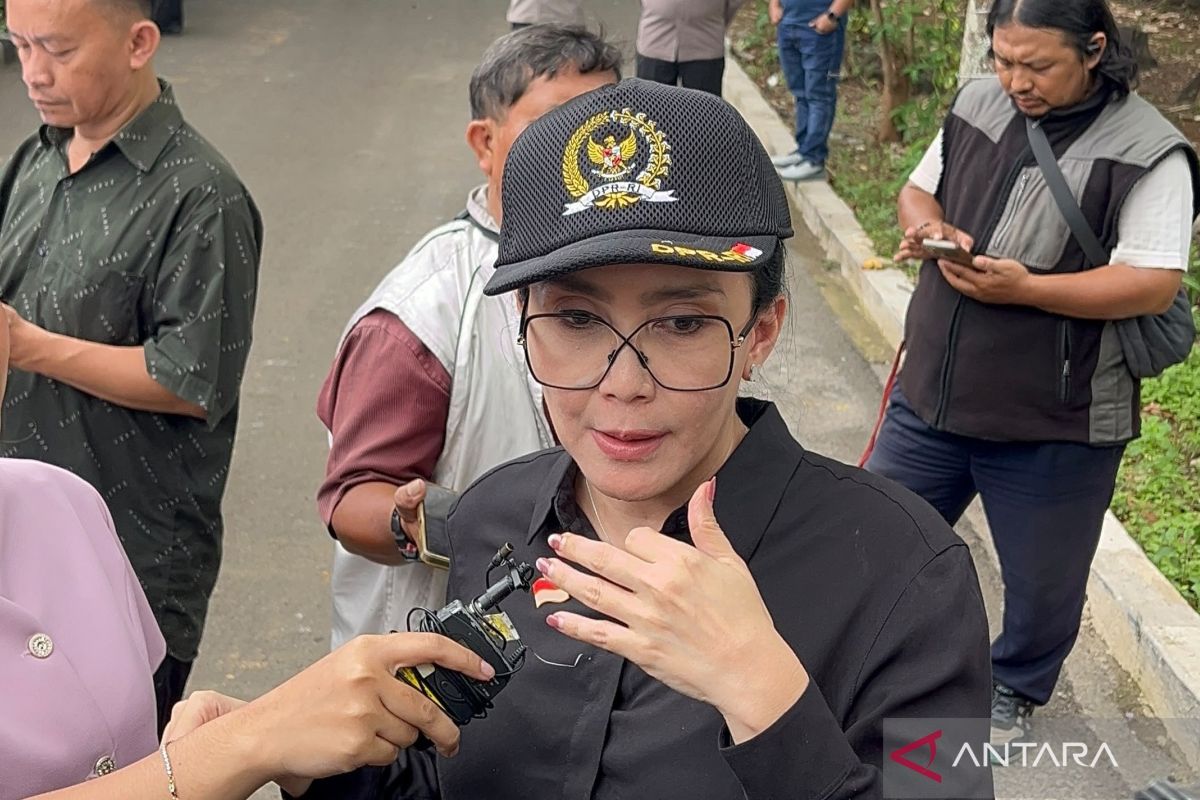
Bogor Regency (ANTARA) - Commission XIII of the Indonesian House of Representatives (DPR RI) is pushing for the implementation of ‘One Data Correctional Services’ to integrate the supervision of prison activities, ranging from inmate data and visits to the movement of goods in and out of facilities.
Member of Commission XIII DPR RI, Rieke Diah Pitaloka, while visiting the Class IIA Cibinong Prison in Bogor Regency, West Java, on Wednesday, stated that recent high-profile cases in the prison should serve as a momentum to overhaul the correctional system entirely.
“What is happening in Cibinology should actually serve as a momentum to improve the correctional system as a whole,” said Rieke.
According to her, the correctional system requires integrated data so that the supervision of various activities within prisons can be conducted more optimally. She cited examples such as data regarding people entering and exiting, visitor identities, and the movement of goods, all of which should be recorded in an integrated system.
“Data on people coming and going, who is visiting, and what goods are moving in and out—that is all data. How we monitor this, and the integration between data and the digital ecosystem within the correctional services, is becoming crucial,” she noted.
She assessed that data issues have not yet received maximum attention, including regarding budget support for building a digital correctional ecosystem. Rieke added that the integration of correctional data also needs to be linked with other law enforcement systems, as prisons are part of the integrated criminal justice system.
She mentioned that this improvement is one of the key reasons for the importance of ‘One Data Indonesia’, which is also being promoted through the formation of new legislation. The correctional system, she said, requires a database that can be used to manage the various characteristics of inmates, including specific cases that require specialised handling.
“The improvement of the correctional system must be based on ‘One Data Correctional Services’ guided by ‘One Data Indonesia’,” she said.
Through the Correctional Working Committee (Panja Pemasyarakatan), Commission XIII will also push for the implementation of this system to ensure that the supervision of correctional services can be carried out in an integrated manner.
Rieke stated that improvements should not stop at the controversy surrounding the discovery of special facilities in the Cibinong Prison. She also urged an audit of various integration rights for inmates, including remissions, parole, conditional release, and other programmes granted based on assessments.
According to her, the process of granting these rights must be based on data and assessments that can be monitored, ensuring a comprehensive overhaul of the correctional system.
Beyond data issues, Rieke highlighted the limited human resources at the Cibinong Prison, which houses approximately 1,810 inmates and is currently experiencing overcrowding. She noted that in such overcrowded conditions, a single officer may be responsible for supervising up to 100 inmates.
Healthcare services were also a point of concern, as Rieke noted that the Cibinong Prison has only one general practitioner, one dentist, and two nurses to serve approximately 1,810 inmates.
Rieke emphasised that improvements in data, digitalised supervision, human resources, and officer welfare must be carried out simultaneously to ensure that the issues at Cibinong Prison are not merely addressed as a temporary response to cases currently attracting public attention.