
Commission XI: PFII Will Not Disrupt Domestic Financial Services
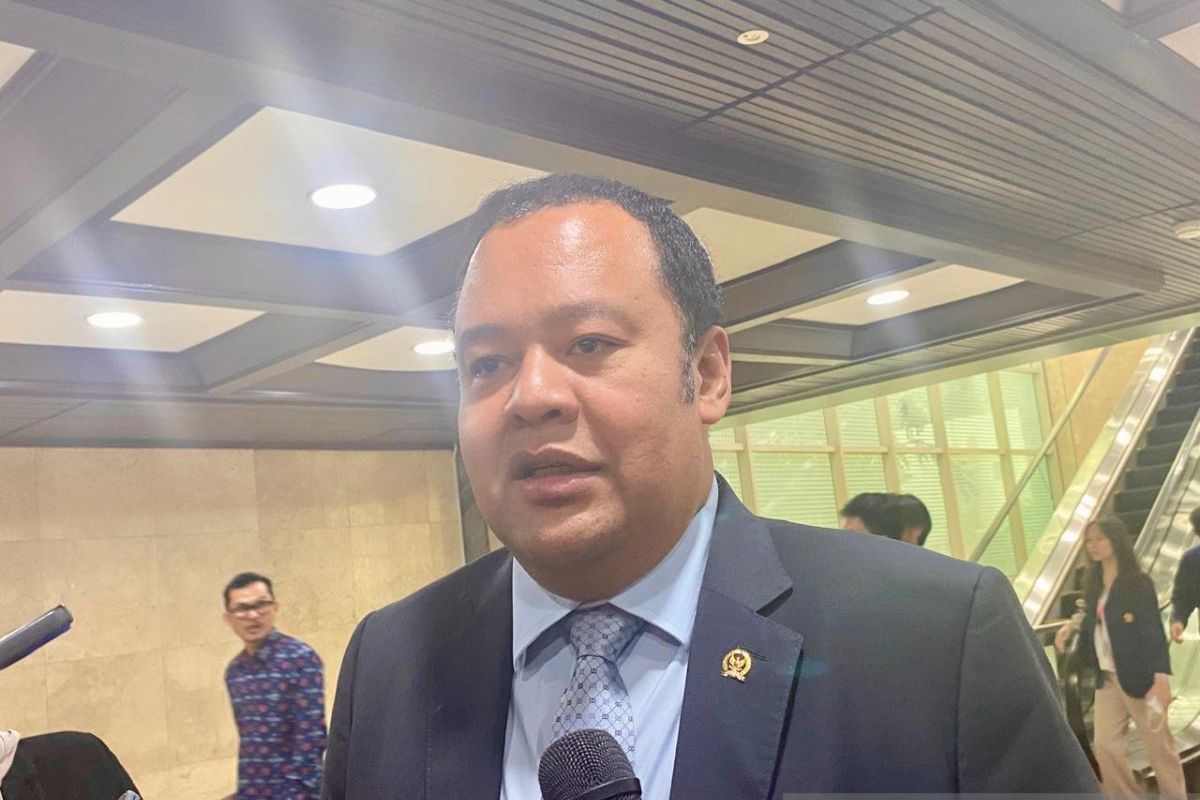
Jakarta (ANTARA) - Deputy Chair of House Commission XI (XI Committee) of the Indonesian House of Representatives, Mohamad Hekal, has assured that the existence of the Indonesian International Financial Centre (PFII) will not disrupt the sustainability of domestic financial services, as financial institutions in the zone are not permitted to raise retail deposits.
“Banking financial institutions within the PFII may not conduct retail business outside the PFII area. So, they may not withdraw funds or seek third-party funds from retail customers,” Hekal told journalists at the DPR building in Jakarta on Tuesday.
However, Hekal added, banks operating within the PFII zone remain permitted to extend financing for projects in Indonesia.
He emphasised that the primary purpose of establishing the PFII is to attract global funds, not funds already circulating domestically.
“We also discussed this yesterday (during the working meeting). If domestic financial institutions enter the PFII, we still limit the freedoms they enjoy, for instance whether their status changes to PMDN (domestic investment). The agreement is that they remain PMA (foreign investment) as usual,” he explained.
Hekal added that the government expects financial institutions in the PFII to bring in large amounts of capital to finance investment, particularly in foreign currency.
However, the PFII is also not designed to become a place for speculating in the foreign exchange market. All financial instruments traded in the zone will use foreign currency.
“When they make investments using foreign currency, they will not disturb domestic banks. It would not be fair if they have cheaper sources of cost of funds competing with domestic banks that face higher costs,” said Hekal.
As stipulated in the PFII Law, Hekal explained that all financial instruments traded within the PFII will use foreign currency. The PFII is also expected to help lower funding costs.
“According to the consultant used by Danantara, all credible international financial centres (IFCs) have succeeded in reducing cost of funds by 200 basis points. That is in foreign currency, so 200 basis points is very significant,” he said.
Through lower funding costs and the availability of foreign currency liquidity domestically, he said this is expected to reduce pressure on the rupiah exchange rate, particularly when foreign currency liquidity is needed to finance major projects.
Regarding tax incentives, Hekal said all financial services players, both domestic and foreign, can enjoy a 0 per cent income tax (PPh) rate while operating within the PFII zone. According to him, there is no differential treatment between domestic and foreign financial services players as long as they are registered in the zone.
“Yes, everyone can, as long as they are within the PFII zone. But once they make investments outside the zone, they will be subject to the usual taxes,” he said.
Hekal said the PFII is also expected to become a destination for family office funds from various countries. Some funds belonging to Indonesian citizens currently placed in Singapore, Hong Kong and other financial centres are expected to flow into the PFII.
The House plenary session on Tuesday approved the PFII Bill, enacting it into law.
The new law contains 10 chapters, covering business activities in the PFII, including financial sector activities, financial sector support activities, and other sector activities.
The PFII Law also covers the institutional arrangements of the PFII, comprising the PFII Advisory Council, the PFII Board, the PFII management body (LP), and the PFII financial services supervisory body (PLJK). In addition, there will be a PFII arbitration body and a PFII court.
A number of tax facilities and other special facilities offered in the PFII include income tax (PPh) facilities, value-added tax (VAT) and/or luxury goods sales tax (PPnBM) facilities, as well as customs facilities.
The law also includes provisions on tax treatment of inheritances and tax treatment of the PFII’s initial capital investment.
Furthermore, it regulates reporting and administrative rights and obligations, as well as sanctions related to tax and other special facilities for businesses, experts or other parties within the PFII zone.
Regarding the special features chapter of the PFII, it contains provisions such as permits for the use of foreign currency and financial transactions within the PFII.