
Commission X: Constitutional Court Ruling on Free Nutritious Meal Budget Upholds Constitutional Mandate
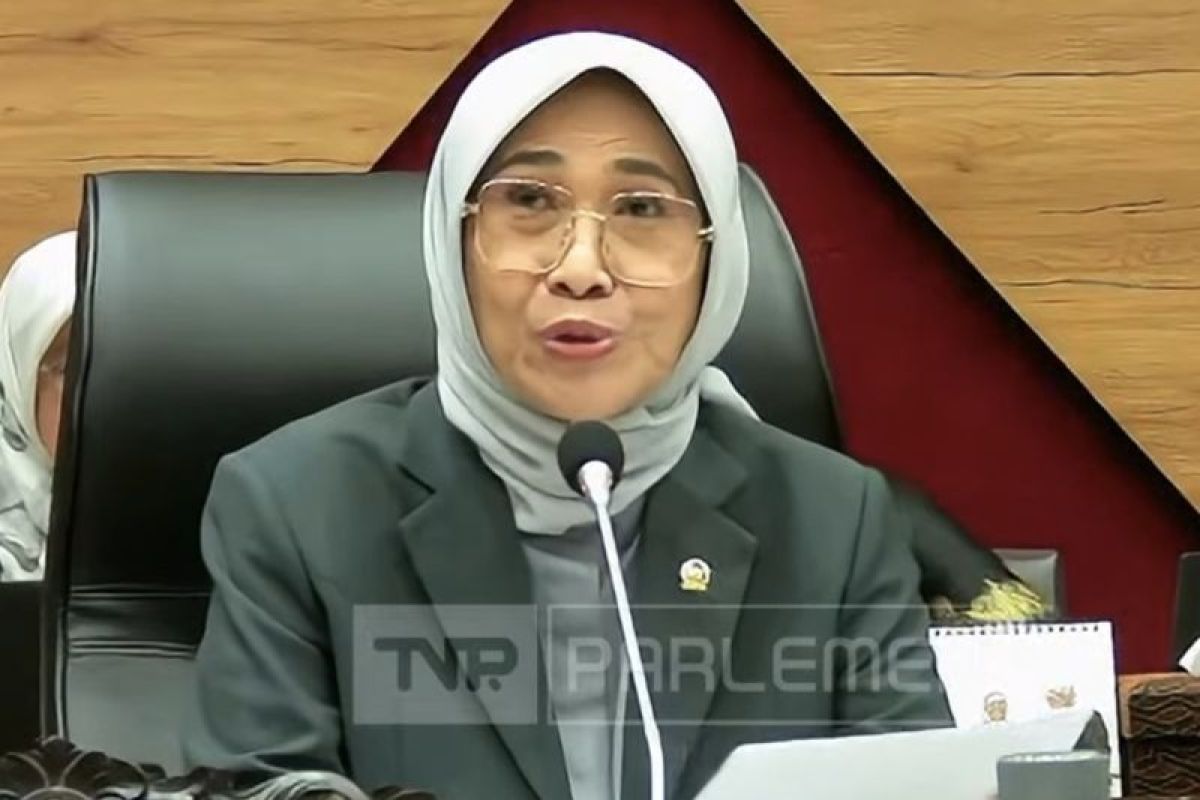
Jakarta (ANTARA) - The Chairperson of Commission X of the Indonesian House of Representatives (DPR RI), Hetifah Sjaifudian, stated that the Constitutional Court’s ruling regarding the separation of the Free Nutritious Meal (MBG) programme budget from the education budget reaffirms the mandate of the 1945 Constitution of the Republic of Indonesia.
“We certainly highly appreciate the Constitutional Court’s decision. This ruling provides confirmation that the 20 per cent education budget must return its focus to the core and operational needs of education in accordance with the constitutional mandate,” Hetifah said in Jakarta on Friday.
According to her, the decision is a vital step towards restoring the focus of the education budget as mandated by the constitution, namely to meet the primary needs of educational implementation and to improve the quality of human resources.
Regarding the alternative funding sources for the MBG programme, the legislator specialising in education stated that her party has not yet received a concrete overview from the government, particularly concerning the funding scheme for the 2027 State Budget (APBN).
Hetifah noted that the education budget has historically provided the largest portion of MBG funding. Following the Constitutional Court’s ruling, the government must seek alternative funding sources, whether through the creation of new budget items, reallocation from budget items outside of education, or through reserve funds.
“However, a concrete decision is still awaiting further discussion between the government and the DPR,” she said.
She expressed that if the education budget is no longer used to fund the MBG programme, the primary priority for Commission X will be the comprehensive improvement of education quality, ranging from teacher welfare to the enhancement of learning standards.
Hetifah emphasised that Commission X of the DPR will oversee the 2027 State Budget discussions to ensure they align with the ruling, noting that the Court has provided a maximum of two years to implement the decision.
“This is certainly our concern. The DPR RI, together with the government, will discuss the budget allocation until an agreement is reached regarding the definitive ceiling of the 2027 State Budget Draft (RAPBN),” she said.
Previously, the Constitutional Court, through ruling number 40/PUU-XXIV/2026, declared that the budget for the MBG programme must be separated from the operational budget for education. The Court stated that the nutritious meal programme is not a primary component of education.
The Court, as per its verdict, ordered that this separation must take effect no later than the 2028 Fiscal Year Budget, or at most two years from the ruling delivered on Thursday (30/7).
In its considerations, the Court emphasised that the minimum 20 per cent education fund allocation mandated by the constitution is intended to meet the financing of the primary components of education. These primary components include students, educators, educational personnel, facilities and infrastructure, curriculum, as well as educational evaluation and development.
“Financing for these primary components does not include financing for the MBG programme,” the Court’s consideration noted, citing the copy of the ruling.
The Court stated that the explanation of Article 22 paragraph (3) of Law Number 17 of 2025 concerning the 2026 State Budget resulted in a failure to meet the mandatory spending principle mandated by Article 31 paragraph (2) and paragraph (4) of the 1945 Constitution, thereby creating legal uncertainty.
The Court partially granted the petition filed by the Taman Belajar Nusantara Foundation, Dzakwan Fadhil Putra Kusuma, Muhammad Jundi Fathi Rizky, Rikza Anung Andita Putra, Sa’ed, and Indra Kusuma.