
Commission VIII warns of legal and sociological aspects regarding the Hajj ticket "war" discourse
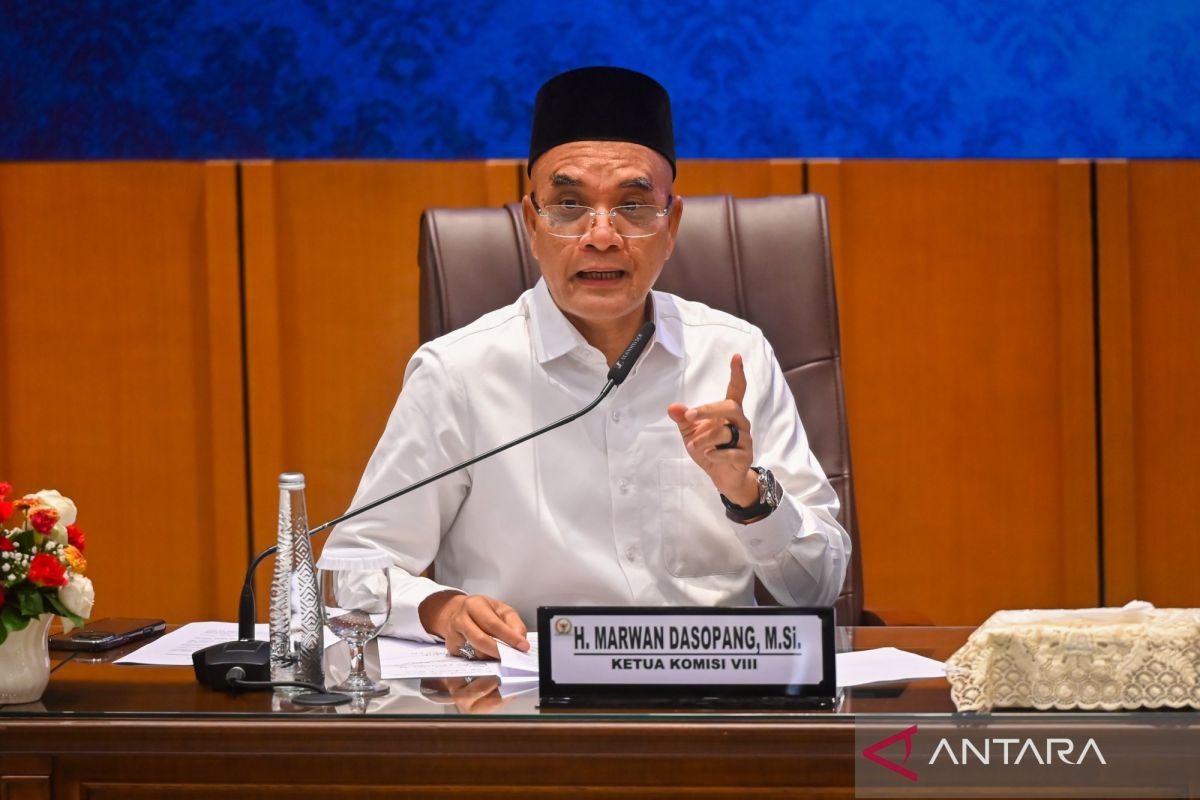
Jakarta (ANTARA) - The Chair of Commission VIII of the Indonesian House of Representatives, Marwan Dasopang, has reminded of the importance of considering legal, historical, and sociological aspects if the government wishes to turn the discourse on competing for or “warring” over Hajj tickets into policy.
“For discussion, I think it’s fine, but if it becomes policy, there are certainly aspects that need to be considered,” he said when met in the parliamentary complex, Senayan, Jakarta, on Friday.
From a legal perspective, Marwan stated that the discourse does not align with Law Number 14 of 2025 on the Third Amendment to Law Number 8 of 2019 concerning Hajj and Umrah Worship.
“In there (the Hajj and Umrah Law), it mentions ‘registering’, not ‘hunting’ for tickets,” said the legislator in the religious and social sector.
He also questioned the legal basis if the ticket competition scheme were truly implemented. “Where is the article? It’s impossible for a policy to exist without a legal provision,” he said.
Meanwhile, from a historical aspect, he noted that the waiting list scheme was implemented due to the high interest among Muslim communities to perform Hajj. Subsequently, the Hajj Financial Management Agency (BPKH) was established to manage Hajj finances.
“If the Ministry of Hajj’s explanation suggests that the long queues emerged because of BPKH. Well, it’s not like that,” he explained.
In addition, Marwan said that a sociological study of this discourse is also important. If Hajj ticket competition is enforced, people with established economic backgrounds will dominate.
Such a condition, according to him, will create jealousy among the public.
“For example, if it’s a ticket war, then who will hunt for these tickets? The ticket hunters will be rich people, right? That means rich people don’t need to be limited. If given free rein, people who can’t afford to hunt will also feel jealous,” he said.
To provide opportunities for those unable to “hunt” for tickets, Marwan said, the Hajj and Umrah Law also regulates a cooling-off period for pilgrims who have already performed Hajj if they wish to register again.
“Therefore, if the Minister of Hajj mentions this as discourse or study, it’s fine, but the aspects mentioned earlier must be addressed. If not, people will be anxious. We would have to amend the law,” he stated.
It is known that the government is studying a Hajj worship scheme without queues, while still ensuring protection for millions of prospective pilgrims who have been waiting for a long time.
Deputy Minister of Hajj and Umrah Dahnil Anzar Simanjuntak said the discourse is currently still in the discussion stage and has not become a decision.
“Now the President wants us to think about how to make Hajj without queues. That’s what we’re formulating,” Dahnil said in Jakarta on Thursday (9/4).
The government, he said, is examining the possibility of implementing a more flexible model, similar to a direct ticket purchase system or ticket competition according to the quota given by the Saudi Arabian government.
“So, we’re given a quota of 200 thousand by Saudi Arabia. Then we set the price. Afterwards, no need to queue. Everyone directly books, whoever gets it, they depart,” he said.
Nevertheless, Dahnil emphasised that the government remains prioritising protection for pilgrims who have entered the waiting list earlier.