
Commission VIII Supports BPKH Opening Data for Hajj Fund Forensic Audit
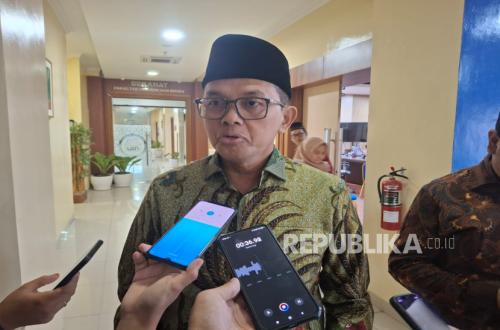
Maman Imanulhaq, a member of Commission VIII of the Indonesian House of Representatives (DPR RI) and Deputy Chairman of the PKB Faction, supports the move by the Hajj Financial Management Agency (BPKH) to prepare data and documents for the purpose of a forensic audit of Hajj finances.
According to him, BPKH’s openness demonstrates a commitment to strengthening governance, transparency, and accountability in the management of pilgrim funds. Maman emphasised that a forensic audit should not be interpreted as an accusation against BPKH, but rather as an instrument to test facts and ensure that fund management complies with regulations.
“I support the forensic audit of Hajj finances. Not because I believe violations have occurred, but because Hajj funds are a public trust of significant value that affects the long-term interests of pilgrims,” Maman stated in a briefing on Wednesday (30/09/2026).
Maman noted that BPKH’s readiness to disclose the necessary data and documents for the inspection process is a commendable attitude. “Openness to inspection is a vital part of governance. An audit can actually serve as a momentum to ensure that the existing systems become stronger and more accountable,” he said.
Maman stated that an Unqualified Opinion (WTP) on financial reports should not be seen as being in conflict with a forensic audit. Both have different contexts and objectives within the framework of oversight and accountability.
“WTP is an important achievement and must be respected. However, WTP does not mean that other areas of inspection are closed. Conversely, a forensic audit should not be interpreted from the outset as evidence of irregularities,” he said.
He added that the inspection must be conducted to obtain facts objectively, rather than building conclusions before the inspection process is complete. “An audit is a process to find and test facts, not a process to create conclusions before the facts are examined,” Maman remarked.
Maman encouraged the inspection to look beyond the figures in financial reports and instead ensure the connectivity and integrity of Hajj financial data and transactions. This process could include the reconciliation of pilgrim data, initial deposits and final payments, benefit values, departure status, cancellations, and refunds, alongside records of Hajj fund management and the actual implementation of the Hajj pilgrimage.
“The important thing is to ensure that the chain of data and transactions can be traced from upstream to downstream. If there are discrepancies or inconsistencies, they must be explainable based on valid data and documents,” he said.
He added that the quality of Hajj fund management is reflected not only in the final figures of financial reports but also in the processes and controls that produce those figures. Maman also assessed that the mechanisms for managing and utilising benefits must be explained transparently to the pilgrims.