
Commission VIII: National Santri Day 2026 a Moment to Strengthen Pesantren
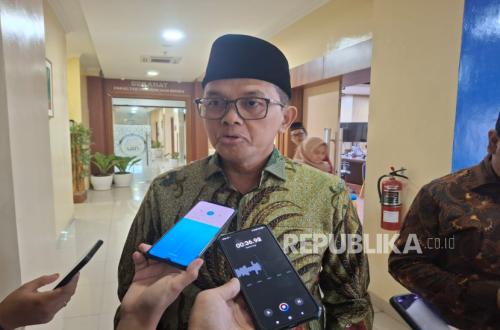
JAKARTA — The 2026 National Santri Day commemoration is an important opportunity to strengthen the role of pesantren through the establishment of a Directorate General for Pesantren at the Ministry of Religious Affairs. The dedicated directorate is expected not only to strengthen state recognition of pesantren but also to address fundamental challenges faced by these Islamic educational institutions.
The Directorate General is expected to strengthen five key areas: services, equitable budget allocation, educators’ welfare, student safety, and the economic independence of pesantren throughout Indonesia.
The comments were made by Maman Imanul Haq, a member of the Indonesian House of Representatives’ Commission VIII, during the Talk Highlight programme on Radio Elshinta on Friday, 23 October 2026.
Maman, as he is commonly known, said the creation of the Directorate General was the outcome of a long campaign for state support for pesantren. This began with stronger regulation through Law No. 18 of 2019 on Pesantren, followed by efforts to secure funding and the need for a more robust institutional structure.
Recognition of pesantren, he said, should not be limited to the ceremonial commemoration of National Santri Day. The state must ensure that pesantren have access to services, funding and programmes suited to each institution’s needs.
“The Director General for Pesantren will act as a facilitator and mediator,” Maman said.
He outlined at least five reasons for establishing the Directorate General. First, it would make administrative services and pesantren data collection easier, including when institutions need help repairing buildings, improving sanitation or expanding health services.
Second, it would strengthen adequate and sustainable budget support. In the discussions he cited, the Directorate General’s budget was put at Rp4.2 trillion, with hopes it would rise to more than Rp5 trillion.
However, he cautioned that increased funding must be accompanied by data verification to ensure assistance reaches active pesantren that need it. He noted the risk of pesantren identities being misused to obtain aid, even where teaching activities or the presence of students are unclear.
“Data collection and oversight are therefore vital tasks for the Directorate General, so that aid is distributed in a targeted, transparent and equitable manner,” he said.
Third, the directorate should improve the welfare and skills of teachers and other pesantren educators. Maman said it was concerning that some educators still received extremely low honoraria.
“Some educators still receive very low honoraria, even around Rp200,000 a month,” he said.
He said this deserved attention because human resource quality was crucial to the development of pesantren. Alongside better welfare, educators also need access to literacy programmes and further education to help them address increasingly complex social issues.
Fourth, educational facilities and infrastructure must be improved. He highlighted access to clean water, sanitation and building safety at pesantren. Construction must also take account of dormitory capacity, student numbers and safety standards.
Protection for students should also be strengthened, including through safer environments designed to prevent violence and sexual abuse.
Fifth, the directorate should promote the economic independence of pesantren. Maman said they needed sustainable sources of funding through businesses, cooperatives, agriculture and other productive activities.
Such independence is important to reduce continued reliance on aid and donations, while safeguarding the institutions’ dignity and the continuity of students’ education.
Beyond these five priorities, the Directorate General is expected to improve the mapping of pesantren’s characteristics and needs across different regions. “That way, the Directorate General must be able to reach every pesantren, without exception, from Sabang to Merauke,” he said.