
Commission VII emphasises opportunities for value addition in essential oil exports
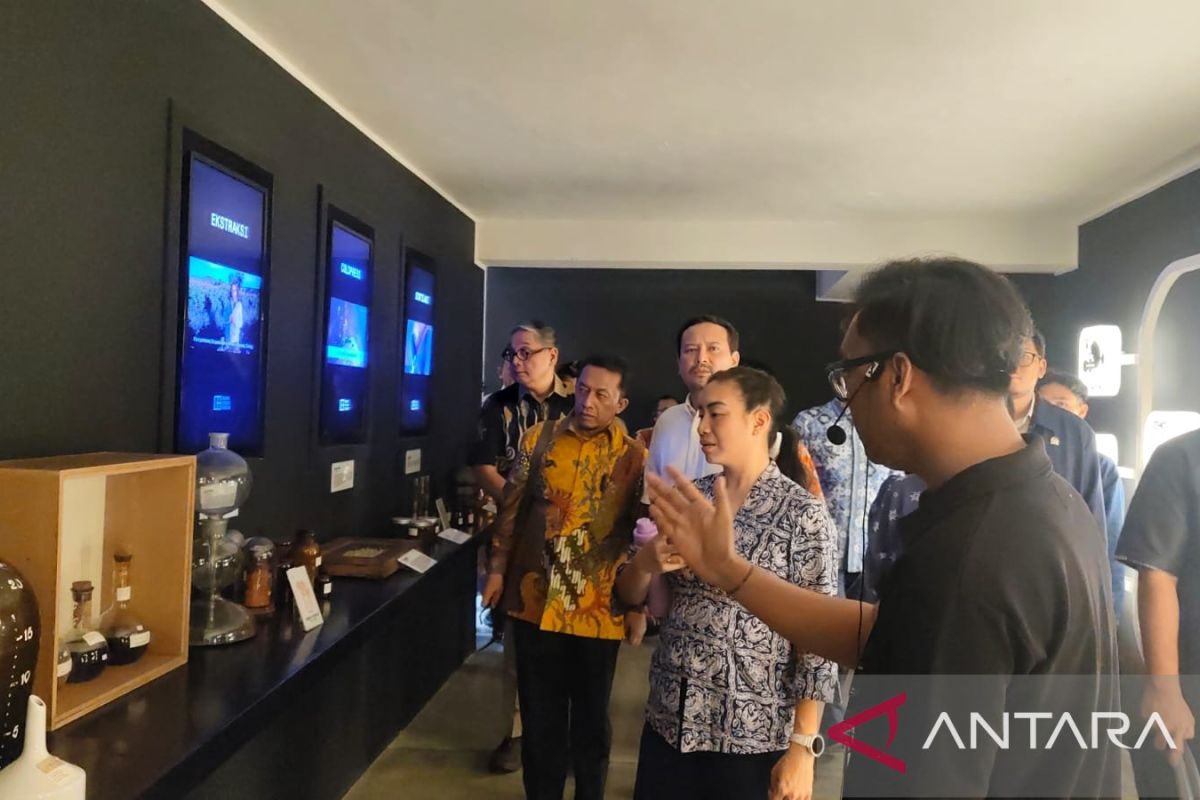
The Republic of Indonesia’s Commission VII of the House of Representatives emphasised the opportunity for added value in essential oil exports, one of Indonesia’s natural resources.
“We actually are an exceptional producer of essential oils because the raw materials are here. We can draw inspiration from this visit. We are highlighting that Indonesia could become one of the largest exporters of essential oils,” said Rahayu Saraswati Djojohadikusumo, Chair of the Working Group on Specific Visits of Commission VII of the DPR RI, at Rumah Atsiri in Karanganyar Regency, Central Java, on Thursday.
“Nevertheless, at present Indonesia does not even rank among the top five essential oil exporters.”
Therefore, they hope that the Indonesian government, especially the Ministry of Industry, which is a partner of Commission VII, can develop this sector into a mature and established industry.
In this regard, she highlighted downstream processing of the industry. Accordingly, exports should not only be in the form of raw materials but also as finished products.
“From the regulatory side, it is already extremely well-developed; it only requires implementation. We note that in 2024 we exported USD 260 million, and this was solely from essential oil raw materials. This must be changed to yield tangible added value. Essential oils that began as ordinary raw materials can be processed into soaps, foods, or room fragrances,” she said.
She stated this aligns with the Asta Cita programme promoted by President Prabowo Subianto, especially in encouraging an economy based on local potential and strengthening the downstream of the national industry, improving MSME standards, and building a just and sustainable economy.
“We view Rumah Atsiri Indonesia as a concrete example of how the integration between the tourism, education, and MSMEs sectors can be realised innovatively,” she said.
By becoming an innovative, industry-based educational tourism area, Rumah Atsiri demonstrates local potential that could become a new economic strength and highly competitive.
Through the visit, Commission VII DPR RI aims to obtain a more comprehensive picture of the model for developing industry-based destinations and downstream local products, including how the integration of production activities, research, education, and tourism can operate sustainably.
“In addition, we also want to absorb aspirations relating to various challenges and policy-support needs, across regulation, infrastructure, MSME development, promotion, and the development of the national essential oil industry,” she added.
She hopes the findings from this working visit can provide strategic input for Commission VII in formulating policy recommendations that support the strengthening of the national tourism sector based on innovation, sustainability, and cross-sector synergy among government, business, and society.
In parallel, Andi Rizaldi, Special Staff to the Minister of Industry for Accelerating Transformation in Industry 4.0, at the Ministry of Industry, said nationally exports for essential oil commodities approach USD 100 million, or around IDR 1.7 trillion.
“However, statistics show that, like other commodities such as CPO, essential oil exports are dominated by primary/intermediate products rather than finished products; but the middle tier includes essential oils as well,” he said.
From a policy perspective, since 2016-2024 the government through Bappenas has provided a special allocation. He noted, under this funding, the central government collaborates with regional governments.
“So we do not distribute directly to businesses but via local governments. If a local government has micro/small industry centres, they can apply for DAK. The programmes that can be directly received by businesses include restructuring. For the essential oil commodity, we have done this since 2021 to the present,” he added.
He said to obtain the restructuring programme, businesses must purchase new machinery.
“If the new machines are produced by local manufacturers, they can receive up to 40 percent of the machine price; if the machines are imported, the subsidy is up to 25 percent. Businesses are welcome to apply for machinery restructuring,” he explained.
Owner of Rumah Atsiri, Paulus Mintarga, said the facility was developed with a historical basis.
“We are not operating in the upstream but actually in the downstream sector. Indeed we need to increase downstream industries to be bolder in expanding,” he remarked.
He hopes in the future there will be policy to ease the marketing of finished essential oil products, making it easier for producers to sell.
“If there are finished products ready for export, assistance with access such as at international airports would help, even briefly, but this would provide exposure,” he concluded.