
Commission IX: Downstreaming Investment Serves as Capital for Job Creation
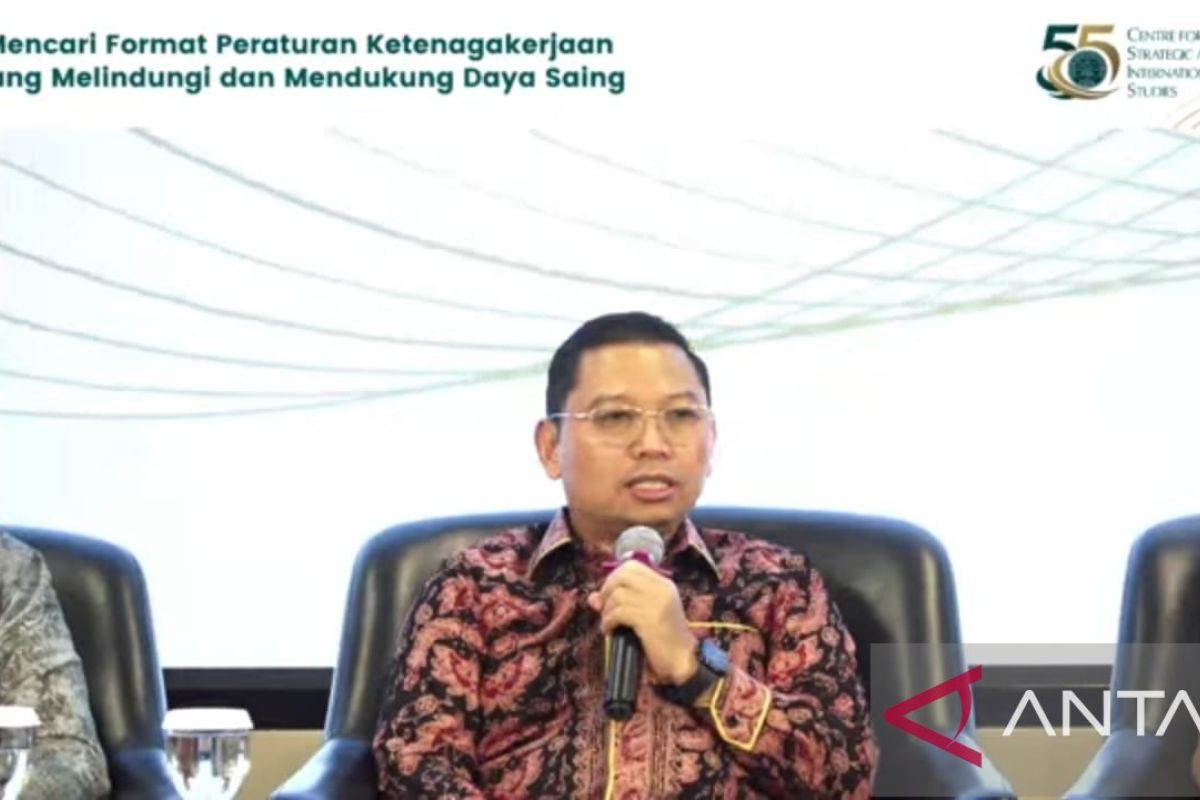
Jakarta (ANTARA) - Zainul Munasichin, a member of the Working Group for the Labour Bill of Commission IX of the Indonesian House of Representatives (DPR RI), stated that downstreaming and the development of derivative industries are essential capital for increasing the conversion of investment into large-scale employment.
“The investment sectors currently ranked highest are capital-intensive. So, how can we ensure this investment opens up a large number of jobs? The government must, of necessity, ensure that downstreaming truly takes place. Derivative industries must be established immediately,” Zainul said during a CSIS discussion regarding the direction of labour policy, held online in Jakarta on Thursday.
Zainul noted that according to data from the Ministry of Investment and Downstreaming/BKPM, investment realisation in the second quarter of 2026 rose by approximately 7 per cent compared to the same period in 2025, increasing from Rp477 trillion to Rp511.8 trillion, with labour absorption reaching 742,293 workers, an increase of 5.1 per cent.
Looking at the current investment composition, approximately 37.1 per cent consists of capital-intensive investment, 23.1 per cent is labour-intensive, and 39.8 per cent is moderate in character. This capital-intensive portion includes significant inflows into the metal industry, goods, machinery, equipment, and mining sectors.
The data also shows that downstreaming investment continues to hold a significant share. In the first semester of 2026, downstream investment realisation reached Rp300.1 trillion, or 29.7 per cent of total national investment.
Zainul assessed that this challenge must be viewed alongside other factors affecting labour absorption. He noted that every single job created currently requires approximately Rp689 million in investment.
This condition indicates that Indonesia’s trend towards capital-intensive investment does not automatically result in large-scale labour absorption. Other factors hindering the conversion of investment into employment include investment composition, automation, supply chains, and labour mismatches.
Therefore, he argued, the development of derivative industries is vital so that incoming investment does not stop at production activities requiring high capital, but can instead form a broader industrial chain to create new job opportunities.
“This includes the fact that, compared to other countries, this is relatively high cost, where investment is not maximally converted into the provision of employment,” he said.
Zainly stated that strengthening downstreaming and derivative industries must go hand-in-hand with increasing labour competence so that incoming investment can create more jobs while simultaneously boosting productivity.
The government also continues to encourage the development of domestic supply chains so that the benefits of investment become more widespread. By strengthening the processing industry and creating derivative industries, it is hoped that increased investment will not only be reflected in the total value of capital investment but will also be felt through the expansion of employment opportunities and the strengthening of the national industrial base.
Source: jawawa.id (https://jawawa.id/newsitem/commission-ix-downstreaming-investment-serves-as-capital-for-job-creation-1790248280)
Originally published by Antara (Indonesian) (https://www.antaranews.com/berita/5756849/komisi-ix-hilirisasi-investasi-jadi-modal-buka-lapangan-kerja), translated from Indonesian