
Commission III Reveals 13 Criminal Offences Subject to Asset Forfeiture
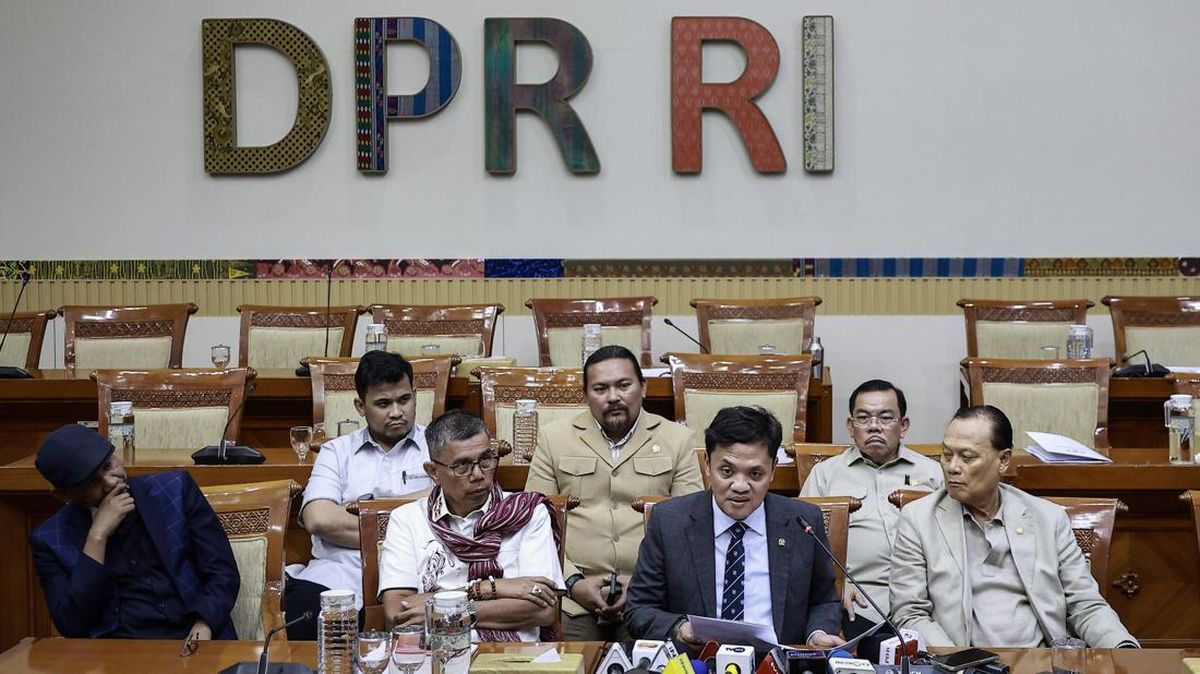
House of Representatives Commission III has revealed a list of 13 types of criminal offences that are regulated and could be subject to asset forfeiture under the Asset Forfeiture Bill.
Commission III Chairman Habiburokhman said the list of 13 criminal offences was determined after the commission considered advice from experts who stressed the need to limit the types of criminal offences.
“Regarding the question about the scope of criminal offences in this bill, Commission III of the House of Representatives conducted research and in-depth study of the types of criminal offences regulated in this bill,” he said in a written statement on Saturday (29/8).
He said input regarding the limitation of criminal offences with economic motives or those with a broad impact on society was also a concern for the commission.
“Legal experts conveyed that the criminal offences regulated should preferably be economically motivated offences, those that harm the state and the wider public, or those with a high level of seriousness and an economic impact on the public,” he said.
Commission III, he said, has conducted comparisons with asset forfeiture rules in force in a number of countries.
He cited New Zealand as an example, where asset forfeiture without a criminal conviction can be applied to significant criminal offences with a prison sentence of more than five years and a value exceeding NZ$30,000.
Meanwhile, Singapore, Paraguay, Uruguay, the Philippines, Switzerland and the Netherlands have asset forfeiture provisions that can be applied to narcotics offences or serious crimes.
Italy regulates in more detail, namely corruption offences, mafia and other categorised serious organised crime.
The United States focuses on narcotics, fraud, corruption and other organised crime. Australia and the United Kingdom apply non-conviction based asset forfeiture to major cases handled by higher courts.
Habiburokhman stressed that the commission is committed to ensuring the Asset Forfeiture Bill related to criminal offences can operate effectively, proportionately, fairly and beneficially. He said input from the public and experts would be taken into consideration in drafting the bill.
“Taking note of this input, in drafting the Asset Forfeiture Bill related to criminal offences, Commission III of the House of Representatives has currently included in the list the criminal offences that can be subject to asset forfeiture under this law,” he said.
“Input from the public, such as community elements and experts, serves as a foundation for Commission III of the House of Representatives to create a bill that is participatory, comprehensive and in line with the interests of the nation and state,” he added.
The following are the 13 criminal offences included in the list:
corruption offences;
narcotics and psychotropic offences;
terrorism offences;
people smuggling offences;
smuggling of weapons, ammunition and hazardous materials;
forestry offences;
environmental offences;
taxation offences;
banking offences;
insurance offences;
mining offences;
marine and fisheries offences; and/or
human trafficking offences.