
Commemorating Library Visit Day, National Library Urges Young Generation to Recognise Nusantara's Knowledge Heritage
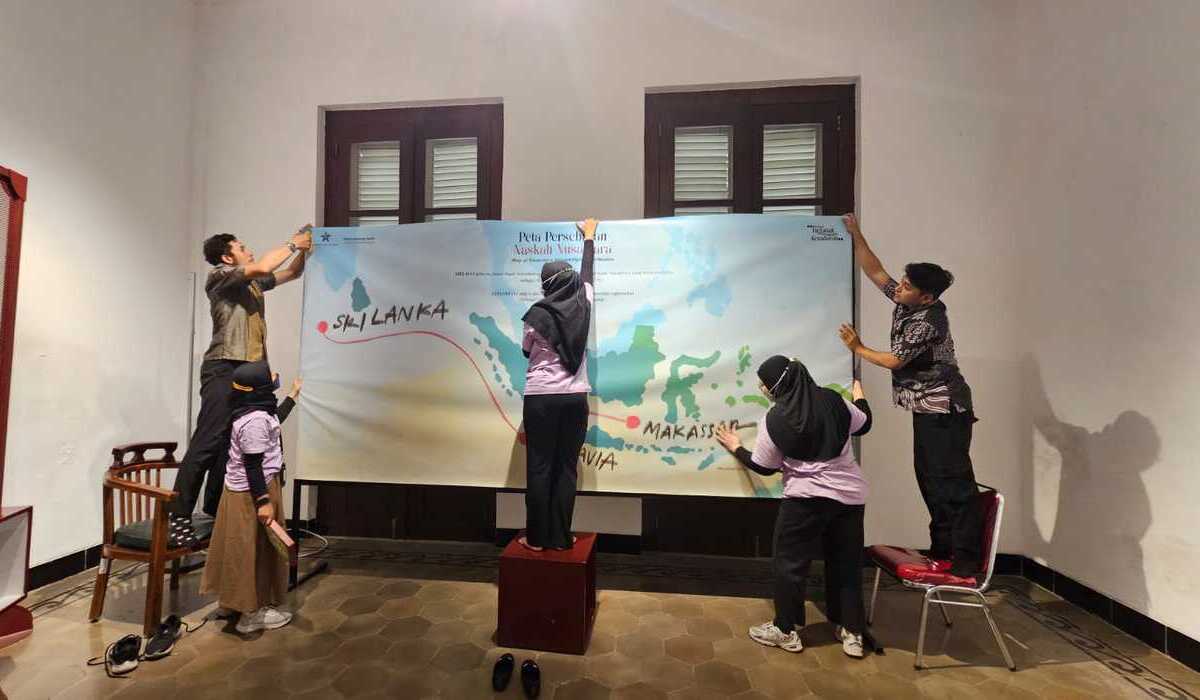
The National Library of the Republic of Indonesia (Perpusnas) is inviting the public, particularly children and the younger generation, to delve deeper into the wealth of Nusantara’s knowledge and culture. Through an exhibition titled “Nurturing Memory, Awakening Awareness”, Perpusnas seeks to strengthen the use of its collections as a source of public learning.
Held in conjunction with the commemoration of Library Visit Day, the exhibition runs from Monday (14/09/202lar) to Wednesday (30/09/2026). Located at the Grha Literasi Building, a cultural heritage site of Perpusnas in Jakarta, the exhibition is designed as a meeting space between the current generation and the intellectual heritage of the past.
Suharyanto, Deputy for Collection Development and Information Services at Perpusnas, stated that through a communicative visual approach, the public is expected to realise that libraries are more than just book repositories. “In addition to storing collections, libraries also safeguard the nation’s memory so that it can continue to be studied, understood, and interpreted by future generations,” said Suharyanto.
The exhibition features various Nusantara manuscripts recognised under the National Collective Memory (IKON) and UNESCO’s Memory of the World (MOW) programmes. Suharyanto emphasised that these manuscripts record the ideas, values, and life journeys of the people of their time.
“The documentary heritage stored in manuscripts can serve as an entry point to understanding identity, culture, and the nation’s journey, while simultaneously exploring values that remain relevant to contemporary life,” he added.
Using a simple, communicative, and visual approach, the exhibition is designed to bring Nusantara manuscripts closer to the youth. Various manuscript reproductions, illustrations, infographics, and interactive visual elements are utilised to help visitors understand the stories and knowledge contained within them.
The exhibition is divided into four main narratives. First, ‘Indonesia’s Heritage for the World’, which introduces manuscripts as records of the journeys of figures, events, ideas, and experiences of the Nusantara people that hold significance at local, national, and global levels. Displayed manuscripts include works related to Syekh Yusuf, Bo Sangaji, Sutasoma, Babad Diponegoro, Imam Bonjol, and Trunojoyo.
Second, ‘Shared Value Heritage’, which invites visitors to view manuscripts as a medium for passing down values, knowledge, beliefs, and traditions across generations. Examples include Panji, Sri Tanjung, Bo Sangaji, Primbon Tengger, and the Heritage of Syekh Burhanudin Ulakan.
Third, ‘Women’s Heritage’, which highlights how manuscripts record the experiences, roles, voices, and status of women in past societies. This narrative is presented through works such as Simbur Cahaya, Sri Tanjung, and Panji.
Fourth, ‘Special Works Heritage’, which presents manuscripts with unique characteristics in terms of content, form, language, intellectual tradition, or documentary value. This includes Siksa Kandang Karesian, Babad Diponegoro, Nagarakretagama, La Galigo, Tambar Ni Hulit, Syair Hamzah Fansuri, and Pecenongan.
“The four narratives presented in this exhibition are an effort to change the perception of manuscripts. Visitors are not just invited to see them as ‘old objects’, but to understand manuscripts as sources of knowledge that hold stories about humans, society, thought, values, and experiences passed down from generation to generation,” concluded Suharyanto.
The “Nurturing Memory, Awakening Awareness” exhibition is part of the 2026 Library Visit Day series organised by Perpusnas throughout September. Various literacy activities have been introduced to reach different groups of society, ranging from children and students to the general public.
These activities include literacy classes, talk shows, writing classes, music and cinema literacy, librarianship activities, and events highlighting the richness of Nusantara manuscripts. The agenda includes Children’s Literacy Classes, High School Short Story Writing Classes, Classical Literacy Classes, Libtalk Reference Literacy Classes, and User Guidance Literacy Classes.
The Library Visit Day series also features the Launch of Books and Talk Shows on the “Transfer of National Collective Memory (IKON) & Memory of the World (MOW) Manuscripts”, the National Collective Memory (IKON) Awards, and the IKON–MOW Seminar titled “Manuscripts, Memory, and National Collectivity”, as well as the Nugra Jasa Dharma Pustaloka Awards for Ancient Manuscript Preservation and the Best Ancient Manuscript Management Award for Library Services. Several activities are held both offline and online to ensure wider public participation.
Through these series of events, Library Visit Day serves not only as a momentum to encourage the public to visit libraries but also to expand the use of libraries as spaces for learning, creating, discussing, and interacting with knowledge.
For information, Library Visit Day originated from the idea of the first Head of the National Library of Indonesia, Mastini Hardjoprakoso. On 14 September 1995, the President of the Republic of Indonesia, Soeharto, designated September as Reading Month and Library Visit Day. Since then, 14 September has been commemorated as Library Visit Day to encourage the public to grow closer to libraries and build a reading habit.