
Combination of AI and Digital Laboratories: How Amalia Medical Center Reduces Medical Human Error
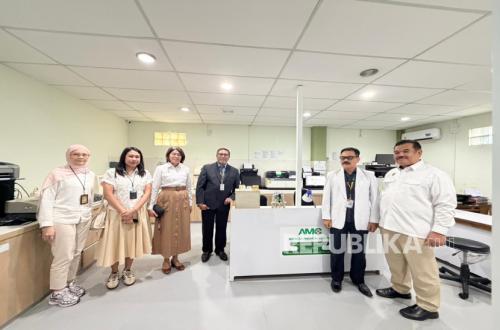
The Indonesian government is striving to improve the quality of healthcare services for Prospective Indonesian Migrant Workers (CPMI). As part of this commitment, the Director General of Placement at the Ministry of Indonesian Migrant Worker Protection (KP2MI), Ahnas, conducted a working visit to Amalia Medical Center in East Jakarta in May 2026.
The agenda focused on directly monitoring the readiness of healthcare facilities for migrant workers, including the reliability of infrastructure, the completeness of medical and non-medical equipment, and the capability of the professional human resources on duty. This step was taken to ensure that healthcare facilities supporting labour placement can meet rapidly evolving global health standards, following the tightening criteria imposed by destination countries. During the visit, the Director General and his delegation thoroughly inspected every vital division within the Ameralia clinic.
The inspection covered the physical examination, laboratory, radiology, and medical supporting examination divisions. In addition to physical readiness, the ministry delegation also reviewed the Quality Management System implemented by Amalia Medical Center to guarantee the validity and consistency of health examination results for migrant workers. The government team was welcomed by the Director of Amalia Medical Center, Ir Zainal Muhamad, MBA, alongside a team of specialists and 50 professional medical and non-medical personnel.
One aspect that drew significant attention from the Director General and the delegation was the modernisation of the laboratory division. The clinic has adopted cutting-edge equipment capable of accurately detecting various types of viruses in the human body using the CLIA (Chemiluminescence Immunoassay) method, which offers high sensitivity.
All laboratory devices are integrated with a Laboratory Information System (LIS) application. The presence of this LIS system significantly reduces manual intervention by staff in making laboratory result decisions. This digital workflow offers not only efficiency and speed but also minimises the potential for human error in producing accurate medical analysis results.
Similar innovations were observed in the Radiology Division, which is now equipped with new detectors. These devices are capable of producing highly sharp visualisations of thorax (shoulder/chest) and lumbar (spine) X-rays, facilitating the work of two specialist radiologists. Furthermore, this division has integrated Artificial Intelligence (AI) applications specifically designed to detect Tuberculosis (TB) with precision. The simultaneous implementation of the CLIA method, LIS, and AI under one healthcare roof is a first in Indonesia.
Such technological updates are considered crucial as destination countries—including Taiwan, the Middle East for formal workers, Malaysia, Singapore, and others—are now implementing much stricter and more detailed health regulations compared to previous years. This condition demands that healthcare centres in Indonesia continue to adapt through consistent technological updates and quality improvements.
Source: jawawa.id (https://jawawa.id/newsitem/combination-of-ai-and-digital-laboratories-how-amalia-medical-center-reduces-medical-human-error-1780867504)
Originally published by Republika (https://ameera.republika.co.id/berita/tg04vq425/kombinasi-ai-dan-laboratorium-digital-cara-amalia-medical-center-pangkas-human-error-medis), translated from Indonesian