
Combating Extreme Weather: South Korea Transforms Public Spaces into Giant Cooling Systems
The South Korean government is implementing a comprehensive strategy to tackle extreme heatwaves by transforming urban spaces into a distributed cooling system. This initiative goes beyond mere health advisories, integrating advanced technology, social services, and strict protections for outdoor workers.
Seoul has introduced ‘Happiso’, an outdoor shelter shaped like an air dome equipped with a cooling system. By the summer of 2026, these facilities are targeted to be available in 14 strategic locations, including Gwanghwamun Square and Cheonggye Plaza. Additionally, large canopies are being installed across dozens of pedestrian corridors to provide direct protection along active citizen routes.
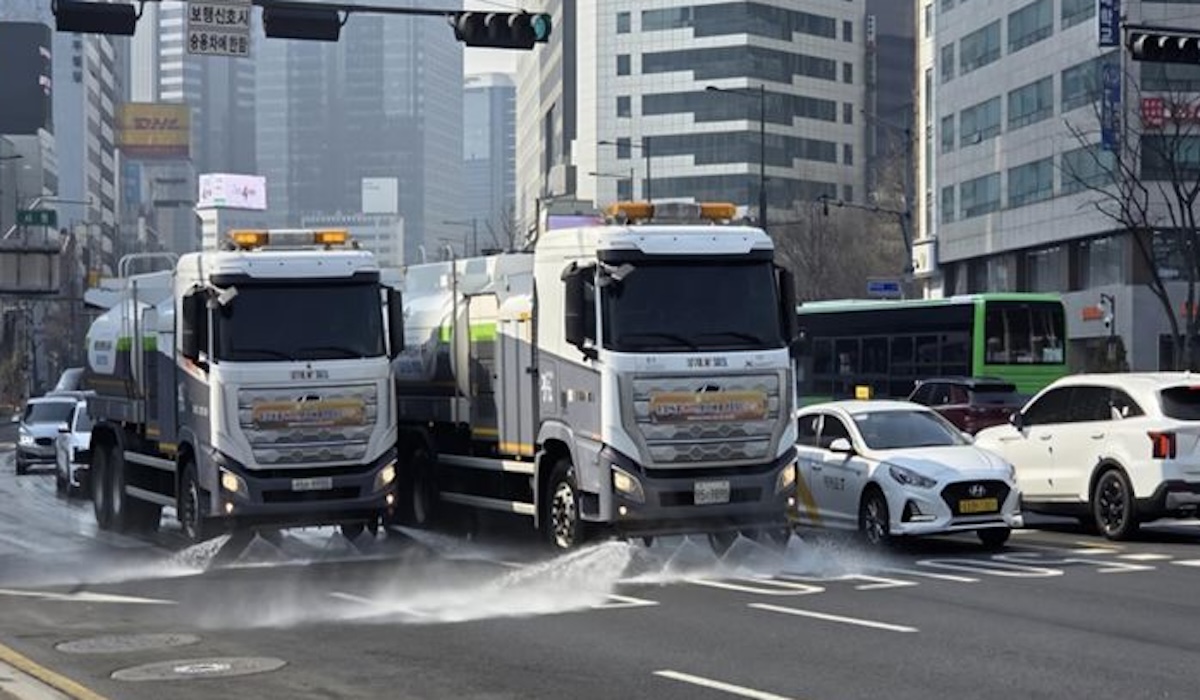
To lower surface temperatures, various districts in Seoul are utilising a combination of cooling fog technology and ‘cooling road’ systems that automatically dampen the asphalt. During active heatwave warnings, road spraying via tanker trucks is increased to up to six times a day. Air-conditioned bus stops and smart canopies, which operate based on temperature and wind speed, are also becoming a new standard on city pavements.
Rather than constructing a single large centre, Seoul is preparing nearly 3,000 specialised cooling centres for the elderly and thousands of ‘climate shelters’ within public facilities. Each district is required to provide at least one emergency shelter that operates during the night. The utilisation of community halls and welfare centres ensures that vulnerable citizens do not have to travel long distances to access cool air.
The sophistication of this strategy lies in the use of data and Artificial Intelligence (AI) to monitor vulnerable groups, such as elderly individuals living alone and residents of semi-basement homes. This system monitors not only temperature but also integrates risks of sudden flooding. The technology serves as a navigation tool for social workers to determine aid priorities with precision.
The government has also tightened supervision on construction projects by implementing five safety principles: the provision of water, shade, health monitoring, and the adjustment of working hours when temperatures reach dangerous levels. While facilities continue to be added, experts emphasise the importance of extending operational hours on weekends and implementing real-time health monitoring systems to ensure these mitigation efforts are truly effective when needed.