
Combat Drone KIZILELMA Fires Supersonic Missile, Turkey Showcases New Strength at NATO
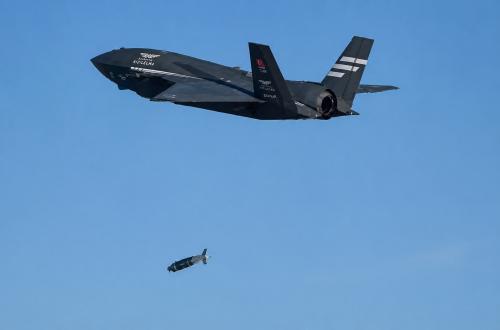
JAKARTA — Only days after NATO leaders discussed the future of drone warfare in Ankara, Turkey immediately showed that it was not merely the host of the meeting. Ankara also wants to be one of the powers shaping the direction of unmanned combat technology within the military alliance.
The Bayraktar KIZILELMA S2 unmanned combat aircraft successfully launched a supersonic JET-230 air-to-surface missile made by Roketsan and hit a target at sea from a distance of more than 120 kilometres. The firing test did not merely add to the types of weapons the KIZILELMA can carry. The success demonstrated Turkey’s ability to combine the aircraft, missile, radar, sensors, mission software and control systems into a single strike chain, most of which is built by its own defence industry.
Baykar announced the success on Monday (13 July 2026). According to a report by Anadolu Agency on Tuesday (14 July 2026), the series-production aircraft with tail number S2 left Baykar’s testing centre in Çorlu on 8 July for the Fifth Main Jet Base in Merzifon. On 11 July, the KIZILELMA took off carrying two JET-230s under its wings, then fired one of them at a target at sea from a range of more than 120 kilometres.
The test came only four days after NATO Secretary General Mark Rutte launched the NATO Drone Edge initiative at the NATO Defence Industry Forum in Ankara on 7 July. Rutte said drones had changed the character of modern warfare and become a decisive factor on the battlefield. NATO countries then committed to investing more than 40 billion US dollars in counter-drone capabilities over five years, as well as training five times as many drone operators by the end of 2027.
The timing carried a political message that is difficult to ignore. While NATO is seeking ways to expand its drone and counter-drone capabilities, Turkey displayed a series-production unmanned combat aircraft already capable of carrying long-range supersonic missiles.
However, the superiority Ankara is building lies not merely in how far its missiles can fly. The more important advantage is Turkey’s mastery of almost the entire technology chain needed to find, identify, lock onto and strike targets.
Beyond the Speed of Sound
Supersonic weapons travel faster than the speed of sound. Baykar has not yet published the full specifications of the JET-230, including the type of seeker system, warhead weight, terminal guidance method and maximum speed. The range of more than 120 kilometres is the firing distance demonstrated in the test, and does not mean the weapon’s maximum range is independently known.
The closest comparable missile is the UAV-230, or IHA-230, made by Roketsan. The company says the air-to-surface ballistic missile has a range of more than 150 kilometres, depending on the speed and altitude of the platform when the weapon is released.
Source: jawawa.id (https://jawawa.id/newsitem/combat-drone-kizilelma-fires-supersonic-missile-turkey-showcases-new-strength-at-nato-1784116370)
Originally published by Republika (https://news.republika.co.id/berita/ti7fxo451/drone-tempur-kizilelma-tembakkan-rudal-supersonik-turki-pamer-kekuatan-baru-di-langit-nato), translated from Indonesian