
Colonised for Hundreds of Years, Why Can't Indonesians Speak Dutch?
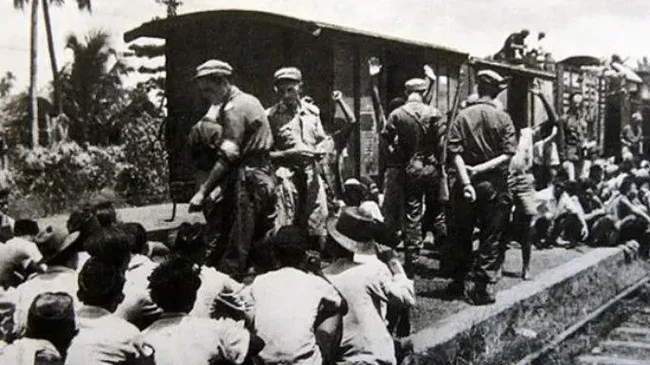
Indonesia commemorated its 81st Independence Day on 17 August 2026. Before achieving independence, the archipelago was colonised by various nations for hundreds of years, although the exact duration of colonisation is not known with certainty. One of the nations that colonised Indonesia for a very long period was the Netherlands.
Generally, colonisation leaves behind ‘remnants’ in several aspects, such as law, politics, mentality, culture and linguistics. For example, as former British colonies for hundreds of years, the populations of Malaysia and Singapore are fluent in English. However, the Indonesian population is different. Almost all Indonesians are not fluent in Dutch. Why is that?
The Dutch linguistic influence that appears in Indonesia is in the form of loanwords, such as gordijn becoming gorden, bioscoop becoming bioskop, and kantoor becoming kantor.
Fundamentally, this is caused by the difference in the character of Dutch and British colonialism. Britain deliberately carried out a Western cultural ‘invasion’ of Malay society so that local culture blended with Western culture or even disappeared. In the language sector, this policy made Malay people quite proficient in English.
Meanwhile, the Dutch did not do this to the Indonesian population. History researcher from Nanyang Technological University, Christopher Reinhart, explained that there are two reasons the Dutch behaved differently towards local culture. As a result, the level of Dutch language proficiency among Indonesians across generations is low.
First, viewed from the perspective of the structure of Dutch colonialism. At that time, local society and the Dutch were in different structures. The Dutch considered themselves to be in the highest class, while the local population was at the very bottom.
The Dutch considered that spreading culture was akin to regarding the local population and the Dutch as culturally equal. As a result, they did not want to share Dutch culture so that the structure would remain intact.
Second, the Dutch always viewed economic exploitation as a characteristic of a colonial state. Reinhart said they felt it was not a problem if they did not spread their culture. The most important thing was to continue exploitation and profit economically.
“Snouck Hurgronje, one of the colonial government officials, once said that ‘cultural matters need not be forced. Let them grow on their own, without eliminating local culture’,” Reinhart told CNBC Indonesia some time ago.
These two Dutch attitudes lasted from the phase of forced cultivation exploitation from 1830 to 1900 and continued when the Dutch implemented the ethical policy in 1900.
Reinhart said the Dutch always focused on economic aspects and did not want to damage local culture, especially after the ethical policy was implemented. They increasingly understood that invading another culture was not good.
However, this does not mean the local population was not allowed to adopt Western culture. The Dutch were not closed off about it. In fact, many Western cultural elements were adopted by the local population.
It is for these reasons that local languages, Malay, and Indonesian have grown and developed to this day.