
Colonialism, Material Wealth and the Destruction of Cultural Identity
The history of colonialism is often written as a story of territorial conquest, the spice trade, resource competition and the expansion of power. Yet there is another dimension of no less importance: the seizure of cultural heritage and the destruction of the identities of conquered peoples.
In his book Blood and Loot: The Plundered Past – From Empire to the Third Reich (I.S. Edition, 2026), Patrick Howlett-Martin invites readers to consider the links between the looting of cultural objects, violence, displacement and attempts to destroy people. The 808-page book is the English edition of a work first published in French in 2023. Its central thesis is that cultural objects now held in Western museums and collections do not always have an untainted acquisition history (Howlett-Martin, 2026).
In the Americas, European conquest did not merely redraw political boundaries; it also brought control over gold, silver, land and indigenous people’s labour. The Potosí silver mines in Bolivia, for example, underpinned global trade through a labour system that involved the coercion of indigenous people. Wealth flowed outwards, while local communities bore the social and economic costs (R. Barragán, Working Silver for the World, 2017, Hispanic American Historical Review).
In Africa, the tragedy of the Kingdom of Benin in 1897 demonstrates the direct link between military force and cultural plunder. British troops invaded Benin City, set fire to the palace, exiled its king and took thousands of artworks, which were later dispersed among museums and private collections around the world. In 2022, the National Museum of African Art in the United States returned 29 Benin artefacts to Nigeria. These objects are not merely works of art; they are part of the community’s history, identity and collective memory (Smithsonian National Museum of African Art, 2022).
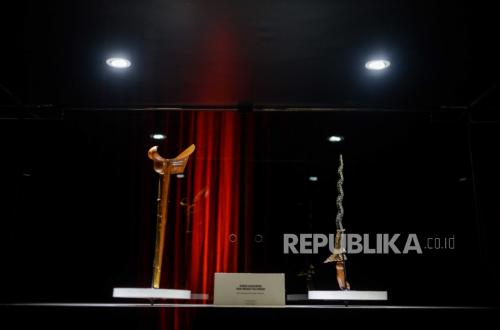
Indonesia has had a similar experience. The Dutch military expedition to Lombok in 1894 was accompanied by the looting of the palace and the kingdom’s wealth. The Rijksmuseum records objects taken as spoils of war and brought back by a Dutch military doctor. In 2023, the Dutch government returned a number of items, including part of the Lombok Treasure. Earlier, Prince Diponegoro’s kris was returned in 2020 after joint research confirmed its authenticity (Rijksmuseum, War Booty; Cabinet Secretariat of the Republic of Indonesia, 2020).
This is not simply a matter of lost objects. When sacred artefacts, manuscripts, royal symbols and ancestral relics are seized, communities lose some of the means by which they understand their own history and identity. Colonial rulers did not only control territory; they could also determine how the history of colonised societies was told.
A contemporary dimension can be seen in Gaza. According to UNESCO monitoring up to 24 March 2026, damage to 164 cultural sites has been verified since 7 October 2023. These include places of worship, historic buildings, museums, monuments and archaeological sites. This is an armed-conflict context, not automatically a case of colonial looting. Nevertheless, the destruction shows how war can damage not only human lives but also a society’s memory and identity (UNESCO, Impact on Cultural Heritage in Gaza, 25 March 2026).
Another dimension is often overlooked: ecosystems and the environment. Colonialism did not only take cultural objects; it also changed communities’ relationships with land, forests, water and livelihoods. The expansion of mining, monoculture plantations and commodity extraction shaped economies around exporting wealth from colonised territories.
The consequences can include soil degradation, deforestation, water pollution and the loss of local knowledge about environmental management. The destruction of cultural identity and ecological damage can therefore stem from the same logic of domination: treating nature and people as objects to be exploited.
The effects extend into political, socio-economic and cultural life. Economic dependency can persist after independence; unequal control of assets can be passed down through generations; and cultural marginalisation can weaken the position of indigenous communities. Museums and art markets may also perpetuate injustice when the provenance of their collections is not transparent.
For this reason, restitution, or the return of cultural heritage, should not be treated merely as a matter of diplomacy. Indonesia needs to strengthen its inventory of artefacts held overseas, provenance research, diplomacy aimed at securing returns, protection of historic sites and efforts to combat the illegal trade in cultural objects.
Indigenous peoples and communities of origin must be involved as rights-holders, not merely as spectators. At the same time, ecological restoration and the strengthening of local economies should form part of the post-colonial justice agenda.
Ultimately, the question is not simply who holds historical objects, but who has the right to determine the meaning and future of that heritage.
A nation may have achieved political independence, but it is not fully sovereign if its natural wealth, knowledge and cultural heritage remain under the control of interests that do not serve its people.
Civilisation is not measured by how much wealth from other nations it has managed to seize, but by how well people respect one another’s rights, identities and lives.
For domination without justice is plunder; development without ecological balance bequeaths damage. It is time to move from a logic of exploitation towards social justice, cultural sovereignty and balance in the living world.
We should support anyone’s efforts to strengthen our national sense of identity across many areas: politics, culture, the economy, ecology, society, technology and, of course, spiritual life.
Source: jawawa.id (https://jawawa.id/newsitem/colonialism-material-wealth-and-the-destruction-of-cultural-identity-1793947872)
Originally published by Republika (https://opini.republika.co.id/berita/to2hld393/kolonialisme-kekayaan-material-dan-penghancuran-identitas-kebudayaan), translated from Indonesian