
Collective Punishment: Israel Forces 2,500 Palestinians from Their Homes in Hebron
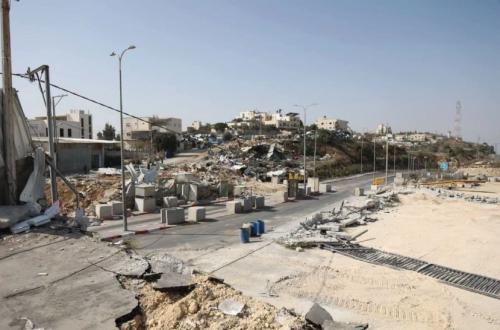
WEST BANK — Israeli forces have again imposed collective punishment, forcing around 2,500 Palestinians to leave their homes in the Deir Bahha and al-Jalda areas of Hebron in the occupied West Bank since Friday (23 October 2026). The operation has expanded following a shooting by two men from Hebron that killed two Israeli soldiers.
The Palestinian news agency WAFA reported on Saturday (24 October 2026) that at least 200 families had been displaced by the operation. Hebron Governor Khaled Dudin called for international and legal intervention to halt Israel’s actions.
Collective punishment is expressly prohibited under Article 33 of the 1949 Fourth Geneva Convention, which provides for the protection of civilians during war and occupation. The prohibition is also part of customary international humanitarian law, applicable in both international and non-international armed conflicts.
UN General Assembly Resolution 37/43, adopted on 3 December 1982, affirms the legitimacy of the struggle of peoples under colonial domination and foreign occupation to exercise their right to self-determination and independence by various means, including armed struggle. The resolution specifically refers to the rights of the Palestinian people.
The local government, local institutions and community groups are forming a crisis committee to assist displaced residents. A state of emergency was also declared on Friday.
Israel’s military operation has extended beyond the area where the shooting took place. Israeli forces have closed entrances and roads leading to Hebron, nearby villages and towns, and refugee camps.
Intersections and main roads leading to Kharsa village have been blocked with earth mounds and concrete blocks. Several entrances to al-Arroub refugee camp, which lies on the route to the Bethlehem area, have also been closed.
In southern Hebron, Israeli forces have shut all road access and permanently sealed several iron gates. The measures have restricted Palestinians’ movement between areas.
Hebron Mayor Youssef al-Jaabari said the displacement plan targets around 2,500 residents in two areas covering approximately 35 hectares. About 200 families have been affected.
He said Israeli forces had marked houses for evacuation and handed notices to other families ordering them to leave their homes without taking their vehicles.
Some families were forced to spend the night outdoors after being ordered to evacuate.
The tightening of the blockade in Hebron followed a shooting near the city on Friday (23 October 2026), in which two Israeli soldiers were killed and several other people injured. The Israeli military said the two Palestinian men suspected of carrying out the shooting had also been killed.
The incident prompted a large-scale military operation in Hebron. Israeli military forces, the Shin Bet security agency, border police and the Civil Administration searched homes and questioned dozens of people suspected of involvement.
Israeli Prime Minister Benjamin Netanyahu ordered Hebron to be placed under immediate siege and preparations to be made for a comprehensive closure of the West Bank.
Israel has also imposed movement restrictions in Hebron and surrounding Palestinian towns and villages. Vehicle access through military gates has been closed, forcing residents to walk through checkpoints to continue their journeys.
The effects have been felt directly by civilians. The Associated Press reported that a mother, Reem al-Jiyawi, struggled to take her 11-year-old daughter to a hospital in Dura for cancer-related tests. Unable to pass through the gate by car, the child had to walk beyond the closure points before continuing the journey in a shared taxi.
The restrictions have disrupted residents’ access to healthcare, work and education, as well as travel between villages.
In the Farsh al-Hawa area, west of Hebron, Israeli forces demolished a residential building containing three flats on Friday. They also dismantled several buildings and commercial shops and raided homes.
WAFA reported that at least 13 Palestinians had been arrested in the operation, which began on Friday.
Israeli forces have also measured the homes of the two Palestinian men accused of the shooting, in preparation for possible demolition. Some residents were reportedly forced to leave their homes before the demolitions.
Netanyahu said Israel would destroy the entire neighbourhood where the two men accused of the shooting lived. The statement broadened the threat of demolition, which had previously focused on the homes of people accused of involvement.
Israeli Finance Minister Bezalel Smotrich also said the demolitions were intended to deter others and make those deemed responsible pay a price for the attack.
The measures have drawn criticism from human rights groups. Israeli rights group B’Tselem warned that statements by Israeli leaders about punishing an entire area and demolishing buildings could amount to collective punishment and war crimes.
B’Tselem urged governments and international institutions to act to prevent the forced displacement of Palestinian civilians, collective punishment and demolitions it said would violate international law.
The Hebron local government has also called for international intervention to stop the military operation and help residents who have lost their homes.
The situation adds to the pressure on Palestinians in the West Bank, who face movement restrictions, raids, arrests and threats of home demolitions amid continuing violence.
Source: jawawa.id (https://jawawa.id/newsitem/collective-punishment-israel-forces-2-500-palestinians-from-their-homes-in-hebron-1792853465)
Originally published by Republika (https://news.republika.co.id/berita/tnezvs393/hukuman-kolektif-israel-usir-2500-warga-palestina-di-hebron), translated from Indonesian