
Collapse! Giant Dams Worldwide Struggle to Generate Electricity, and Indonesia Is Not Immune
Jakarta, CNBC Indonesia – The strengthening El Niño in 2026 threatens not only food production but could also disrupt electricity supplies worldwide, particularly from hydropower plants.
El Niño can trigger drought in several regions as rainfall declines. This reduces river flows and water stored in reservoirs, leaving less water to drive hydropower turbines.
The effects can spread through the economy. Lower hydropower output could increase reliance on fossil-fuel power plants and energy supply costs, as well as the risk of blackouts if electricity generation cannot meet demand.
Bloomberg reported that the United States weather forecasting agency put the likelihood of El Niño becoming the strongest on record since 1950 at 83% by the end of the year.
In September 2026, sea-surface temperatures in the Niño 3.4 region were 2.1°C above normal, exceeding the threshold for a very strong El Niño.
However, the strength of El Niño does not always correspond directly to the level of damage in each country. Its effects depend on rainfall patterns, infrastructure resilience and the energy system’s ability to cope with water supply disruptions.
Global investment manager T. Rowe Price warned in a September 2026 analysis that drought and shrinking water reserves could develop into a broader economic risk.
Disruptions to hydropower production could raise energy costs, fuel inflation, weigh on economic growth and burden government finances if subsidies or purchases of alternative energy are needed.
South African dam reserves shrink
South Africa is facing pressure on water availability amid the threat of El Niño-related drought.
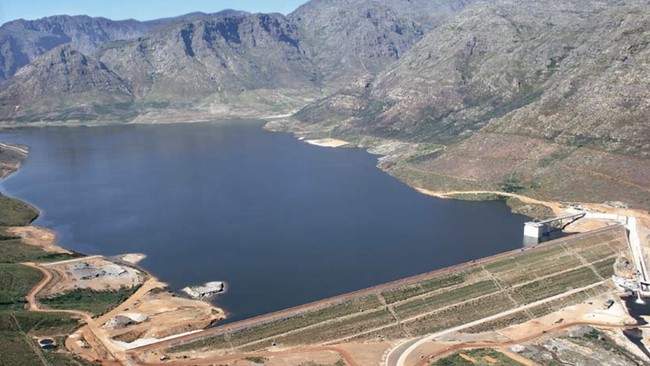
According to Cape Town municipal data dated 9 October 2026, the six main dams supplying the area have a combined capacity of about 898 million cubic metres and are 75.2% full overall.
Theewaterskloof, the largest of the six, has a capacity of 480.19 million cubic metres and is 75.4% full. Steenbras Lower has the lowest level, at 49%, followed by Voëlvlei at 57.8%.
Steenbras Lower and Upper are also part of a 180-megawatt (MW) pumped-storage hydropower system that helps supply electricity to Cape Town during peak demand.
The low level at Steenbras Lower warrants attention because the dam supports power plant operations. However, reservoir levels do not yet indicate a decline in hydropower generation.
Beyond the energy sector, limited water reserves could also disrupt household supplies, agricultural irrigation and industrial activity.
Sri Lanka faces water crisis as reservoirs fall to 30%
El Niño-related drought has also hit Sri Lanka, shrinking reservoir reserves and disrupting water supplies to communities.
NoticiasFinancieras reported on Monday, 12 October 2026, that 74 reservoirs in Sri Lanka were only about 30% full because of low rainfall during the south-west monsoon season.
The situation has left some residents’ wells dry and forced the government to distribute clean water by tanker. In agriculture, water shortages have also led some farmers to abandon their land and lose their source of income.
The drought is also threatening wildlife in Yala National Park after several water sources dried up.
Shrinking water reserves pose a risk to energy security if the situation persists, particularly for hydropower plants that depend on river flows and reservoirs.
Czech hydropower output falls by as much as half
Drought during 2026 has already disrupted hydropower supplies in the Czech Republic.
Czech news agency ČTK reported on Friday, 9 October 2026, that energy company ČEZ said hydropower plants along the Vltava River had produced only about 40–50% of their long-term average electricity output this year.
The decline resulted from drought and low river flows, which reduced water supplies to the turbines.
At the Vrané hydropower plant, water flow was recorded at just 28 cubic metres per second, far below the two turbines’ combined processing capacity of up to 180 cubic metres per second.
The Orlík hydropower plant, meanwhile, can generate electricity only when flows reach about 15 cubic metres per second, leaving its output at less than half its original capacity.
All plants along the Vltava remain in operation, but can no longer guarantee electricity supplies during periods of peak demand.
To make up the shortfall, ČEZ is relying on other sources of electricity, particularly the Dalešice pumped-storage hydropower plant.
The drought has also prompted the regional governments of Central and South Bohemia to introduce water-saving measures. Outflows from several dams have been restricted to slow the depletion of reserves.
Although the drought has occurred during the 2026 El Niño, ČEZ’s report did not establish that the phenomenon was directly responsible for the conditions in the Czech Republic.
Sulawesi hydropower affected, putting electricity supplies under pressure
The impact of El Niño on hydropower has also been felt in Indonesia, particularly in Sulawesi, one of the country’s main hydropower centres.
In September 2026, PLN chief executive Darmawan Prasodjo said El Niño had reduced hydropower generation capacity in southern Sulawesi by about 650 MW as water flows declined.
PLN had previously recorded a drop in the combined available capacity of hydropower plants in the area from about 850 MW to 250 MW. The disruption affected the Poso, Bakaru and Malea hydropower plants, as well as several mini-hydropower plants.
To maintain electricity supplies, PLN is preparing up to 627 MW of additional capacity through plant optimisation, expedited repairs and the development of solar power plants with battery storage.
Drought has also affected clean water supplies. In Maros regency, South Sulawesi, nearly 300,000 people had been affected by drought by early October 2026. The local government deployed around 30 water tankers each day to meet residents’ needs.
The situation shows that El Niño threatens not only water availability but also energy security and economic activity in Sulawesi.
Source: jawawa.id (https://jawawa.id/newsitem/collapse-giant-dams-worldwide-struggle-to-generate-electricity-and-indonesia-is-not-immune-1791870638)
Originally published by CNBC Indonesia (https://www.cnbcindonesia.com/research/20261012152257-128-775456/runtuh-bendungan-raksasa-dunia-mandek-hasilkan-listrik-ri-tak-aman), translated from Indonesian