
Collaborative Path to Stem Poverty Amid Economic Headwinds
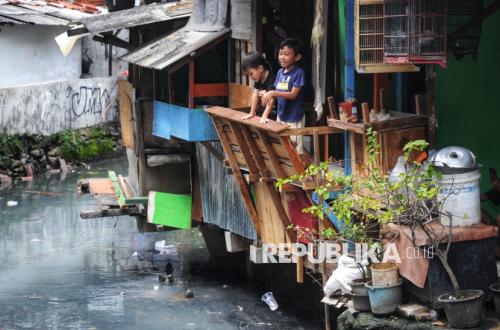
The recent depreciation of the rupiah has had a direct impact on the daily lives of Indonesians. When the currency weakens, production and distribution costs tend to increase, which can subsequently drive up the prices of food, transport, and other basic necessities. For millions of low-income families and vulnerable groups, this economic pressure poses a far more serious threat. Even a small increase in the price of staple goods can mean the difference between meeting basic needs and sacrificing family health or education.
Data from the Central Statistics Agency (BPS) in September 2025 showed that Indonesia still has 23.36 million people living in poverty. Beyond this figure, there is a much larger group of vulnerable people who could easily fall back into poverty when facing economic shocks. As the costs of transport, food, and daily necessities rise simultaneously, this group is the most susceptible to being pushed below the poverty line. In many cases, they are forced to reduce their consumption of nutritious food, delay access to healthcare, or sacrifice their children’s education just to ensure the family’s survival.
In an uncertain economic climate, the challenge is not only to reduce the number of poor people but also to prevent a much larger vulnerable population from falling into poverty. This situation demonstrates that a sectoral approach to poverty alleviation is no longer sufficient. While social assistance remains important as a short-term safety net, it is not enough to build community resilience against increasingly complex crises. Amid global economic pressures, climate change, and limited fiscal space, no single actor or policy instrument can tackle these challenges alone.
Poverty is not merely a matter of income; it is also linked to access to education, healthcare, decent work, social protection, and the ability to withstand economic and environmental shocks. It is further exacerbated by policies that do not fully favour the poor and vulnerable, resulting in unequal access to economic opportunities, basic services, and social protection. Therefore, stemming the tide of poverty in the midst of an economic storm requires not only aid programmes but also a concerted effort to create more inclusive and responsive policies that address the needs of those most affected.
Such an effort demands collaboration among various parties with complementary resources, knowledge, and reach. The contribution of non-state actors is becoming increasingly vital to complement the state’s efforts in strengthening community resilience. Indonesia’s philanthropic sector has long played a significant role in poverty alleviation. Various philanthropic organisations consistently run programmes covering social assistance, economic empowerment, improved access to education, health services, and capacity building at the grassroots level. This commitment is reflected in the Indonesia Philanthropy Outlook 2024, which identifies poverty as one of the top five programme priorities for philanthropic institutions in the country. This shows that poverty alleviation is a shared concern actively pursued by various philanthropic organisations across the nation.
However, the scale of the current challenges indicates that broader impact cannot be achieved through isolated efforts. The resources, knowledge, and networks possessed by the government, private sector, philanthropic bodies, civil society organisations, and academics need to be connected within a more focused and coordinated common agenda. This is where multi-stakeholder collaboration shifts from being a normative discourse to a strategic necessity. What is needed is not just additional resources, but a mechanism capable of aligning visions, connecting capacities, and driving collective action across sectors so that various programmes can reinforce one another, avoid overlap, and produce more optimal outcomes for the community.
One collaborative effort to address this need is the establishment of the Multi-Stakeholder Forum (MSF) for Poverty Alleviation. The MSF was formed in August 2025 by the Indonesian Philanthropy Association (PFI), the Zakat Forum (FOZ), and the Indonesian Humanitarian Forum (HFI) as a collaborative platform to align and synergise philanthropic organisations, government actors, the private sector, and academics in a joint effort to eradicate poverty in Indonesia. This initiative is strengthened by government support, including from the Coordinating Ministry for Community Empowerment and the Ministry of National Development Planning (Bappenas), which underscores the importance of a collaborative approach in addressing increasingly complex development challenges.
As a national philanthropic network organisation, PFI views the challenge of poverty as requiring a collaborative space that can bring together diverse resources, experiences, and cross-sector capacities to generate a greater and more sustainable impact. The presence of the MSF becomes increasingly relevant when economic pressures threaten to increase the number of poor and vulnerable people. In such a situation, the ability to consolidate resources and align various interventions becomes just as important as the amount of resources available. Through a common agenda, the development of collaborative programmes, cross-sector resource mobilisation, and evidence-based learning, the MSF aims to create a more effective and unified response to poverty.