
Collaboration to Hold Back Waste Before It Reaches the Sea
The Plastic Overshoot Day 2025 report, released by Swiss research organisation EA Earth Action, places Indonesia on the list of the world’s 12 largest contributors of mismanaged plastic waste. These twelve countries, including China, India, Brazil, and Indonesia, are responsible for 60 per cent of the total 72 million tonnes of plastic polluting the global environment throughout 2025. This figure is not merely a ranking. It reflects a systemic failure of humanity, where plastic production continues to grow whilst waste management capacity lags far behind. Domestically, the picture is no less severe.
Data from the 2024 National Waste Management Information System (SIPSN), compiled by the Ministry of Marine Affairs and Fisheries (KKP) together with the National Coordination Team for Marine Debris Handling (TKN-PSL) and LAPI ITB, records that potential national waste generation reaches 50 million tonnes per year. Of that amount, 40 per cent, or the equivalent of 20 million tonnes, is unmanaged and potentially flows into the sea. The KKP notes that waste enters via four main pathways: rivers contribute 43 per cent, coastal areas 26 per cent, inhabited small islands 10 per cent, and ports and activities at sea 21 per cent.
With more than 12,000 coastal villages, 1,203 inhabited small islands, and 675 rivers emptying into the sea, one can imagine the complexity Indonesia faces in tackling this marine debris issue. This geographical burden leaves a tangible mark on the ocean. Waste not captured on land ends up as a multi-layered ecological threat, triggering eutrophication due to excessive algal blooms, producing microplastics that inhibit oxygen and nutrient absorption in coastal ecosystems, and entering the bodies of marine biota through a food chain that cannot digest it. The fish stock crisis in the Java Sea is one of the most visible markers of this cumulative damage. Fishing vessels are beginning to leave these waters for more productive areas. The Java Sea has too few fish, yet is too full of rubbish.
The dominance of land-based waste sources, particularly household waste, makes prevention a far cheaper and more sensible strategy than handling waste once it is already in the sea. Since 2022, the KKP has launched the Bulan Cinta Laut (BCL) programme, which directly involves fishers in collecting plastic waste from the sea. In three years, more than 1,240 tonnes of waste have been collected from 54 regencies, processed into recycled raw materials, and fishers have earned additional income through waste cooperatives. This programme introduces a new logic: that waste is not a burden, but a circular economic value that can be harvested from the sea.
However, the scale of the problem demands a far more systemic response. Based on the understanding that the pathways for waste entering the sea are highly complex and layered, the KKP in 2025 launched the Laut Sehat Bebas Sampah, or Sebasah, programme. This programme targets four main monitoring points for waste flow, covering major rivers that empty into the sea, coastal villages, inhabited small islands, and ports and activities at sea, with two major strategies: preventing waste from entering the sea and handling waste already in the sea. The entire business process is built as an accountable system, from baseline data collection and marine health audits, to the establishment of local waste management institutions, and incentive and disincentive mechanisms that affect marine and fisheries business permits.
To date, this framework has been strengthened through memoranda of agreement with three local governments—DKI Jakarta, Bali, and West Nusa Tenggara—to ensure that land-based waste management does not end up polluting the sea. Ultimately, there will be an award as the highest recognition for regions that succeed in managing their waste. The Sebasah target is to reduce marine debris by up to 70 per cent by 2029, aligned with the Clean Indonesia vision that demands 100 per cent of national waste be managed by the same year.
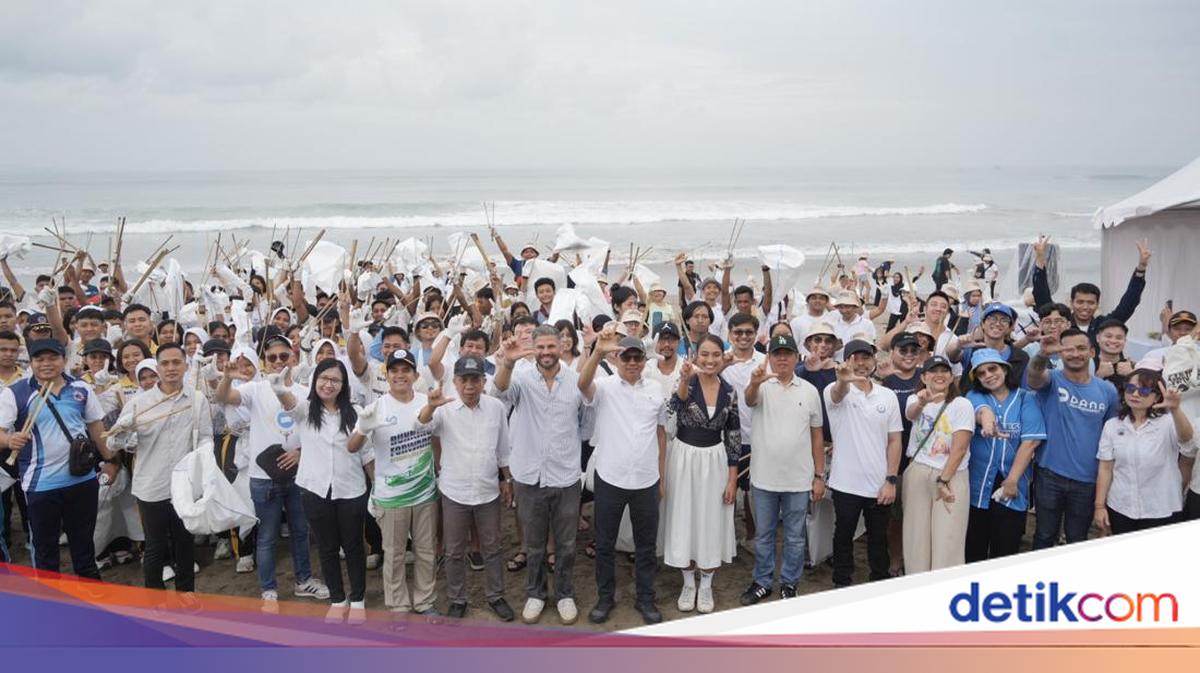
Small steps from this large framework are beginning to materialise on the ground through concrete cross-sector collaboration. On 13 June 2026, a beach clean-up action at Petitenget, Bali, presented a pentahelix model in practice, involving the government through the KKP, the private sector through DANA and hospitality and restaurant businesses in the Seminyak area, a non-governmental organisation through Seven Clean Seas, academic and vocational circles through cadets of the KKP marine school, and the wider community working shoulder-to-shoulder to collect waste—from snack food plastic packaging, glass bottles, and organic waste, to cigarette butts scattered across the tourist coastal area.
The economic dimension of the potential plastic waste crisis is increasingly difficult to ignore. Waste pollution is estimated to be able to reduce fishers’ incomes by up to 30 per cent, a figure that has direct implications for the purchasing power of coastal communities. On the other hand, waste handling requires wise consideration so as not to create new problems. Banning open waste burning is indeed appropriate from a health perspective, but it leaves the challenge of accumulating non-recyclable waste, so the option of building a second final disposal site that can provide a time window of about a decade to build waste-to-energy facilities and attract joint investment is worth considering as a solution.
In the end, waste will not stop flowing into the sea just because there is a programme; it stops when enough parties decide not to let it pass. That is what is being built—not merely a system, but a collective habit that waste is a shared responsibility before it becomes a shared burden. A healthy sea does not come from a single policy or a single beach clean-up action. It comes from decisions taken repeatedly, every day, long before the waste ever touches the water.