
Collaboration to Channel Energy to Communities through Solar Power Plant Construction on Sembur Island
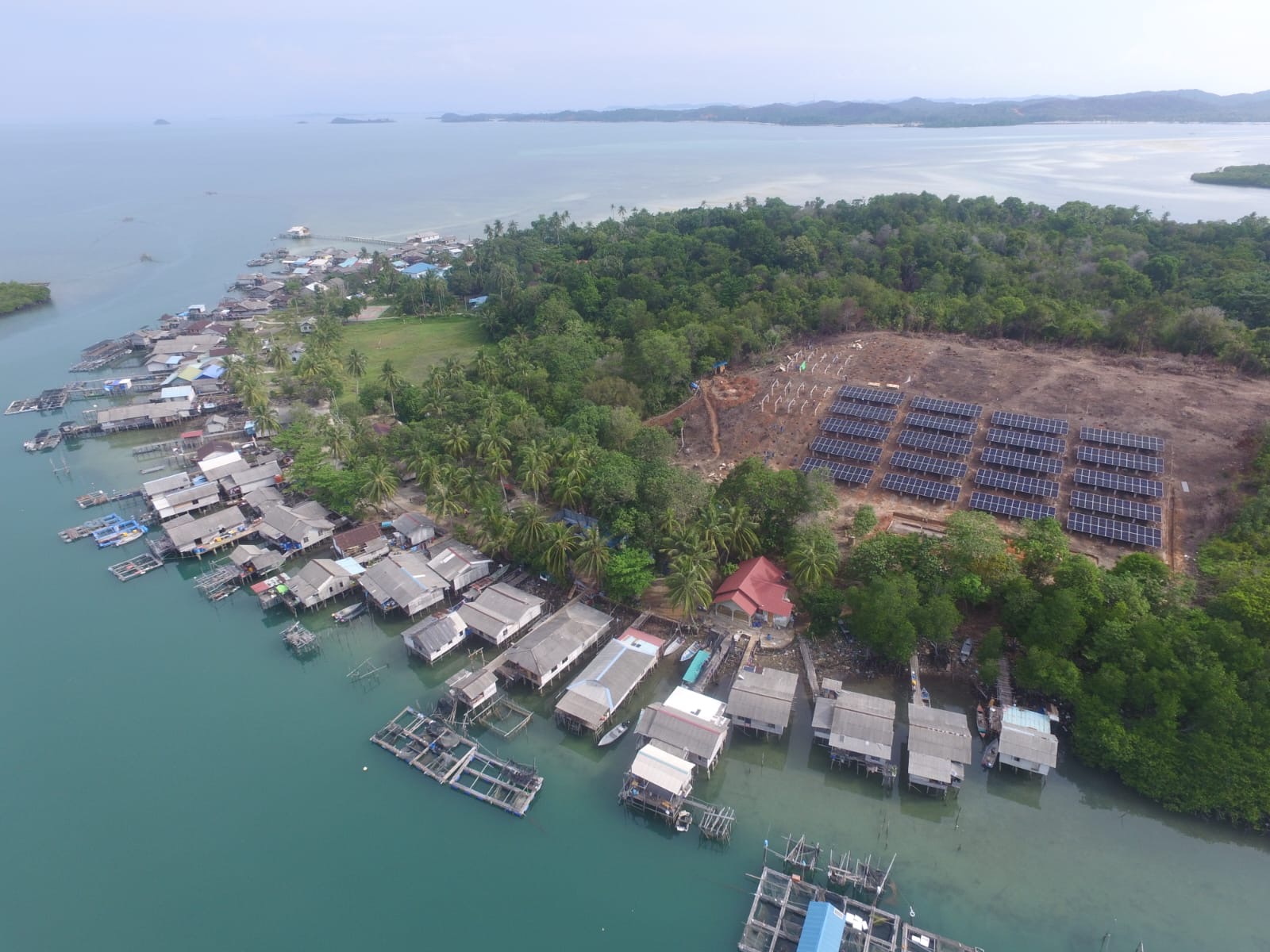
The Indonesian Ministry of Cooperatives (Kemenkop) together with Pertamina New & Renewable Energy (NRE) conducted a monitoring visit for the first phase of the construction of the Koperasi Desa/Kelurahan Merah Putih (KDKMP) Solar Power Plant (PLTS) on Sembur Laut Island, Galang Baru, Batam, Riau Islands, on Friday (19/6).
Corporate Secretary of Pertamina NRE, Nur Hidayati, confirmed that the progress of the KDKMP PLTS project on Sembur Island has reached 80%.
“The renewable energy-based PLTS project, paired with the KDKMP programme, has achieved approximately 80% progress. We express our gratitude for the coordination and support of all parties, especially the Indonesian Ministry of Cooperatives and the community of Sembur Island, in working to realise this project,” Nur Hidayati stated in a written release on Sunday (21/6).
As is well known, Sembur Island is a small island within the Galang archipelago, accessible only by sea, approximately one hour from Batam. Previously, the local community lacked an adequate electricity supply and relied on diesel-powered generators with high operational costs.
Sembur Island was selected for this new and renewable energy project because it meets several key criteria for KDKMP development: it possesses active economic activities and has an established KDKMP, yet remains disconnected from the electrical grid.
She further explained that during this first phase, all solar panels have been installed, and the battery system has been successfully delivered to the project site. This initial phase involves a PLTS capacity of 400 kilowatt-peak (kWp) supported by a 600 kilowatt-hour (kWh) battery system.
“Ultimately, the total installed PLTS capacity will be 1 megawatt-peak (MWp) with a 1 megawatt-hour (MWh) battery system,” she clarified.
Furthermore, Nur revealed that current work is focused on completing the electricity distribution network, integrating the battery system, and constructing supporting facilities, including a 5-tonne capacity cold storage and a 2-tonne per day ice maker, which will be managed by the local Merah Putih Cooperative. These facilities are targeted to be fully operational by the third quarter of 2026 and will serve as a vital part of creating a productive economic ecosystem based on clean energy on Sembur Island.
“We hope the KDKMP PLTS on Sembur Island can serve as an example of how renewable energy can not only provide reliable power but also create economic value, open up jobs, and improve community welfare through synergy between cooperatives,” concluded Nur.
On the same occasion, the Deputy for Cooperative Business Development at the Indonesian Ministry of Cooperatives, Panel Barus, explained that the project is tangible evidence of multi-agency synergy in delivering benefits directly to the community.
“The construction of the KDKMP PLTS on Sembur Island is a concrete form of inter-agency collaboration to deliver energy to the people. We want to ensure that village communities receive sustainable economic benefits through the management of productive businesses based on energy through cooperatives,” he explained.
He also emphasised that the project’s benefits are already being felt by the community through the involvement of local labour in various construction stages. Once operational, the PLTS will be the primary production factor; the electricity generated will be prioritised for operating the cold storage and ice factory so that fishermen no longer depend on ice supplies from outside the island, can store their catches longer, reduce operational costs, decrease reliance on diesel generators, and improve the quality and market value of their catch.
This project, a collaboration between the Indonesian Ministry of Cooperatives and PT Pertamina (Persero) via Pertamina NRE, is the first cooperative-based solar power plant project in Indonesia. The developed model positions the cooperative as the primary manager of energy assets and the driver of community economic activities, ensuring that the benefits return to the members and villagers.