
Collaboration between Humans and AI Said to Boost Productivity
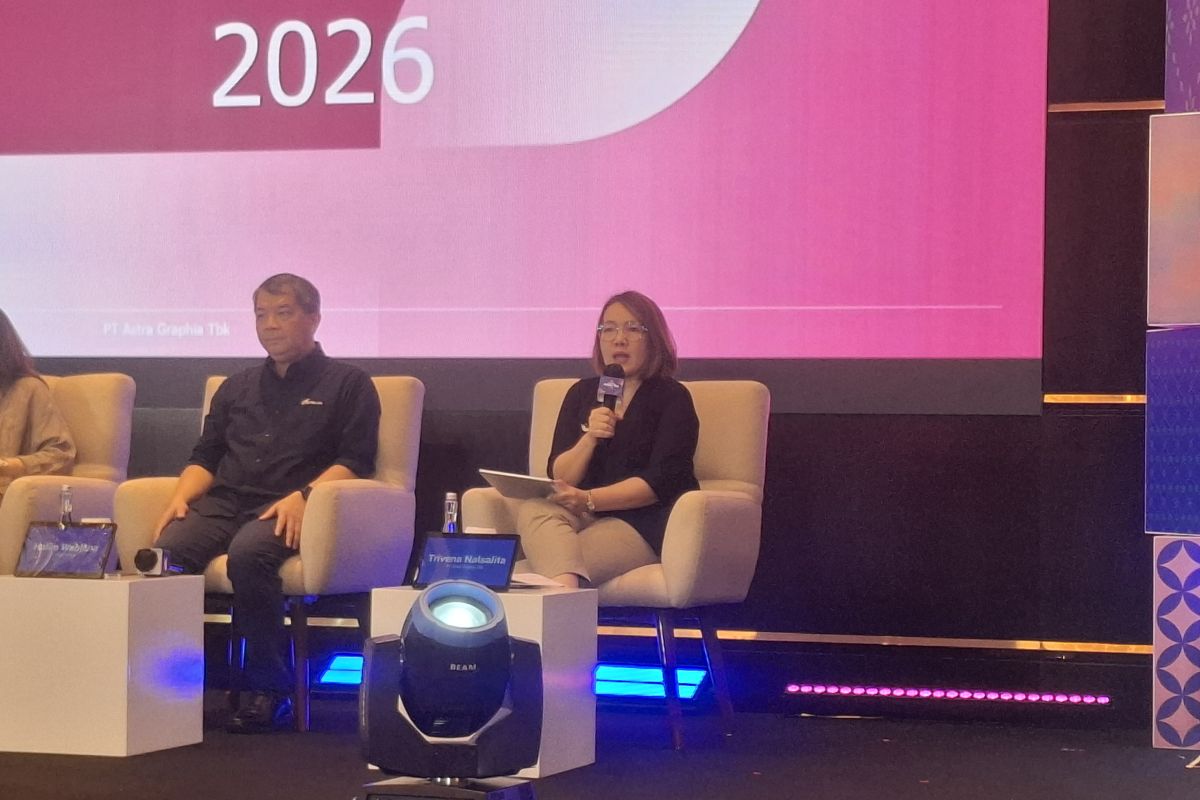
Jakarta (ANTARA) - PT Astra Graph to Astra Graphia Tbk (Astragraphia), a subsidiary of PT Astra International Tbk specialising in document solutions and information technology, stated that collaboration between humans and artificial intelligence (AI) can increase productivity, while the human role remains essential.
“AI replaces the human role in terms of administration or repetitive tasks, or jobs that involve analytics. However, they do not possess empathy or creative thinking,” said Astra Graphia Director Trivena Nalsalita during Astra Media Day 2026 in Jakarta on Wednesday.
According to Trivena, the development of automation does not necessarily eliminate the human role in work processes. She noted that humans are still required, particularly for tasks that demand creativity, empathy, and judgement.
“Therefore, AI and humans should be able to collaborate to create better productivity,” she added.
She stated that Astragraphia utilises AI both in the company’s internal processes and in several information technology solutions developed by the firm. In application development, for instance, AI is used in the coding process to help increase speed and accuracy and to identify sections requiring correction.
The use of AI is also implemented in the field of cybersecurity, including assisting with analysis during penetration testing of customer systems.
Regarding internal processes, Trivena mentioned that AI is utilised in areas such as recruitment and finance. According to her, this technology helps accelerate work and automate processes.
Astragraphia maintains two main business portfolios: Document Solutions and IT Solutions. In the first semester of 2026, the company recorded a consolidated net profit of Rp138 billion, a 30 per cent increase compared to the same period the previous year. Net revenue during the period reached Rp1.556 trillion, representing a 2 per cent year-on-year growth.
The company noted that the growth in revenue and net profit originated from the Document Solutions and IT Solutions segments, with the acceleration of business process digitalisation being a key supporting factor for performance.
Trivena stated that the company does not view AI merely as a technological development, but also looks at its application from the perspective of business model sustainability. “AI is not just a trend or hype; we must also seek business models that generate recurring revenue,” she said.
In the context of employment, the Minister of Manpower, Yassierli, previously stated that AI adoption in the workforce must be human-oriented and directed towards increasing national labour productivity. According to Yassierli, the use of AI does not necessarily mean a drastic reduction in the workforce. Workers are expected to strengthen their expertise in their respective fields while simultaneously developing the ability to utilise AI in their work.
Regarding governance, the Deputy Minister of Communication and Digital, Nezar Patria, emphasised the principles of being ‘human-centric’ and ‘human-in-the-loop’ in AI development. With this approach, AI can take over certain tasks to increase efficiency, but human involvement remains necessary for specific decisions.
Nezar also emphasised that AI governance must go hand-in-hand with cybersecurity. The government is currently preparing the National AI Roadmap 2026-2029 and AI ethics regulations to build a responsible AI ecosystem.