
Collaboration and Medical Technology Needed to Overcome Healthcare Access Gaps
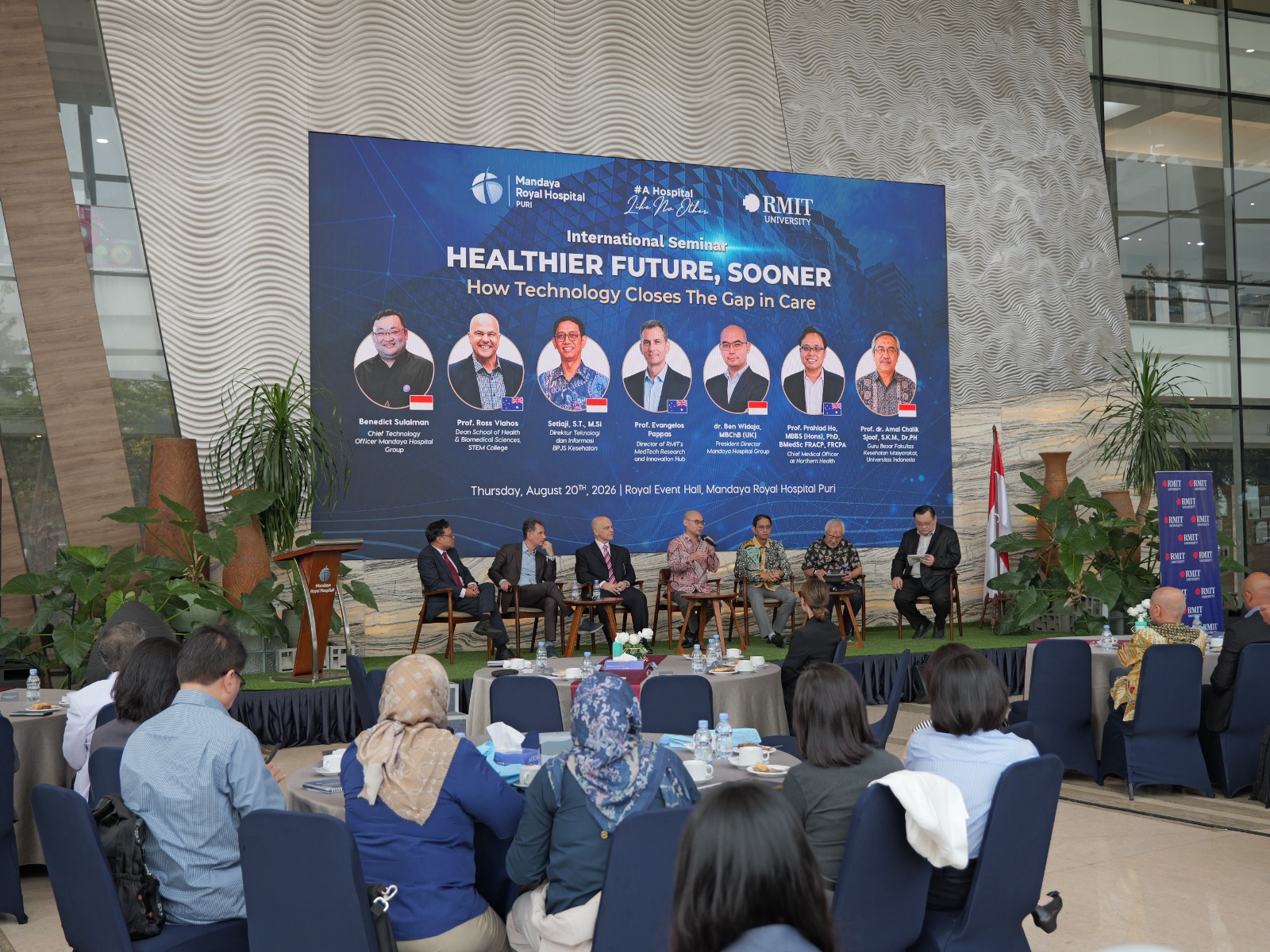
RMIT University from Australia, in partnership with Mandaya Hospital Group, has brought together researchers, clinicians, and healthcare leaders in Jakarta for a forum titled ‘Healthier Futures, Sooner: How Technology Closes the Gap in Care’. This strategic collaboration focuses on leveraging research, medical technology (MedTech), and clinical approaches to address disparities in the quality and accessibility of healthcare services in Indonesia. The forum highlighted the challenges of transforming the national health system, which is currently marked by geographical inequality and a high burden of chronic diseases.
Projections from the Ministry of Health indicate that medical personnel remain concentrated in urban areas and Java, while eastern Indonesia faces a significant shortage of healthcare workers. In this context, the integration of RMIT University’s MedTech research expertise and Mandaya’s clinical experience is seen as a way to provide concrete solutions to expand healthcare reach beyond major cities.
“Indonesia’s healthcare priorities require solutions that are not only innovative but also relevant to the realities faced by patients and healthcare workers in Indonesia. By connecting RMIT’s global research capabilities with partners like Mandaya, we aim to deliver a real impact that meets local needs,” said the Director of RMIT Indonesia, Tantia Dian Permata Indah, in a statement on Thursday.
During the forum, experts explored the implementation of telehealth, remote monitoring, artificial intelligence (AI), wearable sensors, biomarkers, and digital health data integration systems, such as the SATUSEHAT platform. These technologies are designed to complement clinical expertise in accelerating early diagnosis and designing precision treatments.
Representing RMIT University, Prof. Ross Vlahos emphasised that research into new medical technologies provides optimal value only if the results can be applied directly to patients and improve the quality of daily medical practice. “Researchers, clinicians, and healthcare organisations need to work together from the outset so that new ideas can be implemented safely and effectively in healthcare,” said Prof. Vlahos.
Dr Ben Widaja, Co-Founder and President Director of Mandaya Hospital Group, expressed similar sentiments. He noted that the combination of global research and local clinical insight is key to identifying responsible healthcare solutions. “Combining RMIT’s research expertise with Mandaya’s local clinical knowledge can help us identify solutions relevant to Indonesia and explore how these solutions can be applied responsibly in real-world healthcare,” said Dr Ben Widaja.
Through this forum, RMIT University and Mandaya Hospital Group have agreed to deepen their long-term collaboration. The partnership will encompass joint research, the application of research findings into medical practice, healthcare workforce capacity building, and the testing of the latest medical technologies to address national health challenges.
According to the Minister of Health, knowledge exchange is essential so that the ability of Indonesian medical personnel to understand and manage neurological diseases can approach international standards. Policy breakthroughs are required, including the strengthening of specialist doctor education, the utilisation of telemedicine, and measured options for fulfilling medical personnel needs from abroad.
Source: jawawa.id (https://jawawa.id/newsitem/collaboration-and-medical-technology-needed-to-overcome-healthcare-access-gaps-1788407499)
Originally published by Media Indonesia (https://mediaindonesia.com/kesehatan/929172/kolaborasi-dan-teknologi-medis-dibutuhkan-atasi-kesenjangan-akses-pelayanan-kesehatan), translated from Indonesian