
Coko Cacao Expands Its Indonesian Cocoa Processing Business
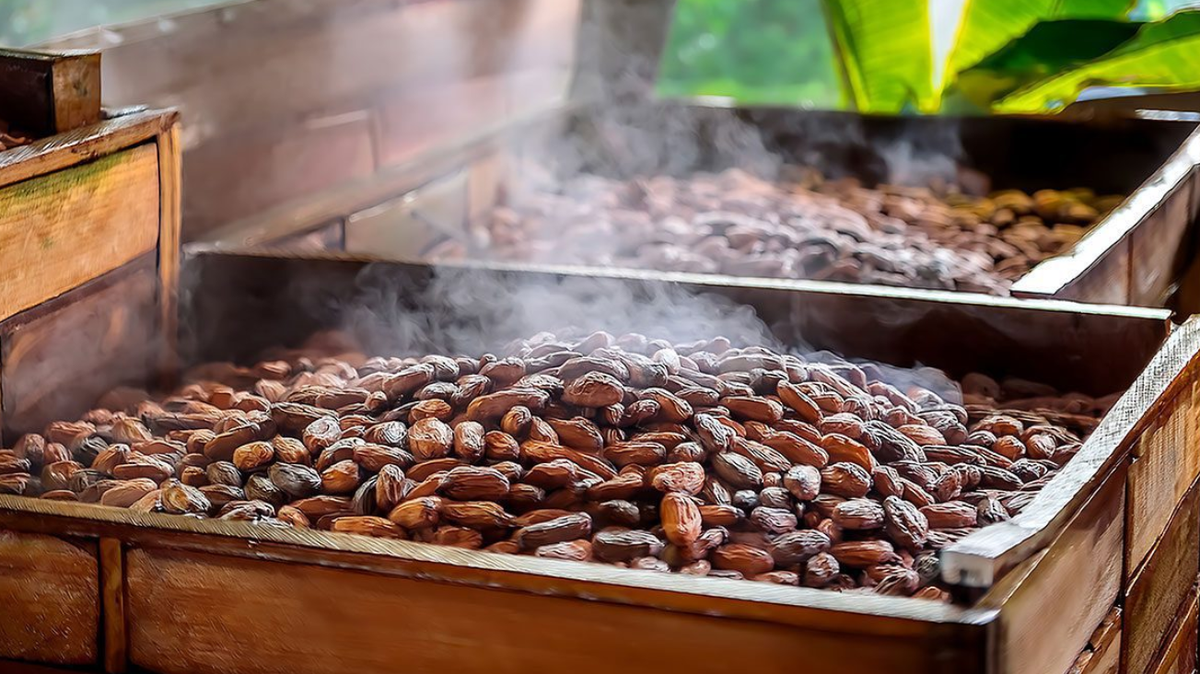
Processing cocoa into industrial ingredients is opening up new business opportunities for companies while raising the economic value of Indonesia’s agricultural output. One business pursuing this strategy is Coko Cacao Company, which is partnering with local farmers.
According to Investor Daily, the company began expanding its business activities in early 2026. Previously focused on ready-to-drink chocolate beverages, Coko Cacao Company is now also supplying a range of processed cocoa ingredients for industrial use.
The expansion was introduced at Trade Expo Indonesia (TEI) 2026 at ICE BSD in Tangerang. The company aims to make greater use of agricultural produce and increase the value of cocoa grown by farmers.
Expanding partnerships with cocoa farmers
Coko Cacao Company Purchasing Manager Andri Epriasman said the expansion was linked to farmers’ economic circumstances after the harvest. The company wants to help increase the value of the commodities they produce. Speaking at TEI 2026, Andri highlighted the low prices farmers receive after harvesting cocoa. “So far, farmers have received very little after the harvest,” he said.
To support the business, Coko Cacao Company has established partnerships with farmers in six areas: Pangandaran, Jember, Tabanan, Berau, Polewali Mandar and Merauke.
The partnership network is intended to secure cocoa supplies while helping develop a market for processed products. This means the company’s business is not limited to trading raw cocoa beans.
Cocoa products serve a range of industries
Coko Cacao Company offers several processed ingredients for different uses, including cocoa powder, cocoa paste, cocoa butter, cocoa shells and cocoa nibs. All are aimed at the business-to-business (B2B) market, in which the company supplies ingredients to other businesses for use in their production processes.
This market creates opportunities to use cocoa across several sectors, particularly food, beverages and cosmetics. Each product has a specific function depending on the processing needs of the purchasing company. Cocoa butter, for example, can be used in food and cosmetics.
Cocoa powder, meanwhile, is used to make chocolate-flavoured drinks and food. Developing derivative products can give agricultural commodities greater economic value than selling them in raw form. Processing therefore offers a way to increase cocoa’s contribution to national industry.
Indonesian cocoa production and exports
The development potential of the industry is supported by the capacity of Indonesia’s cocoa plantations. The Directorate General of Plantations at the Ministry of Agriculture recorded national cocoa production of 617,000 tonnes in 2024, from plantations covering about 1.37 million hectares.
Preliminary production figures for 2025 stood at around 616,000 tonnes, while national cocoa production in 2026 is projected to reach 635,000 tonnes. International trade also reflects the commodity’s potential.
The Ministry of Agriculture recorded Indonesian cocoa exports worth US$2.65 billion in 2024, with volumes of about 348,000 tonnes. The figures illustrate the scale of Indonesia’s cocoa trade in global markets. The Government is also encouraging the development of processed products so that more of the economic benefits from agricultural commodities can be retained domestically.
However, the structure of the country’s plantations presents its own challenges. Smallholders operate around 99 per cent of Indonesia’s cocoa plantations, making productivity, crop quality and reliable supply important concerns for the industry.
Production capacity challenges and investment opportunities
Expanding cocoa processing also requires operational readiness. Coko Cacao Company is working to broaden its marketing network and increase production capacity to meet customer demand. Andri said orders exceeding 10–20 tonnes could take around two to three months to fulfil. This indicates that rising demand needs to be matched by sufficient production capacity.
Alongside order volumes, consistent quality and control of production costs are important to the business’s long-term viability. The company’s ability to manage raw material supplies is also crucial to meeting industrial customers’ needs. For investors, developments in cocoa processing may be worth watching, particularly in agricultural processing and the food industry. However, the commodity’s potential does not automatically guarantee corporate profits or share-price gains.
Investment assessments still need to take account of a company’s financial position, profit margins, cash flow and ability to maintain raw material availability. These factors directly affect the sustainability of processing operations and the ability to meet market demand. Strengthening links between farmers, processors and export markets will be important to the development of Indonesia’s cocoa industry. Better-connected supply chains could increase cocoa’s economic value while expanding farmers’ role as suppliers of industrial raw materials.
Source: jawawa.id (https://jawawa.id/newsitem/coko-cacao-expands-its-indonesian-cocoa-processing-business-1793645419)
Originally published by koridor.co.id (https://koridor.co.id/coko-cacao-bisnis-olahan-kakao), translated from Indonesian