
Coffee: The Devil’s Drink in Islamic Civilisation and the Global Economy
Who would have thought that a cup of thick black liquid, now part of the morning routine for people around the world, once fuelled fierce controversy in Islamic civilisation and was given an extreme nickname in Europe: the “Devil’s Drink”? From Sufi dhikr rituals in Yemen’s mountains to becoming one of the biggest commodities in the global market, coffee has had a long history involving debates over Islamic jurisprudence, political intrigue and the transformation of the world economy.
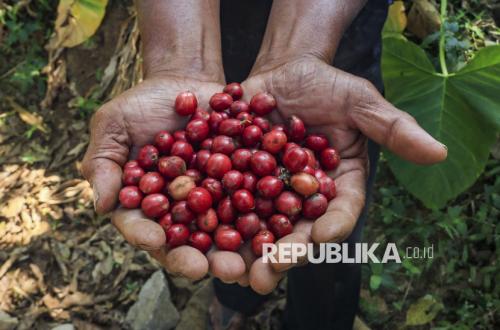
Behind the pleasure of drinking coffee lies a popular legend about its origins, said to date to the ninth century in the Ethiopian highlands. The story tells of Kaldi, a young goatherd who was astonished by the strange behaviour of his animals. The goats jumped about energetically and stayed awake all night after eating red berries from a wild bush.
Kaldi then took the berries to a local monk. The monk, however, regarded them as a “devil’s temptation” and threw them into a fire. The fragrant aroma released by the coffee beans as they roasted over the embers is said to have given rise to the tradition of roasting and brewing coffee, the first in human history.
According to academically validated historical accounts, the drink was first developed as a brewed-beverage culture by Sufis in Yemen in the 15th century. The scientific journal World Coffee Research and Ralph S Hattox’s historical account, Coffee and Coffeehouses: The Origins of a Social Drink in the Middle East, confirm that Sheikh Ali bin Umar al-Shadhili and Sheikh Muhammad al-Dhabhani were important figures who used coffee—then called qahwah—to help students and Sufis remain alert and energetic during night prayers (qiyamul lail).
This history is also recorded in classical Islamic texts (turats) digitised in Maktabah Syamilah. One authentic reference on coffee is Umdat al-Shafwa fi Hill al-Qahwa, by Imam Abdul Qadir bin Muhammad al-Jaziri al-Hanbali (d. 977 AH). In this work, al-Jaziri records the early use of coffee at dhikr gatherings in Mecca, Medina and Cairo.
Before coffee was widely accepted, its legal status became the subject of intense and controversial debate among Muslim scholars. During a prohibition campaign in Mecca in 1511, the city’s governor at the time, Khair Beg, convened a gathering of scholars and doctors to rule on the drink.
Some scholars considered coffee intoxicating (musykir) and harmful to the mind like khamr, particularly because coffeehouses were seen as places where sin flourished and people neglected prayer. Those who prohibited it based their arguments on the Prophet’s hadith: “Every intoxicant is khamr, and every khamr is forbidden” (narrated by Muslim). Coffee was also likened at the time to a substance that impaired mental faculties (mufattir).
The controversy was eventually eased by prominent scholars in Cairo’s Al-Azhar and the Levant, including Sheikh Ibn Hajar al-Haytami in al-Fatawa al-Fiqhiyyah al-Kubra. The scholars affirmed that the default ruling on things on earth is that they are pure and permissible (mubah), citing the Qur’anic verse: “It is He who created for you all that is on the earth” (Surah al-Baqarah 2:29). Because coffee was not intoxicating and could help people stay awake for acts of worship, the majority of scholars ruled that drinking it was permissible; it could even be sunnah if the intention was to support worship.
Coffee’s global journey continued when Ottoman traders brought it to Venice in the 17th century. The Catholic Church in Europe initially rejected the dark drink from the East, with some religious leaders calling it the “Devil’s Drink” or a bitter invention of “infidels” intended to replace wine.
The moral panic ended only after Pope Clement VIII tried a cup of coffee. Impressed by its taste, the Pope reportedly joked that it was too delicious to be enjoyed only by Muslims, before officially baptising the drink. Coffee then took off as a new lifestyle across Europe, and coffeehouses developed into centres of the Enlightenment.
Source: jawawa.id (https://jawawa.id/newsitem/coffee-the-devils-drink-in-islamic-civilisation-and-the-global-economy-1794207053)
Originally published by Republika (https://opini.republika.co.id/berita/to80t6415/kopi-minuman-setan-dalam-peradaban-islam-dan-ekonomi-dunia), translated from Indonesian